A fresh US carrier group is heading to the Middle East to relieve the USS Abraham Lincoln, according to an American official, closing out one of the longest and most scrutinised carrier deployments in recent memory. Officials insist the handover was locked into the schedule long before the Lincoln’s crew became the subject of headlines — but the timing has thrown a spotlight on a Navy that many analysts believe is being asked to do far more than its shrinking fleet can comfortably deliver.
A Rotation That Was Always on the Calendar
The Pentagon’s line is straightforward: this is a routine swap, not a rescue mission. Carrier strike groups operate on planned cycles, and relief crews are penciled in months ahead. Still, the replacement lands at an awkward moment, arriving just as questions swirl about what the past six months at sea have cost the sailors aboard the Lincoln.
Relatives of crew members have reportedly voiced worries about the state of the ship and the emotional toll of an extended tour tied to the ongoing conflict with Iran. Defense Secretary Pete Hegseth pushed back hard, arguing the accounts had been badly distorted. Every ship, every crew, every commanding officer gets whatever the department can give them, he said, framing the coverage as a mischaracterisation rather than a scandal.
The Human Cost of Long Deployments
Former naval officers have long pointed out that carriers are their own kind of pressure cooker. Thousands of people live in a steel city with no windows, no privacy and no obvious exit. Shifts blur together. Mail is slow, news from home lands unevenly, and small annoyances — a broken washing machine, a cold shower, a cancelled port call — snowball in ways they never would ashore.
Stretch that environment past the point crews were mentally braced for, and morale becomes a genuine operational issue rather than a soft one. A sailor who expected to be home in the autumn and is still on station in the summer is not simply tired; they are recalibrating their entire sense of when normal life resumes.
A Fleet Paying for Old Decisions
For Jennifer Parker, a former Royal Australian Navy officer now with the Lowy Institute, the strain aboard the Lincoln is less a story about one ship and more a symptom of choices made decades ago in shipyards and budget committees.
Her reading is blunt: a roughly 200-day deployment happens because there simply aren’t enough hulls to rotate. The demands placed on the Navy have grown, while the number of ships available to meet them has gone the other way.
The comparison with the past is jarring. During the 1991 Gulf War, a campaign whose active combat phase ran 42 days, Washington surged six aircraft carriers into the region — from a total inventory of 15. In the current confrontation with Iran, now approaching the six-month mark, the maximum concentration has been three carriers, and even that lasted only a matter of days. The fleet today numbers 11.
Do the arithmetic and the squeeze becomes obvious. Fewer carriers, longer conflicts, and the same expectation of persistent global presence means individual ships absorb the difference.
Carriers Are Not Only Fighting Iran
Parker also notes something that rarely makes it into headlines: the carrier fleet has a day job beyond any single crisis. Joint drills with allies, deterrence patrols in the Indo-Pacific, maintenance windows and training cycles all consume ships. Every vessel parked in the Middle East is one not available somewhere else, and the gaps have to be filled by extending whoever is already deployed.
The Lincoln is not the only ship to feel it. The USS Gerald R Ford wrapped up a 326-day run in May — a modern record — after a stretch that took in operations near Venezuela as well as against Iran. That deployment came with its own troubles, including non-functioning toilets and a laundry fire that halted combat operations for a period and wrecked some berthing spaces.
Washington’s Economic Front
While the Navy manages its rotation, the Treasury is opening a second line of attack. Secretary Scott Bessent signalled that the administration intends to isolate Iran economically using tools he described as unprecedented, telling Newsmax that more announcements are coming shortly.
That messaging fits neatly with President Donald Trump’s own framing. He made plain earlier in the month that inflicting economic damage is a deliberate pillar of his Iran policy, not a side effect of it. The logic is familiar: squeeze revenue, restrict access to markets, and force decisions at the negotiating table that military pressure alone might not produce.
What “never been seen” means in practice remains undefined. It could point to secondary sanctions aimed at buyers and intermediaries, tighter shipping restrictions, or financial measures targeting entities that have so far slipped through.
The Strait of Hormuz Remains the Pressure Point
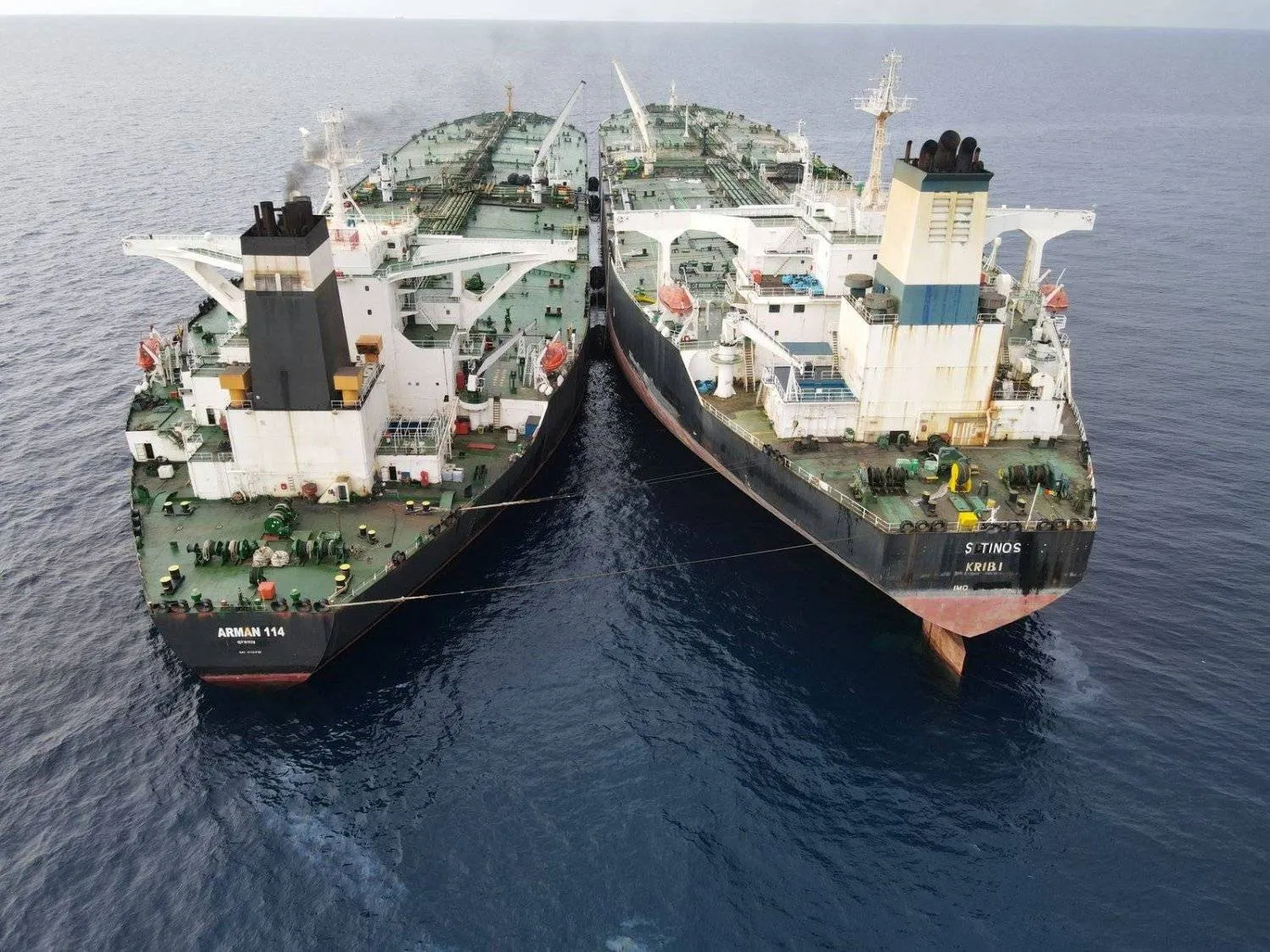
Bessent also indicated the blockade on Iranian ports is staying in place. Traffic through the Strait of Hormuz — the narrow channel through which a substantial slice of the world’s seaborne oil moves — remains well below normal levels.
The waterway is also proving dangerous. A state-owned company in the United Arab Emirates reported that two of its vessels came under attack while transiting the strait on Thursday, a reminder that commercial shipping is now firmly inside the risk zone.
What Comes Next
Two storylines are converging. One is military and structural: a Navy discovering that decades of fleet reduction have a bill attached, paid in extended deployments and worn-out crews. The other is economic: an administration betting that financial suffocation can achieve what firepower alone cannot.
The incoming carrier group buys the Lincoln’s sailors a trip home. Whether it buys the Pentagon any real breathing room is a different question — and one that depends less on this rotation than on how many ships are waiting behind it.
Author