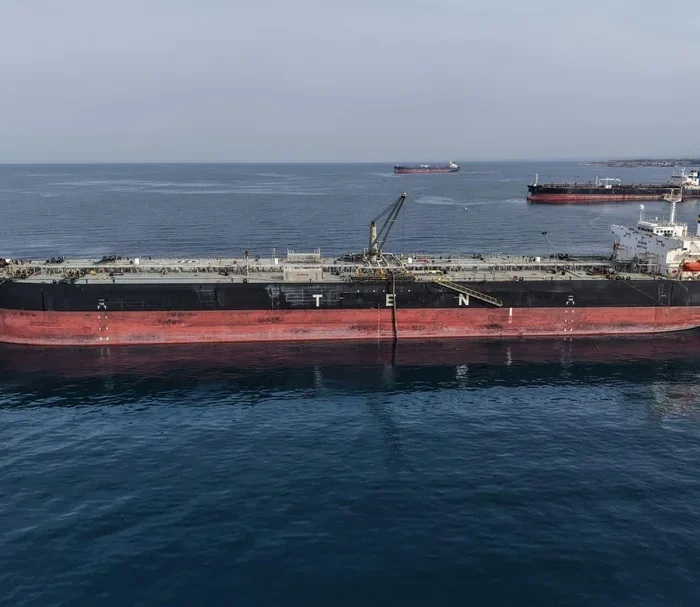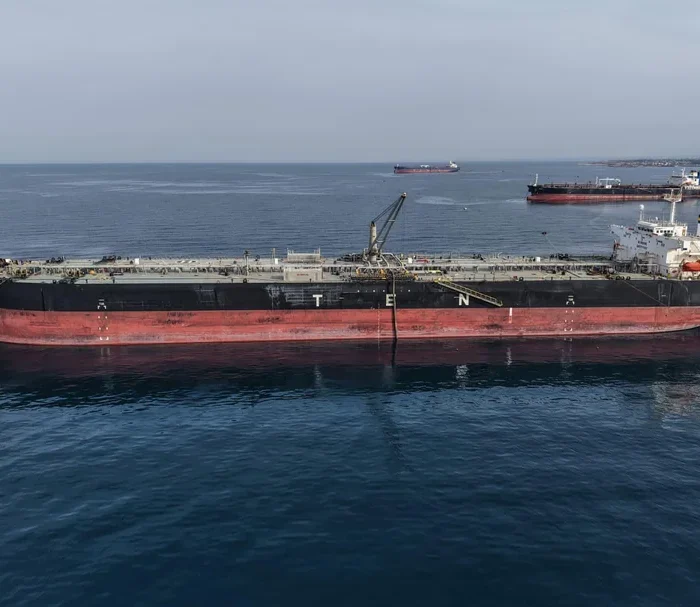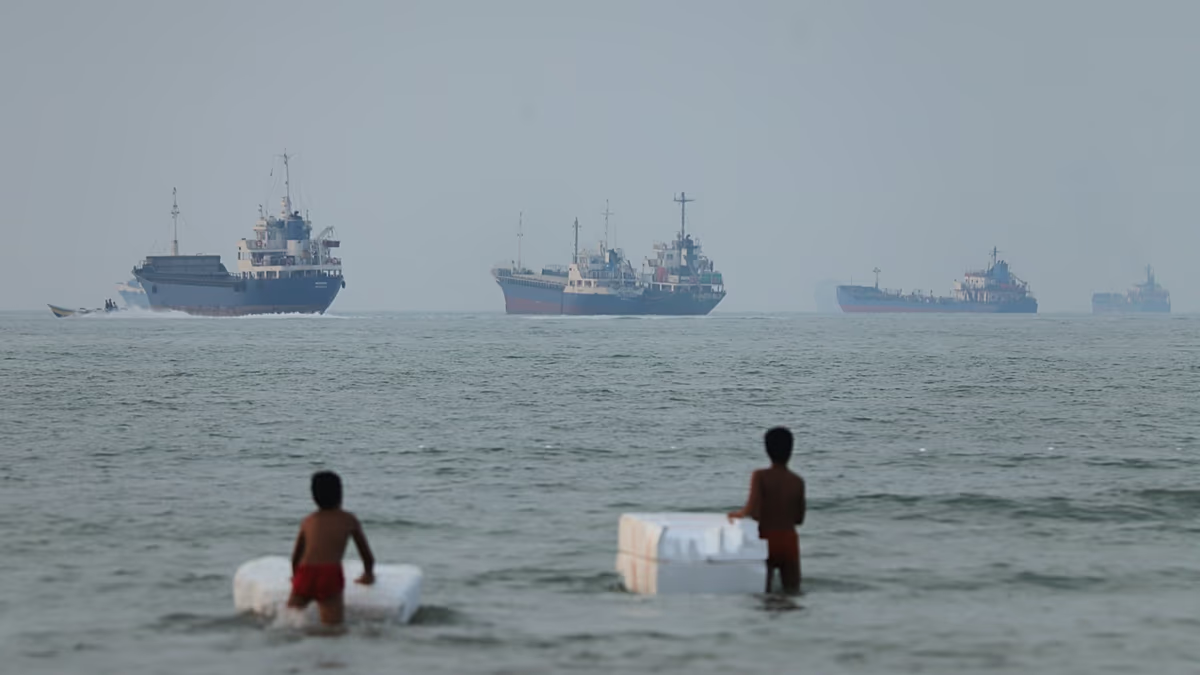
The Strait of Hormuz has moved back to the centre of an already volatile confrontation between Washington and Tehran, after President Donald Trump suggested he intends to declare the narrow waterway American territory and Iran responded by insisting it will never surrender control.
The exchange, playing out over Friday and Saturday, adds a new and unusual dimension to a conflict that has already disrupted one of the most important shipping corridors on earth.
What Trump Actually Said
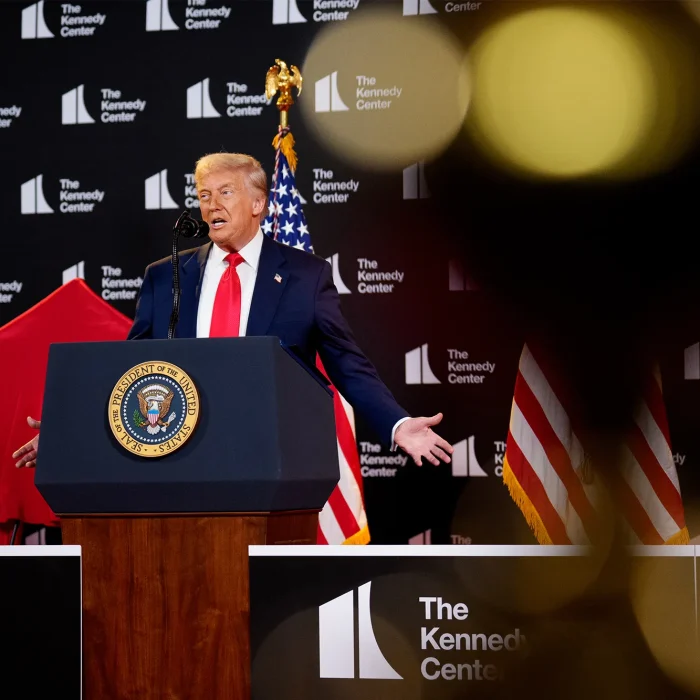
Speaking at a political rally held at a police academy in New York state on Friday, Trump told the crowd that Iran was being comprehensively beaten and that, before long, he would be announcing that the Hormuz passage belongs to the United States. He delivered the line with a laugh, then insisted he meant it.
He offered no legal framework for how such a declaration would work, no timeline beyond “pretty soon,” and no explanation of what it would mean in practice for the ships, navies and coastal states that use the route every day.
Tehran’s Answer
The reply came within hours. Iran’s Deputy Foreign Minister Kazem Gharibabadi wrote on social media that the strait has always been Iranian, remains Iranian, and will stay that way. He went further, saying the passage would be opened or shut solely on Iran’s instruction.
That framing matters. It is not merely a rejection of Trump’s remark; it is a restatement of Iran’s long-held position that it holds the decisive hand over traffic through the chokepoint — the exact leverage that has made Hormuz such a persistent flashpoint.
Why This Waterway Carries So Much Weight
For readers unfamiliar with the geography, the strait is a slim channel connecting the Persian Gulf to the open ocean, hemmed in by Iran on one side and Oman and the UAE on the other. At its tightest it is only a few dozen kilometres across, with the usable shipping lanes far narrower still.
A very large share of the world’s seaborne crude and liquefied natural gas passes through it. There is no convenient alternative route for most of that cargo. That combination — enormous volume, minimal width, no bypass — is why any threat to the passage moves energy markets almost instantly and why the region’s security has been debated for decades.
An Attack at Sea
The rhetorical clash did not happen in isolation. Abu Dhabi National Oil Company confirmed on Saturday that one of its vessels was attacked while making its way through the strait the previous day.
The company reported no injuries among those on board and said the situation had been brought under control. It did not publicly assign blame.
Even without casualties, an incident like this reverberates. Insurers reprice risk, operators reconsider schedules, and every subsequent transit is made under heavier assumptions about danger.
Talks: Messages, Not Negotiations
Alongside the threats, there has been quiet diplomatic movement — though Iran is careful about how it describes it.
Foreign Minister Abbas Araqchi told an Iranian news outlet in an interview published Saturday that no decision has been taken to restart talks with the United States. Messages have been passing back and forth through Qatar and Pakistan, he acknowledged, but he was firm that these do not constitute negotiations.
A separate track exists with Oman. According to Araqchi, those discussions are focused specifically on establishing a maritime route through the strait. He added that Washington would need to satisfy certain conditions before shipping resumes through the passage.
The distinction Iran is drawing is deliberate. Exchanging messages preserves a channel without conceding that formal diplomacy has begun — and without appearing to be pressured to the table.
Violence in Southern Lebanon
The strait is not the only front generating headlines. Lebanese state media reported that an Israeli strike in the south of the country early Saturday killed seven people.
The National News Agency said warplanes hit a house on the edge of the village of Ansar, destroying the building. Three additional people were reported wounded.
If the figures hold, this would be the deadliest single incident since arrangements reached in June brought a relative pause to fighting between Israel and Hezbollah. That quiet had already been fragile, punctured repeatedly by smaller exchanges. A strike of this scale raises real questions about whether the lull can survive.
The Wider Picture
Several threads are now running at once across the region:
- Economic pressure on Iran, with Washington having threatened isolation on a scale it says has not been attempted before.
- Sustained strain on American forces, including reported difficulties aboard a US aircraft carrier operating in the region during an unusually long deployment.
- Friction over the West Bank, where Israel’s defence minister has proposed shifting responsibility for handling settlers from the military to the police.
- Diplomatic pushback from Europe, with France calling on Israel to arrest and prosecute settlers involved in the siege of the village of Qusra.
Taken together, these do not form a single storyline so much as a set of simultaneous pressure points, each capable of escalating on its own.
What to Watch
The immediate question is whether Trump’s comment translates into any concrete action or remains rally rhetoric. A formal claim over an international waterway bordered by multiple sovereign states would face immediate legal challenge and would likely be rejected by allies as well as adversaries.
The more practical question is narrower and more urgent: whether shipping through Hormuz can resume safely, on what terms, and who gets to set them. That is what the Oman channel appears to be about, and it is where progress — or its absence — will show up fastest in oil prices, insurance rates and the daily risk calculations of vessel crews.
For now, both sides have staked out positions that leave little visible room to move.
Author
-
Lucienne Albrecht is Luxe Chronicle’s wealth and lifestyle editor, celebrated for her elegant perspective on finance, legacy, and global luxury culture. With a flair for blending sophistication with insight, she brings a distinctly feminine voice to the world of high society and wealth.