A 1907 Proclamation Just Cleared the Way for Border Wall Construction on Tribal Land
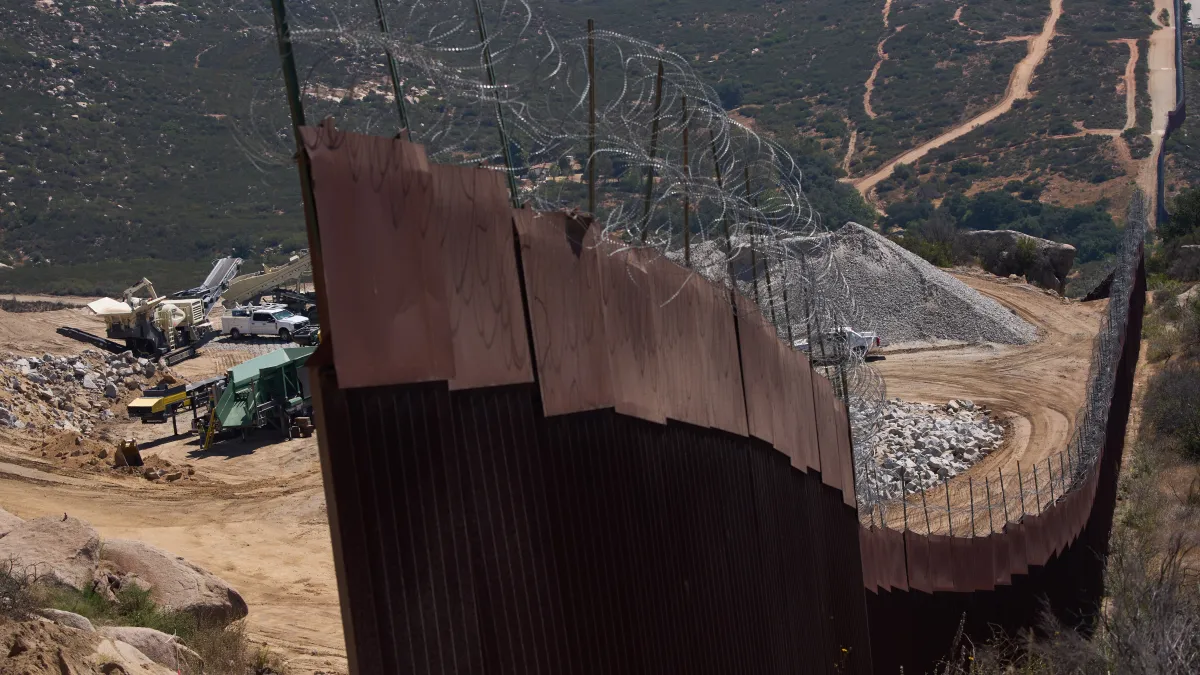
A court ruling has cleared the path for border wall Native American reservation construction, and the legal reasoning behind it reaches back more than a century to a document signed by Theodore Roosevelt.
The decision hands the federal government a significant victory in a dispute that pitted infrastructure plans against tribal land claims, and it turns almost entirely on a matter of timing.
The Century-Old Document at the Center of the Case
Judge Leon based the ruling on a proclamation issued by President Theodore Roosevelt in 1907. That document declared that all public land falling within 60 feet of an international boundary would remain under the exclusive control of the federal government.
Roosevelt’s stated justification at the time was practical rather than territorial. The proclamation described the measure as necessary to guard against the smuggling of goods moving between the United States and the Republic of Mexico.
More than 118 years later, that same 60-foot strip has become the legal foundation for modern wall construction.
Why the Dates Matter So Much
The decisive element in the judge’s reasoning was chronology.
Leon pointed out that the Tohono nation was not formally designated as a reservation until 1917. Roosevelt’s proclamation predates that designation by a full decade.
Under that reading, the federal government had already reserved control over the boundary strip before the reservation came into existence. The land in question, in other words, was never part of what was subsequently set aside for the tribe.
That sequencing argument is what allowed the court to sidestep questions that would otherwise arise about tribal sovereignty and consultation requirements. The government’s position was not that it could override tribal land rights, but that its claim to that particular corridor came first.
A Ruling That Lands Amid Broader Border Announcements
The legal outcome arrived shortly after the Trump administration marked what it described as 15 consecutive months without a single border release at the U.S.-Mexico frontier.
Homeland Security Secretary Markwayne Mullin’s office released figures characterizing the current situation in stark comparative terms. According to that office, daily apprehensions along the border have fallen 94 percent relative to levels recorded during former President Joe Biden’s administration.
The office further stated that apprehension numbers now sit at their lowest point in three decades.
Mullin framed those results as validation of the administration’s approach, saying the outcome demonstrates that the president’s border security agenda is restoring order and prioritizing the safety of the American people.
What This Means Going Forward
The ruling has implications beyond this single stretch of construction.
Establishing that the 1907 proclamation carries continuing legal force creates a template. Any segment of the border where federal reservation of the 60-foot strip predates the establishment of surrounding land designations could potentially be treated the same way.
For tribal governments along the southern border, the decision narrows one avenue of legal resistance. Arguments grounded in reservation boundaries become considerably harder to sustain if a court determines the disputed corridor was carved out before the reservation existed.
The Broader Tension
Cases like this expose a persistent friction in American law. Land arrangements negotiated or imposed generations ago continue to govern present-day disputes, often in ways that neither party anticipated when the original documents were drafted.
Roosevelt signed his proclamation to address smuggling concerns in an era of horseback patrols and sparse settlement along the boundary. The infrastructure it now authorizes involves steel barriers, surveillance systems and construction on a scale that would have been unimaginable in 1907.
Yet the legal instrument remains valid, and courts are bound to apply it as written.
Where Things Stand
With the ruling issued, federal construction can proceed on the contested section. The government’s position has been affirmed at this level, though litigation of this kind frequently continues through appeals.
For the administration, the timing reinforces a narrative it has been building throughout the year: enforcement statistics trending in its preferred direction, and legal obstacles to physical barrier construction falling away one by one.
For the Tohono nation and other tribes situated along the border, the decision represents a considerable setback, resting on a document signed a decade before their reservation was recognized and interpreted now in a context its author could not have foreseen.
Author
-
Lucienne Albrecht is Luxe Chronicle’s wealth and lifestyle editor, celebrated for her elegant perspective on finance, legacy, and global luxury culture. With a flair for blending sophistication with insight, she brings a distinctly feminine voice to the world of high society and wealth.