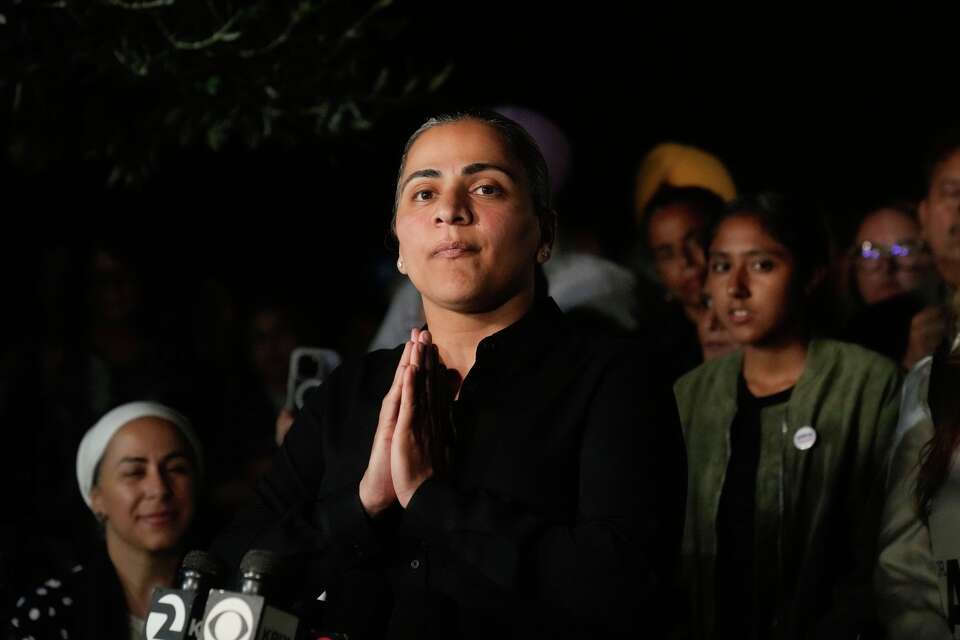
The Aisha Wahab special election victory delivered a California congressional seat to a progressive state lawmaker who was outspent by millions and opposed by leaders of her own party’s delegation. The Associated Press called the race Thursday afternoon as a later vote count widened her margin.
She now holds the East Bay seat previously occupied by Eric Swalwell, who resigned in April following allegations of sexual assault. He has denied the allegations.
The Margin and the Money
Wahab defeated fellow Democrat Melissa Hernandez, a more moderate candidate who serves as president of a Bay Area regional transit board.
The financial picture was lopsided. Outside political action committees, including several funded by the American Israel Public Affairs Committee, directed more than $6 million into television advertising and mailers either attacking Wahab or supporting Hernandez.
That level of spending in a single House special election is substantial by any measure, and it did not produce the intended result.
Wahab’s Response
In her statement, Wahab framed the outcome as a rejection of that spending.
The victory belongs to voters who demonstrated the district cannot be purchased, she said. She described the contest as among the ugliest and most expensive she had witnessed, and said her campaign declined to take the bait or go negative in response. She closed by pledging to fight for the district that raised her.
The framing is deliberate. Candidates who win while badly outspent tend to make the spending itself the story, because it converts a resource disadvantage into a moral argument.
A Familiar Proxy War
The race became the latest venue for a fight playing out in Democratic primaries nationwide, pitting populist progressives against more established institutional forces over the party’s direction.
Wahab won, but the picture contains a complication worth noting.
Hernandez cut dramatically into what had been a 26-point deficit from the primary. That compression suggests the spending accomplished something even in defeat, and it changes the calculation for what comes next.
The Rematch Is Already Set
This victory secures only the remainder of Swalwell’s term, which runs until January.
Both women will face each other again in November for a full term, in a district with slightly redrawn boundaries.
Hernandez signaled in her concession that she intends to compete fully. She described herself as a lifelong fighter and said that when she promised residents she would fight for them, she never gave up.
The narrowed margin gives that promise more weight than a concession statement usually carries.
Trouble Within the Delegation
Wahab’s difficulties were not confined to outside groups. She has been at odds with senior figures in California’s Democratic congressional delegation.
The dispute traces to the period after Swalwell’s resignation, when delegation leaders devised a plan to install a temporary caretaker in the seat ahead of the June primary. Wahab declined to cooperate.
The friction surfaced publicly on the eve of Tuesday’s election, when Representative Zoe Lofgren, the longtime chair of the California delegation, released a video rebuking her.
A senior member of her own party publicly criticizing a candidate the night before voting is an unusual escalation. It also failed.
Why This Result Matters
Several threads run through the outcome.
- Heavy outside spending draws attention to itself, and in some districts that attention produces backlash rather than persuasion
- Progressive candidates continue to demonstrate that grassroots organization can offset financial disadvantage
- Party leadership endorsements carry less weight than they once did, particularly when the leaders are not from the district
- Special elections with low turnout favor candidates whose supporters are motivated rather than merely sympathetic
The narrowing margin cuts the other way, though. It indicates persuadable voters exist in the district, and that sustained messaging moved some of them.
Looking Toward November
The rematch will differ from this contest in several respects.
Turnout will be higher, since a general election draws a broader and less activist electorate than a special election. The district boundaries shift slightly, altering the composition of the voter pool. And both candidates now have a full campaign’s worth of information about the other’s weaknesses.
Outside groups will have to decide whether to spend again. Six million dollars produced a loss, but it also produced a twenty-point swing, which some strategists will read as progress rather than failure.
Wahab, meanwhile, will serve several months in Congress before facing voters again. That gives her a record to run on and, potentially, a record to defend.
The Larger Fight
What happened in the East Bay reflects an argument the Democratic Party has been having with itself for years, about whether electoral success comes from mobilizing a committed base or from reassuring moderate voters.
The Aisha Wahab special election gave one answer. November will test whether it holds.
Author