The La Tomatina festival transforms a quiet town in eastern Spain into something that looks, for about sixty minutes, like a disaster film shot in bright red. Buñol sits inland from Valencia, home to roughly nine thousand people most of the year. On the last Wednesday of August, its narrow streets fill with tens of thousands of visitors who have travelled a long way to throw fruit at strangers.
It is loud, absurd, and startlingly well organised.
How the Morning Unfolds
Participants arrive early and pack into Plaza del Pueblo and the surrounding lanes. The crush is intense long before anything is thrown.
Traditionally the event opens with the palo jabón, a greased pole with a ham fixed at the top. Someone has to climb it. The crowd watches, jeers, and generally treats the attempt as entertainment rather than competition. Whether the ham comes down has varied over the years, and organisers have not always waited for success before starting.
A signal marks the beginning. Then the trucks come.
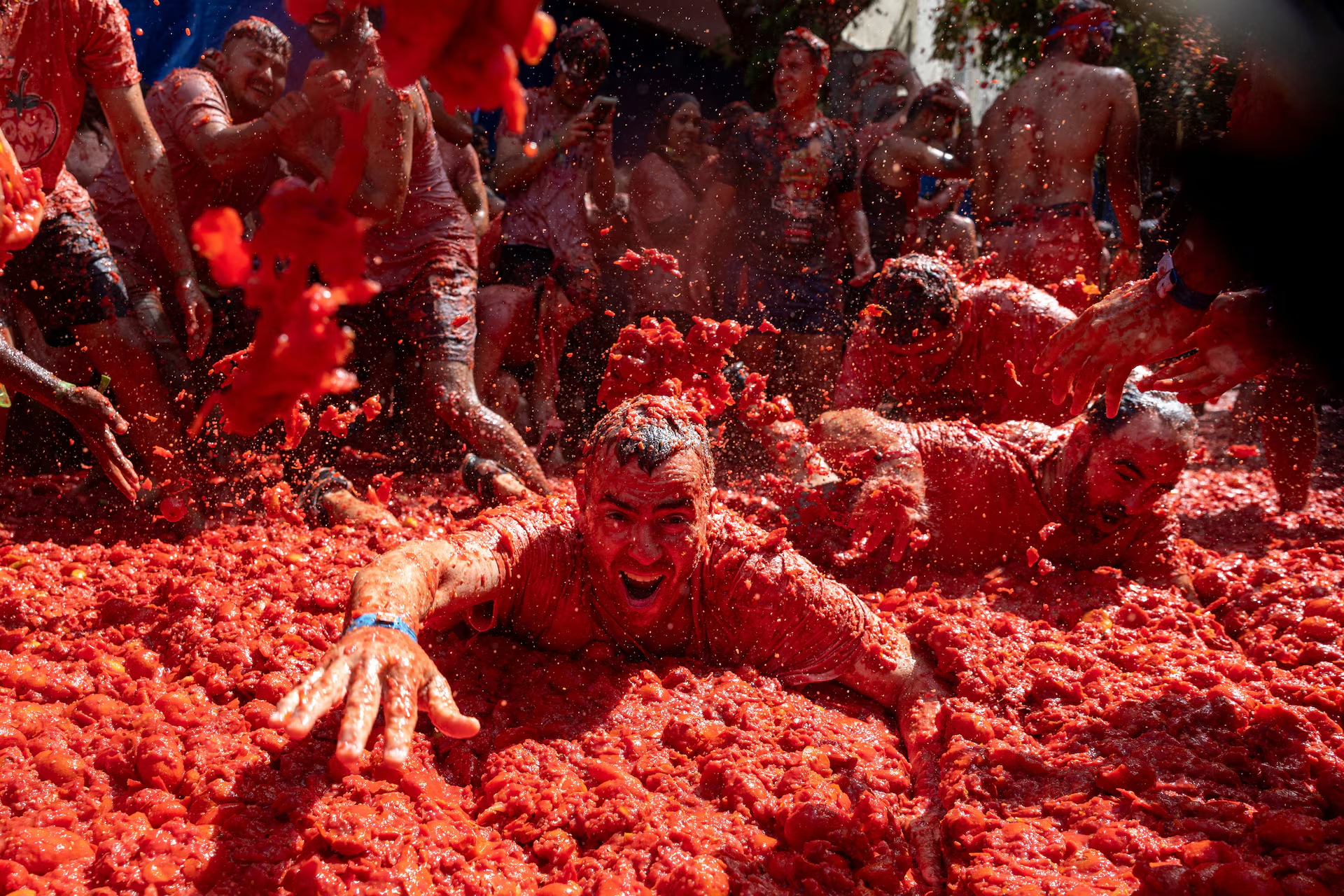
Flatbed lorries loaded with overripe tomatoes push slowly through the crowd while crew members shovel the fruit down into the mass of people below. What follows has no teams, no objective, and no score. Everyone throws at everyone.
An hour later, a second signal ends it. That rule is enforced strictly, and it is the reason the whole thing works.
The Cleanup Is the Strange Part
The most surprising element is what happens afterward.
Residents hose down façades, and municipal crews wash the streets. Within a couple of hours the town looks close to normal, and the stone paving often ends up cleaner than it was that morning. Tomato acidity does the work of a mild detergent.
Locals long ago learned to cover shopfronts and doorways with plastic sheeting. It has become part of the town’s annual rhythm, less an intrusion than a chore everyone knows is coming.
Where It Came From
The origin story is unremarkable, which is part of its appeal.
The event traces back to the mid-1940s and a scuffle in the town square during a parade. Accounts differ on the specifics. Some say young people tried to join a procession and were pushed out. Others describe a stall being knocked over near a vegetable market. In every version, someone reached for produce that happened to be nearby.
Whatever happened, people repeated it the following year. Authorities tried to shut it down at various points, including a ban during the Franco era, and residents kept reviving it anyway. Eventually the town stopped fighting the tradition and started organising it.
In 2002 it received official recognition as a festival of international tourist interest.
The Ticketing Change
For most of its history, La Tomatina was free and uncontrolled. That became a problem.
By the early 2010s attendance had climbed to levels the town’s infrastructure could not safely handle, with crowds reportedly reaching around fifty thousand. Streets built for a village were absorbing the population of a small city.
Buñol introduced paid tickets in 2013 and capped attendance at roughly twenty thousand. The decision drew complaints from purists but made the event considerably safer and generated revenue that offsets the cost of staging it.
Practical Rules
The regulations are short and exist for good reason.
- Squash the tomato before throwing it, since a firm one hurts
- Throw nothing else, ever
- Do not tear other people’s clothing
- Keep clear of the trucks as they move through
- Stop immediately when the closing signal sounds
Veterans add their own advice. Wear clothes you will discard. Bring goggles, because tomato juice in the eyes stings sharply. Leave anything valuable behind, and if you must bring a phone, seal it in something waterproof.
Footwear matters more than people expect. The ground becomes a slick layer of pulp and skin, and closed shoes with grip are the difference between enjoying yourself and spending the afternoon at a first aid tent.
What It Actually Feels Like
Descriptions tend to undersell the sensory chaos.
The smell arrives first, sweet and slightly fermented, and it lingers in your hair for days. The pulp underfoot rises steadily until it reaches ankle depth in places. Visibility drops as the air fills with airborne fruit.
Beyond that, there is an unusual social dynamic. Everyone looks identical within minutes, coated head to toe in the same red. Nationality, age, and language stop registering. People who cannot exchange a sentence end up laughing together.
That levelling effect is what most participants remember afterward, more than the throwing itself.
The Debate Around It
Not everyone approves.
Critics point to the waste, noting that tonnes of food are destroyed for entertainment. Organisers respond that the tomatoes are a low-grade variety grown specifically for the event, unsuitable for sale and sourced from outside the region to avoid displacing food supply.
Others raise concerns familiar to any town dependent on a single annual event. Overtourism, crowding, and the gradual shift from local tradition toward international spectacle are all live issues in Buñol, as they are across much of Spain.
Residents remain broadly supportive, though the ticket cap suggests an awareness that unlimited growth is not the goal.
Going Yourself
Accommodation in Buñol is scarce, so most visitors base themselves in Valencia and take an early train. Book tickets and transport well in advance, since both sell out.
Arrive with low expectations of comfort and high tolerance for crowds. Then spend an hour doing something completely pointless with twenty thousand people who came for the same reason.
Author