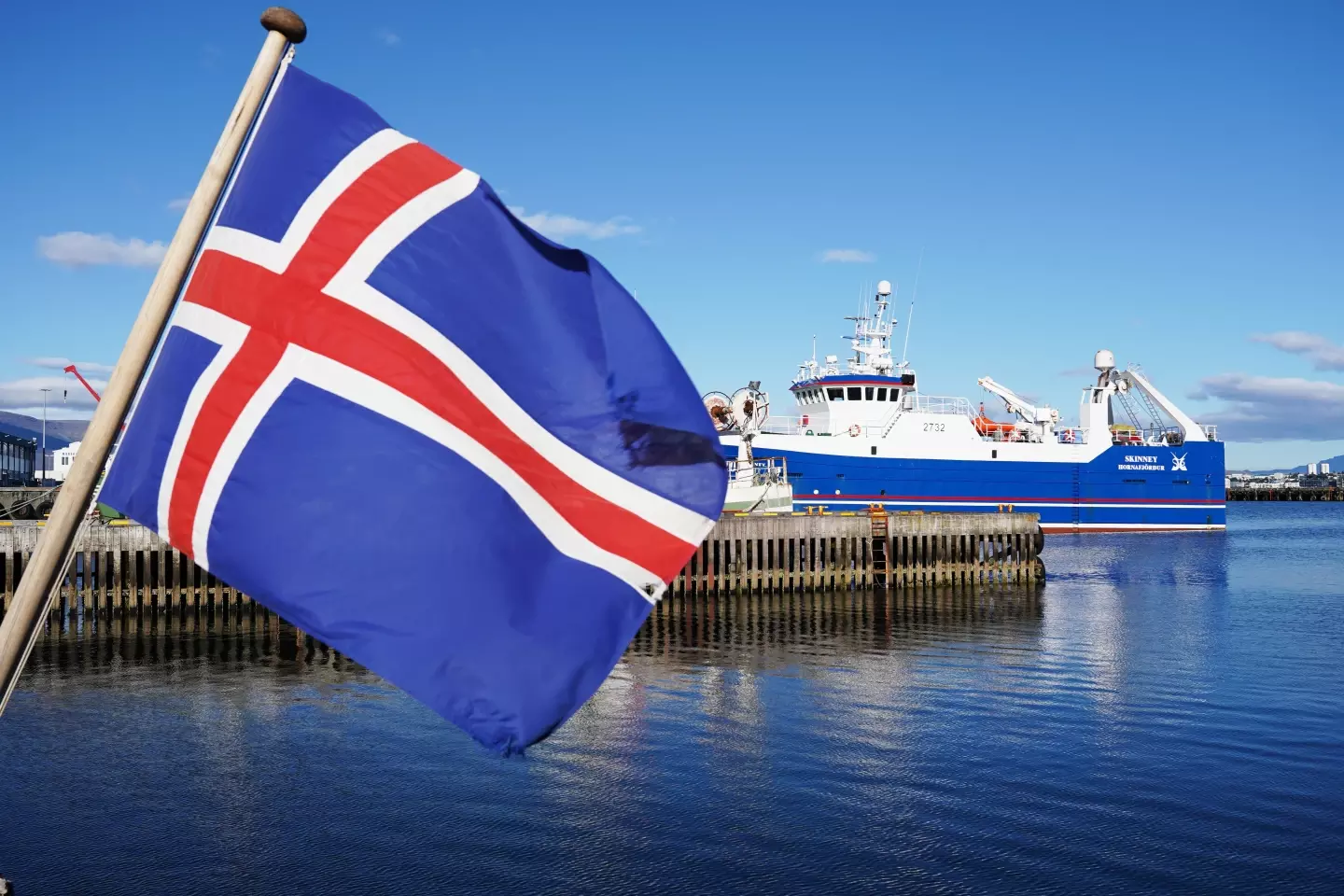
The Iceland EU referendum arriving Saturday has split a nation of nearly 400,000 people almost exactly down the middle, and the argument keeps returning to the same subject: fish.
Inside a waterfront processing plant, workers in hairnets and blue overalls sort cod and haddock while machines turn the catch into fillets, most of it destined for European markets. The irony is not lost on anyone. Iceland sells to Europe while debating whether to join it.
The Question on the Ballot
Voters are being asked whether Iceland should restart negotiations on European Union membership.
This is not the final word. A Yes vote opens talks with Brussels, but any eventual deal would require a second referendum, plus approval from all 27 existing member states.
A No vote shelves the whole matter for the foreseeable future.
Too Close to Call
Polling offers little comfort to either side.
One survey this week showed Yes leading 51.3 percent to 48.7 percent. An earlier one had the camps effectively tied.
Eirikur Bergmann, professor of politics at Bifröst University, described the outcome as impossibly hard to predict, noting both campaigns are spending everything they have.
The Fishing Problem
Marine industries account for close to 40 percent of Icelandic exports, which explains why fishing dominates the debate.
Pétur Pálsson, who runs the Visir fishing operation, worries membership would cost jobs and drive processing abroad. His objection is about authority: inside the EU, he says, Brussels sets the policy.
Opposition leader Guðrún Hafsteinsdóttir, heading the No campaign, has pledged that Icelandic waters will never be shared under any circumstances.
Bergmann explained why no politician would offer that concession. Fishing is inseparable from Icelandic culture and political identity. Anyone who gave it away, he said, would be expelled from the country.
Can Iceland Get an Exemption?
The government believes it can negotiate a special arrangement covering fishing and agriculture.
Finance Minister Daði Már Kristófersson expressed confidence about securing exemptions, pointing to precedent. Norway obtained terms in 1994 even though it ultimately never joined, while Finland and Sweden negotiated special provisions for agriculture in their far northern regions.
Sceptics are unpersuaded. Margrét Ágústa Sigurðardóttir, head of the Icelandic Farmers’ Association, noted that no member state has ever received a permanent opt-out.
Her deeper concern is one of scale. EU policy, she argued, will inevitably serve the interests of 450 million consumers rather than the particular needs of a country with 400,000 people.
The Economic Case for Yes
Supporters focus on money.
Iceland has grown from a poor island into one of Europe’s wealthier nations since independence from Denmark in 1944. But prices sit 84 percent above the EU average according to analysis by the academic union Viska, and interest rates have reached 8 percent.
Adopting the euro, Yes campaigners argue, would tame a volatile currency and stubborn inflation.
Snærós Sindradóttir of the European Movement in Iceland described the trap plainly: wages rise, and the increase disappears straight into the cost of everything. She compared it to a dog chasing its own tail.
In central Reykjavik the concern is concrete. Adolf Fridriksson, 62, said the biggest problem falls on the generation trying to buy homes, calling mortgage rates terrifying.
Helga, 22, takes the opposite view, saying membership would cost too much and that the fishing industry and everything else should stay under Icelandic control.
Why Now
The referendum was promised after Prime Minister Kristrún Frostadóttir’s centre-left government won a snap election in 2024, with a commitment to hold it by 2027.
Events accelerated the timetable. Russia’s war in Ukraine, intensifying competition in the Arctic, and Donald Trump’s tariff threats and interest in Greenland all pushed Iceland’s international position up the agenda, according to Kristófersson.
An Exposed Position
Iceland sits high in the North Atlantic beside the GIUK gap, a strategic corridor where Western navies monitor Russian activity closely.
It is a founding NATO member with no armed forces of its own. Security rests on alliance partners and a 1951 defence agreement with the United States.
At the Keflavik airbase this month, fighter jets were taking off beneath American, Belgian, and NATO flags flying together.
Officials cite Russian naval activity nearby as their primary concern. In June, authorities tracked a Russian intelligence vessel passing through Iceland’s Exclusive Economic Zone.
The relationship with Washington has produced some awkward moments. Icelanders reacted with disbelief when Trump referred to their country four times during a Davos speech while apparently meaning Greenland. The new American ambassador had to apologise after joking that Iceland might become the 52nd state.
Kristófersson insists the special relationship remains intact but believes an additional pillar matters. The government signed a defence partnership with the EU in March.
The Missing Argument
Curiously, security has barely featured in public debate.
Sindradóttir finds that frustrating, arguing the referendum is happening now entirely because of security concerns, whatever voters are actually discussing.
Her campaign office windows display giant red letters spelling JA.
Where Iceland Already Stands
Iceland is not isolated from Europe now.
Through the European Economic Area, alongside Norway and Liechtenstein, it participates in the single market and the Schengen zone. Much of EU regulation already applies without Iceland having any vote on it.
Accession talks began in 2010, two years after the financial crisis devastated the Icelandic economy, and were abandoned in 2013. Fishing was the obstacle then too.
Watching From Abroad
The result matters beyond Iceland.
If Yes prevails, officials say negotiations would take months rather than years, since 11 of the 35 negotiating chapters were already closed before talks collapsed.
Norway is paying attention. Traditionally Eurosceptic and a fellow EEA member, it has seen support for membership rising.
Hallgrímur Oddsson of the think-tank European Currents noted that gaining a wealthy, stable member would be a welcome result for EU enlargement.
The Undecided Middle
Some voters are choosing Yes precisely because Saturday settles nothing permanently.
Reykjavik resident Anna Ragnarsdottir put it simply. Icelanders need to know what the EU package contains, and refusing now means never finding out.
That logic may prove decisive in a vote this narrow.
Author