Palestine Action Protesters Arrested at Labour Conference as Civil Disobedience Campaign Grows
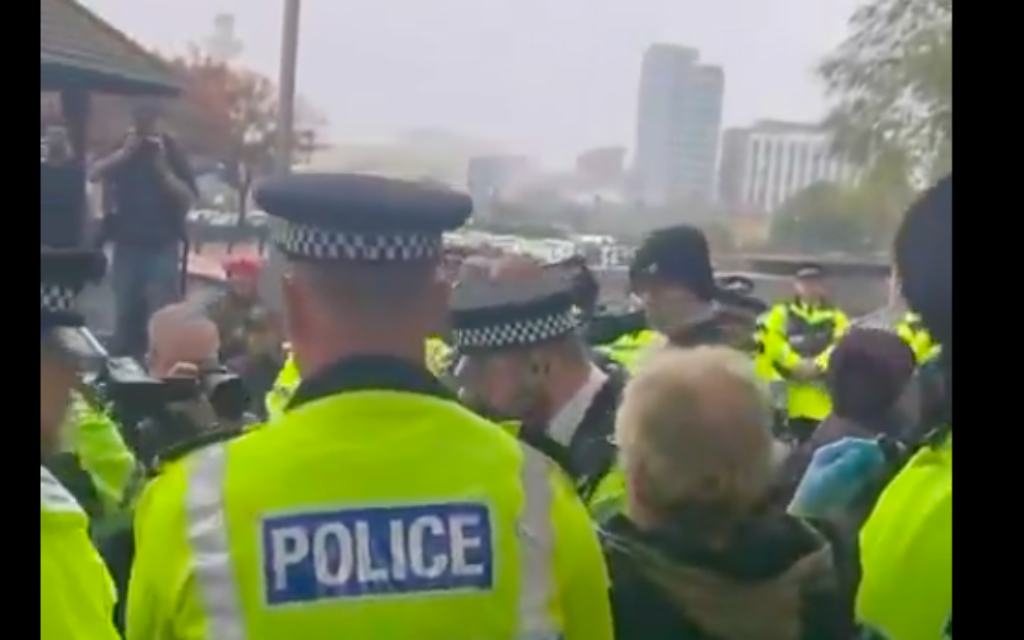
Palestine Action protesters arrested outside the Labour Party’s annual conference have once again pushed one of Britain’s most divisive political issues into the spotlight. More than 50 people were detained in Liverpool on Sunday after staging a demonstration in support of the banned group, turning the opening day of the conference into a flashpoint over free speech and counterterrorism law.
Merseyside Police confirmed the arrests in a statement released the same day.
What Happened in Liverpool
The protest was organised by Defend Our Juries, a campaign group that has been at the forefront of challenging the government’s decision to outlaw Palestine Action.
More than 250 demonstrators gathered and sat down outside the conference centre, holding up banners expressing support for the group. For a time, the scene was calm. Then dozens of officers moved in.
Police approached protesters and asked whether they intended to keep displaying their signs. Those who continued were escorted away and informed that they were being detained under the Terrorism Act.
According to police, the people taken into custody had shown material backing Palestine Action. The force said it had tried to balance the public’s right to lawful protest with its duty to maintain order and keep people safe.
A Famous Face Among Those Detained
One of the most recognisable people arrested was Robert Del Naja, the singer from the English band Massive Attack. His detention quickly drew attention to the protest far beyond Liverpool and highlighted how the campaign has attracted support from well-known cultural figures.
Why Palestine Action Was Banned
The Labour government proscribed Palestine Action as a terrorist organisation in July 2025, using powers under the Terrorism Act. Once a group is proscribed, openly showing support for it, including by carrying signs or wearing related symbols, can become a criminal offence.
That legal reality is what turns a peaceful sit-down protest into a mass arrest. Supporters of the ban argue it is necessary for public security, while critics insist it criminalises ordinary political expression.
The ban has faced legal challenges. In June, London’s Court of Appeal upheld the government’s decision, ruling that the proscription was lawful. The case is now heading to the UK Supreme Court, which will have the final say.
Putting the Issue on the Prime Minister’s Agenda
The timing of the protest was deliberate. Demonstrators chose the first day of the Labour conference, hoping to force the question of the ban onto the agenda of Prime Minister Andy Burnham, who was attending his party’s major annual gathering.
For campaigners, the conference offered a stage where party members, journalists and senior ministers would all be present, making it harder for the government to ignore their message.
Voices From the Protest
Those who took part were clear that they knew what they were risking. One demonstrator said that being arrested felt minor compared with the suffering endured by people in Gaza, and argued that the stand was worthwhile because it was ultimately about the right to speak freely.
Another protester stressed how varied the crowd was. They pointed out that priests, healthcare workers and many others with strong moral convictions had come together, all motivated by a sense of right and wrong.
This diversity has become a defining feature of the campaign. Rather than a small group of activists, the movement has drawn in people from across society, including:
- Religious leaders and faith groups
- Doctors, nurses and other healthcare staff
- Artists and musicians
- Ordinary members of the public with no previous history of arrest
Amnesty International Condemns the Arrests
Kerry Moscogiuri, chief executive of Amnesty International UK, strongly criticised the police action. She described protest as one of the most powerful ways for citizens to make political leaders pay attention, and called the arrests a deeply shameful blow to freedom of expression.
She also issued a direct challenge to the new prime minister, asking whether he would change the law so that communities could gather and demonstrate on the causes they care about without fear of prosecution.
Her comments reflect wider concern among human rights organisations that counterterrorism powers are being stretched to cover peaceful political protest.
Foreign Secretary Confronted
The pressure did not stop at the conference gates. Activists also approached Foreign Secretary Ed Miliband while he was inside a restaurant in Liverpool.
They called on him to overturn the ban on Palestine Action and to formally recognise Israel’s actions in Gaza as genocide. Miliband reportedly declined to respond, and the activists eventually left.
A Movement Built on Mass Arrests
Sunday’s events are part of a much larger pattern. Since Palestine Action was outlawed, a sustained campaign of civil disobedience has spread across the country.
More than 3,600 people have now been arrested for publicly backing the group. Many of them were detained while holding simple handwritten signs stating that they opposed genocide and supported Palestine Action.
The strategy is intentional. By encouraging large numbers of people to break the law openly and peacefully, organisers aim to show how widely the ban is opposed and to place strain on the police and courts.
What Comes Next
All eyes are now on the Supreme Court, whose ruling could either cement the ban or open the door to it being overturned. Until then, campaigners have made it clear that the protests will continue.
For the Labour government, the issue presents a growing political challenge. Every mass arrest draws fresh headlines, fresh criticism from rights groups and fresh questions about where the line between national security and free speech should be drawn.
As the Liverpool conference showed, that debate is no longer confined to courtrooms. It is now playing out on the doorstep of the ruling party itself.
Author