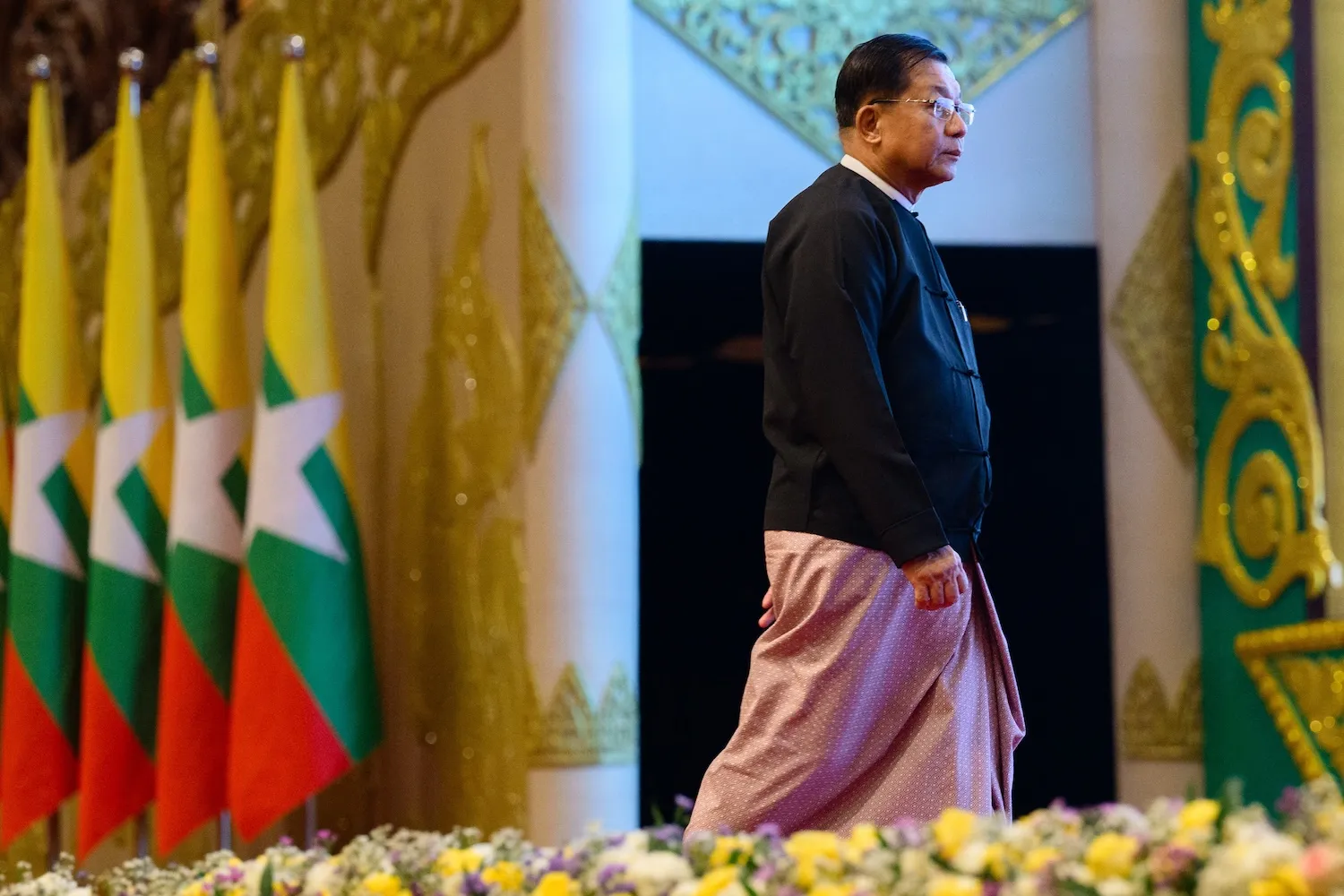
The Min Aung Hlaing Malaysia visit puts a spotlight on a deeply contested issue: the return of thousands of Myanmar nationals to a country still gripped by war. The leader of Myanmar’s military-backed government flew to Malaysia on Wednesday for a two-day trip, just days after nearly 1,500 of his countrymen were sent home from Malaysian soil.
What the Visit Involves
State-run television said Min Aung Hlaing left the capital, Naypyitaw, from a military airport on Wednesday morning. He is expected to meet Malaysian Prime Minister Anwar Ibrahim and take part in a business dialogue with members of Anwar’s Cabinet.
The trip is his fifth to an ASEAN member state, following visits to Laos, Thailand, Vietnam and Cambodia. It reflects a broader effort to rebuild ties that frayed after he removed Aung San Suu Kyi’s government in February 2021, while serving as army chief. He was sworn in as president in April after an election that critics say was designed to lock in military control.
An Uneasy Position Within ASEAN
Several ASEAN governments are engaging more with Myanmar, yet the 11-member bloc continues to keep the country’s leaders out of its top-level meetings. The 2021 takeover triggered armed resistance, and the conflict has not ended.
The Repatriation Dispute
Four days before the visit, nearly 1,500 Myanmar nationals arrived back in the country from Malaysia. Malaysia says about 5,000 people, including those returned on Sunday, have agreed to go home in stages. At the end of August, 11,804 Myanmar nationals were held in immigration detention depots across Malaysia, according to its Home Ministry.
The UN refugee agency and rights groups have criticised the transfers. They argue that security and humanitarian conditions in parts of Myanmar remain volatile, and that returnees could face persecution or forced military conscription in an active war zone. It is unclear whether any of those sent back were Rohingya.
Malaysia’s Position
Malaysia hosts about 215,600 refugees and asylum seekers registered with the UN, including roughly 126,000 Rohingya, one of the largest such communities in Southeast Asia. It is not a party to the UN Refugee Convention and treats refugees as undocumented migrants. Public hostility toward the Rohingya has grown amid worries over jobs, services and security.
Anwar has defended the policy as a diplomatic search for a long-term solution. He says Malaysia cannot host refugees indefinitely and that Myanmar must take responsibility for its own citizens.
Concerns From Monitors
The Armed Conflict Location and Event Data group warned that the meeting could help Min Aung Hlaing’s administration gain international legitimacy through cooperation on refugees. Its analyst, Sindy Ajara, said that without real steps to end the civil war, repatriation remains risky and places returnees, especially Rohingya, in immediate danger.
What to Watch Next
- Outcomes of the talks between Min Aung Hlaing and Anwar
- Whether further repatriation flights are scheduled
- Any statement on the treatment of Rohingya returnees
- ASEAN’s stance on engaging Myanmar’s leadership
The Bottom Line
For Malaysia, repatriation is a matter of policy and limits. For rights groups, it is a gamble with lives. As Myanmar’s leader seeks regional acceptance, the fate of those sent back will remain a test of whether diplomacy can be squared with safety.
Author