UK Sends Typhoon Jets to Shield Saudi Arabia From Houthi Missile and Drone Strikes
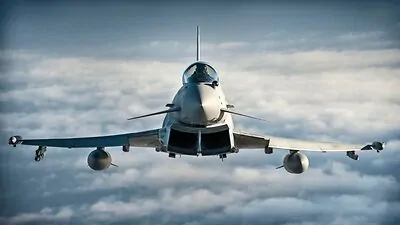
UK Typhoon jets Saudi Arabia deployment was confirmed on Tuesday, as Britain’s Ministry of Defence announced that Royal Air Force warplanes will fly protective missions over the kingdom to counter a surge in attacks from Yemen’s Houthi movement.
The ministry was careful to define the scope of the operation. The aircraft will serve in a strictly defensive capacity, intercepting incoming drones and missiles, and will not be used to strike Houthi targets inside Yemen.
What the Deployment Involves
According to the ministry’s statement, the Typhoons will conduct what it termed defensive counter-air missions aimed at protecting Saudi cities and vital national infrastructure from aerial threats.
Alongside the fighter jets, Britain is extending its air-to-air refuelling support for Saudi air operations, allowing the kingdom’s own aircraft to remain airborne for longer stretches during patrols and interceptions.
The deployment adds to a British military presence already in place. The UK has had equipment and personnel stationed in Saudi Arabia for some time specifically to help defend against Houthi air attacks, and the new mission builds on that foundation rather than starting from scratch.
Why Now: Attacks on Riyadh and Oil Facilities
The decision follows weeks of escalating violence. The Houthis, who also go by the name Ansar Allah, meaning Supporters of God, have intensified missile and drone strikes against Saudi territory. Their targets have included oil installations and, most alarmingly for the international community, King Khalid International Airport in Riyadh.
In response, the Saudi-led coalition backing Yemen’s internationally recognised government has carried out air strikes on Houthi positions, feeding a cycle of escalation that shows little sign of easing.
Defence Secretary Wes Streeting did not mince words when announcing the move. He described the ongoing Houthi attacks as despicable and singled out the strike on Riyadh’s airport as evidence of how far the group is willing to go to inflame the regional situation. He framed the Typhoon deployment as a direct answer to that escalation and said he had personally approved the expanded support.
The Energy Price Factor
Beyond solidarity with an ally, there is a domestic dimension to Britain’s decision. Reporting from London, Al Jazeera’s Camille Nedelec noted that mounting concern about energy prices played a significant part in the government’s thinking.
Instability in the Gulf, she observed, translates quickly into higher bills for ordinary households. Attacks on Saudi oil infrastructure threaten supply and push up global prices, and a British government already under pressure over the cost of living has every incentive to prevent further disruption.
The deployment, in her assessment, signals a deepening British engagement in the region’s security affairs.
A Defensive Line, Carefully Drawn
The emphasis on a purely defensive role is significant. Britain has in the past participated in offensive operations against the Houthis, including strikes on launch sites and military infrastructure in Yemen. This mission is deliberately narrower.
Several factors likely shaped that choice:
Keeping the mission defensive reduces the risk of Britain being drawn into a wider conflict in Yemen.
It makes the deployment easier to justify to a sceptical public and parliament.
It aligns with Saudi Arabia’s immediate need, which is protection of its own territory rather than additional offensive firepower.
Whether that line can hold if attacks intensify remains an open question. Defensive interceptions do not address the source of the threat, and pressure to go further could build if Houthi strikes continue to find their mark.
Egypt Hesitates on Its Own Commitment
Britain’s swift decision stands in contrast to the deliberations unfolding in Cairo. A day before the UK announcement, Egypt’s parliament postponed for a second consecutive day a vote on President Abdel Fattah el-Sisi’s request for authorisation to provide military support to Saudi Arabia should the kingdom ask for it.
State media reported that lawmakers will reconvene on October 26 to take up the matter. The repeated delays suggest a degree of caution within Egypt about committing forces to a conflict that has already drawn in multiple regional and international actors.
The Wider Picture
The Houthi campaign against Saudi Arabia is one front in a broader pattern of instability stretching across the Middle East. Airspace advisories remain in force across much of the Gulf, airlines continue to cancel and reroute flights, and energy markets are jittery.
Against that backdrop, Britain’s deployment serves multiple purposes at once. It reassures a key partner, protects infrastructure that matters to the global economy, and demonstrates that London intends to remain a security player in the region.
What to Watch
The effectiveness of the Typhoon mission will depend on how quickly the aircraft can be integrated into Saudi air defence operations and whether they can reliably intercept the drones and missiles the Houthis have been launching.
Equally important is the political trajectory. If the Yemeni conflict escalates further, Britain and other partners may face difficult choices about whether a defensive posture is sufficient. For now, the message from London is clear: the kingdom’s skies will be defended, but Britain is not looking to take the fight to Yemen.
Author