






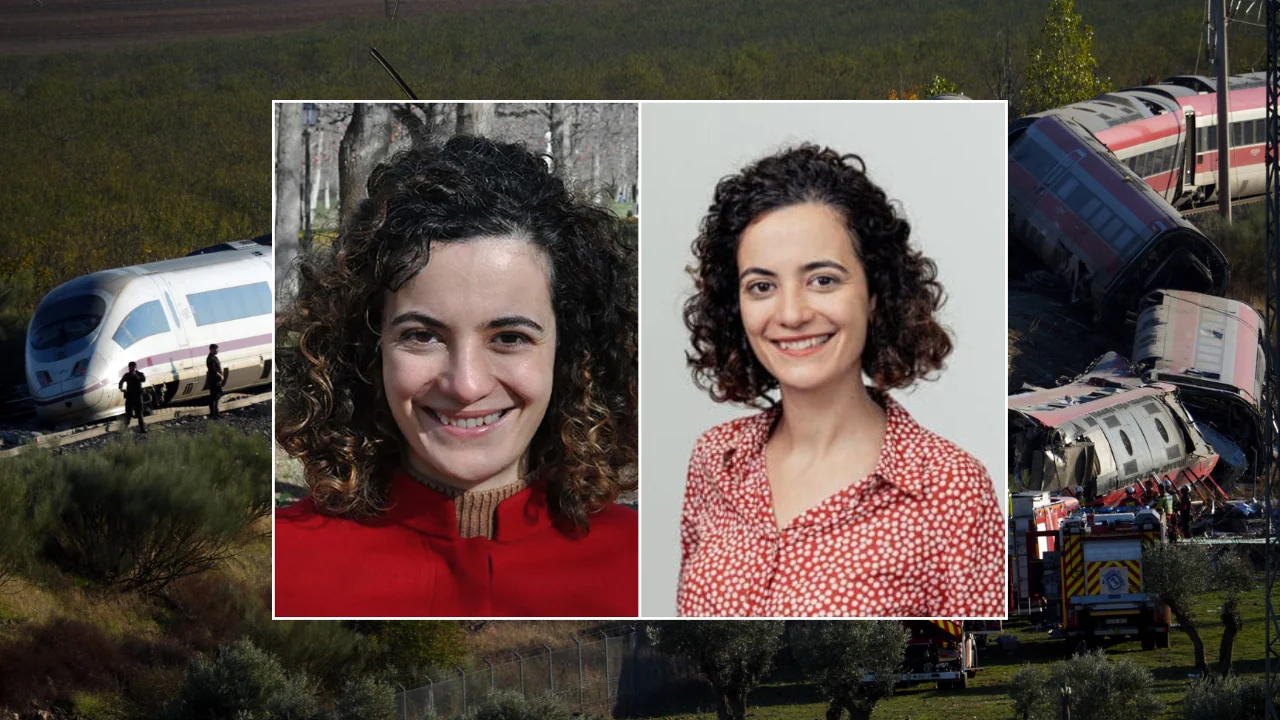
Marta Shahbazi, an acclaimed University of Cambridge researcher whose work illuminated the earliest stages of human life, was among the 69 people killed when two trains collided near Urda, south of Madrid, on Wednesday. She was travelling to accept a prize honouring her scientific contributions when the disaster struck.
A Journey to Celebrate Her Work
Dr Shahbazi had been named the recipient of an award from the Spanish Society for Developmental Biology, recognising her research into early human development. She was on her way to a conference in El Rompido, in the southern region of Andalusia, where she was due to collect the honour in person.
The journey ended in tragedy when a high-speed Renfe service operated by the Spanish state slammed into the back of a stationary train run by the private company Iryo. More than 540 passengers were aboard the two trains. The collision ranks among the deadliest rail accidents in modern European history and is Spain’s worst since 2013. The Spanish government declared three days of national mourning.
A Pioneer in Embryo Research
Shahbazi led her own research group, the Shahbazi Laboratory, at the MRC Laboratory of Molecular Biology on the Cambridge Biomedical Campus, where she held the position of affiliate associate professor. Her work focused on cell biology and the mechanisms governing the first steps of human embryonic development, including how errors at that stage can lead to pregnancies that fail.
The LMB described her as an inspiring, gifted and passionate scientist and said her death represented a profound shock and an enormous loss for the institute. Her research had earned her many awards and prizes over the course of her career.
She was also listed as a principal investigator at the University of Cambridge’s Stem Cell Institute, where she held affiliate roles as principal investigator and assistant professor.
The “Mother Scientist”
Beyond her laboratory achievements, Shahbazi was known for speaking openly about the challenge of combining a demanding research career with raising a family. A wife and mother of two young children, she described herself as a “mother scientist” and wrote thoughtfully about balancing those two parts of her life. The LMB said she had become a widely admired role model for others navigating the same path.
Her willingness to address the realities of parenthood in academia resonated with many colleagues, particularly women in science who often face pressure to choose between family and career advancement.
Tributes From Colleagues
Professor Bertie Gottgens, director of the Cambridge Stem Cell Institute, said the community was shocked and deeply saddened. He noted that Shahbazi was highly respected across both institutes for her groundbreaking work on early human development and valued for her collaborative approach. Her creativity, enthusiasm and generosity, he said, would be greatly missed.
The tributes reflect a scientist who was not only accomplished but also regarded with warmth by those who worked alongside her.
From Madrid to Cambridge
Shahbazi’s path to Cambridge began in Spain. She completed her doctorate at the Spanish National Cancer Research Centre before moving to the United Kingdom as a postdoctoral fellow at the University of Cambridge. In 2020, she joined the LMB, one of the world’s most distinguished molecular biology institutes, where she established her own group.
Her career trajectory, from a Spanish doctoral programme to leading a laboratory at a premier British research centre, exemplified the international nature of modern science and the mobility of talented researchers across borders.
News Breaks Through Family Connection
Confirmation of her death first emerged through a social media post by CiMUS, a research centre in Santiago de Compostela where Shahbazi’s aunt works. The personal connection underscored the way the disaster rippled through families and professional communities alike.
The Wider Tragedy
While Shahbazi’s death has drawn particular attention within the scientific world, she was one of 69 people who lost their lives in the crash. Investigators are examining how a high-speed train came to collide with a stationary one on the same stretch of track, a scenario that modern signalling and safety systems are designed to prevent.
The scale of the disaster has prompted national grief in Spain and renewed scrutiny of rail safety on a network that is generally regarded as among Europe’s most advanced.
A Legacy in Science
Shahbazi’s research addressed questions of fundamental importance: how a fertilised egg develops into an embryo, what goes wrong when that process fails, and how a better understanding might one day help people struggling with infertility and pregnancy loss. Her findings contributed to a field that sits at the intersection of basic biology and real human need.
Her laboratory colleagues, students and collaborators now face the task of continuing that work without her. The award she was travelling to receive stands as a final recognition of a career that, by all accounts, was still rising.
Remembering Marta Shahbazi
To those who knew her, Shahbazi was more than a brilliant researcher. She was a mentor, a collaborator, a mother and an advocate for a more humane vision of scientific life. Her death on the way to celebrate her achievements has left a void in Cambridge, in Spain and in the global community of developmental biologists who admired her work.
The outpouring of tributes in the days since the crash offers some measure of the impact she made in a career cut short far too soon.
Author