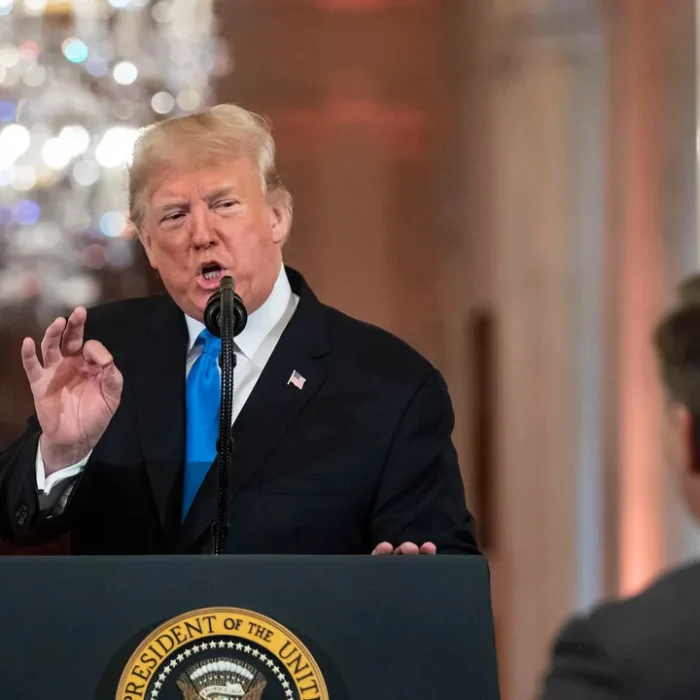





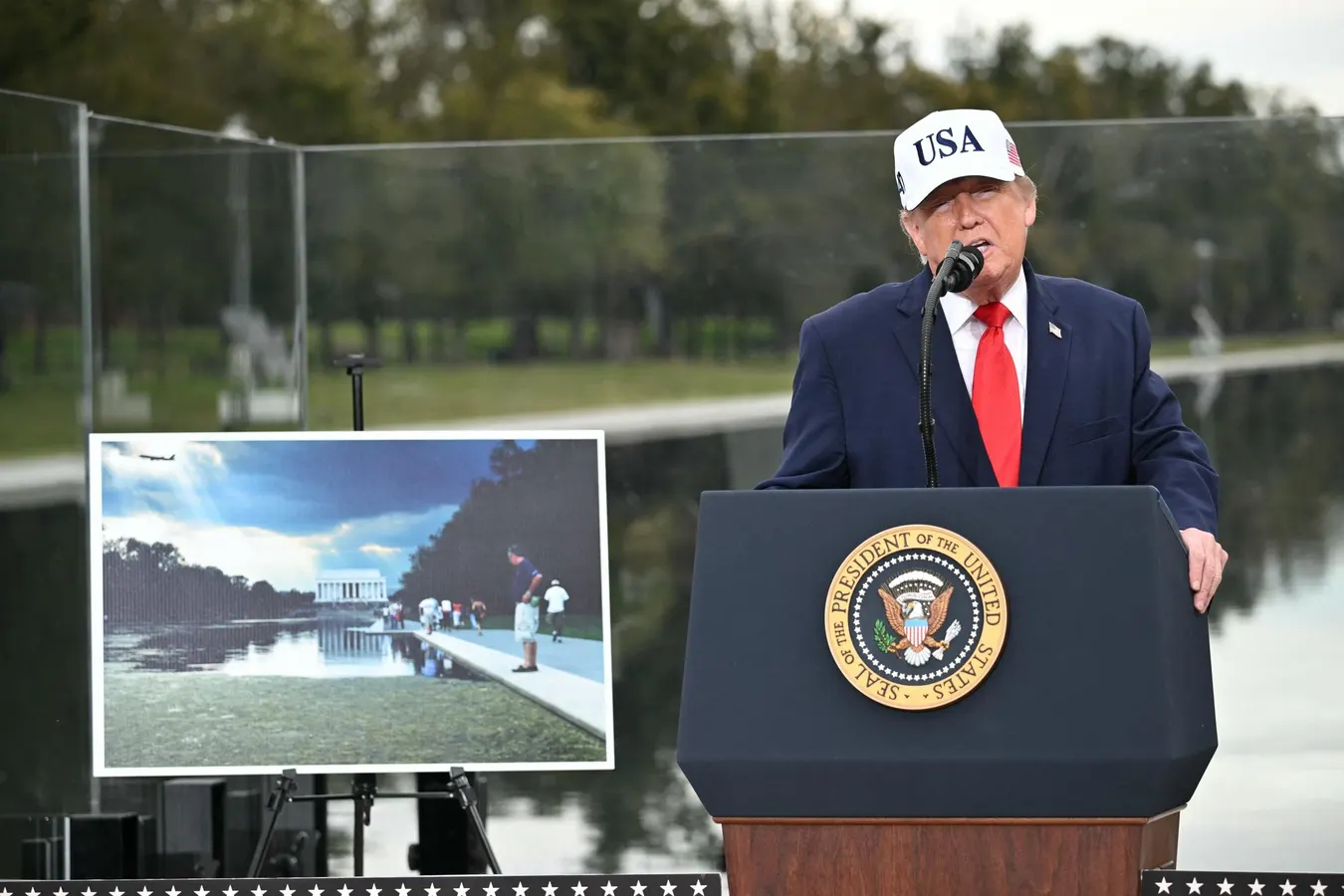
Trump Reflecting Pool speech coverage drew a sharp rebuke from the president on Tuesday morning, as voters cast ballots in the midterm elections. Donald Trump took to Truth Social to insist that his Monday appearance at the Lincoln Memorial Reflecting Pool had been misrepresented, arguing it was never intended as his closing argument for the campaign and that reporters had twisted a lighthearted remark about renaming the landmark after himself.
“It Was a News Conference”
In his post, Trump objected to descriptions of the event as a “final midterms speech” attended by only around 60 people. He characterised it instead as a news conference, closed to the public and open solely to journalists, with no invited audience. The framing was notable because Trump did not take any questions from reporters during the appearance, which is the defining feature of a press conference.
He went on to say that his actual closing message had been delivered the previous day at campaign rallies in Iowa and Kansas, two states with competitive Senate races.
A Puzzling Choice of Venue
The dispute over labels masks a more substantive question about how Trump chose to spend the final day before the election. Republican strategists had anticipated that he would crisscross battleground states, rallying supporters in races where the party was fighting to hold its congressional majorities.
Instead, the president appeared beside the Reflecting Pool, which stretches between the Lincoln Memorial and the Washington Monument, and devoted more than half of his remarks to renovation projects in the capital. Those projects have not been popular with voters, and the decision to highlight them on election eve struck many observers as an odd allocation of the president’s time and attention.
Trump’s insistence that the event was not his closing speech may be an effort to deflect criticism that he failed to make a final push in the places where it mattered most.
The Renaming Joke
The remark that generated the most attention came when Trump told reporters the administration was giving serious consideration to renaming the landmark the “Trump Reflecting Pool.” He immediately added that he was only kidding and asked the press not to report the comment, predicting that outlets would clip it and present it as a genuine plan.
That is, in Trump’s telling, exactly what happened. He singled out the Daily Mail for treating the joke as a serious proposal and accused the outlet of pretending he had announced an actual name change. He levelled similar criticism at Democratic Representative Ted Lieu of California, who had seized on the comment.
Why the Joke Landed Badly
Trump’s sensitivity to the renaming story reflects a broader pattern. Throughout his presidency he has faced accusations of seeking to attach his name to public institutions and monuments, and critics have portrayed his focus on Washington landmarks as vanity rather than public service. A quip about naming a national monument after himself, even one explicitly flagged as humour, fed directly into that narrative.
With polls showing Republicans at risk of losing the House and possibly the Senate, the president appeared keenly aware that the story could reinforce perceptions of self-absorption at a moment when voters were focused on the cost of living, the war with Iran and fuel prices.
The Media as Target
Attacking press coverage has long been a reliable tactic for Trump, particularly when the underlying story is unflattering. By reframing the controversy as a case of dishonest reporting, he sought to shift attention from the substance of his election-eve choices to the conduct of the outlets covering them.
The strategy has its limits. The president’s own words, including the renaming remark and his request that it not be reported, were captured on camera and widely available. The absence of questions from reporters also undercut his claim that the event was a news conference rather than a speech.
Unity Message Overshadowed
The Reflecting Pool appearance had included a call for Americans to unite behind the restoration of the landmark, a theme the president presented as transcending partisan division. That message was largely lost amid the controversy over the renaming comment and the debate over whether the event constituted a closing argument at all.
Trump also used the occasion to comment on the Iran war, noting a drop in oil prices and suggesting the conflict barely qualified as a war given the months-long pause in active fighting.
What It Reveals
The episode offers a window into the president’s state of mind as results began to arrive. Rather than projecting confidence or focusing on turnout, Trump spent election morning relitigating media coverage of a monument renovation. For a leader facing a potential loss of congressional control, the choice of priorities drew its own share of commentary.
Whether the Reflecting Pool event was a speech or a news conference, a closing argument or a sideshow, its legacy may be as a symbol of a campaign’s final day spent on something other than the campaign.
The Bigger Picture
As votes were counted, the question of what Trump said beside a restored pool in Washington quickly gave way to the larger question of what voters had decided. Early results pointed to significant Democratic gains, including control of the House. In that light, the argument over whether the president’s remarks were his final pitch may matter less than the fact that, for many voters, the pitch did not land.
Author