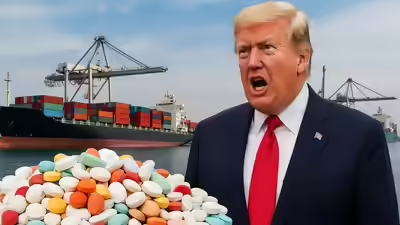
If you’ve ever wondered why Americans pay so much more for the same medications that people in other countries get at a fraction of the price, President Trump is apparently wondering the same thing — and he’s done waiting for an answer. On Thursday, he put pen to paper on an executive order that slaps a staggering 100% tariff on certain imported pharmaceutical drugs. The message to global drugmakers is clear: either play fair with American consumers, or pay a very steep price to sell here.
So What Drugs Are We Actually Talking About?
Not every pill crossing the border is affected. The 100% tariff zeroes in specifically on patented drugs — the kind that carry brand-name price tags — that are sold in the U.S. without any “most favored nation” pricing agreement in place. What does that mean in plain English? It means the drug company hasn’t committed to charging Americans the same price that other wealthy nations already negotiate for the exact same medication.
For years, countries like Germany, Canada, and France have paid dramatically less for identical drugs because their governments negotiate hard on price. The U.S. has largely not done the same — and this executive order is Trump’s way of forcing the issue.
There Are Three Ways Out — But None of Them Are Free
The administration isn’t just punishing companies — it’s dangling incentives too. Think of it as a structured deal with three tiers, each offering a better outcome in exchange for a bigger commitment.
At the first level, companies that agree to shift their drug manufacturing operations to U.S. soil will see their tariff rate slashed from 100% down to a much more manageable 20%. That’s still a real cost, but it’s a world away from the full levy.
Step it up further — commit to both building in America and signing a most-favored-nation pricing deal with the Department of Health and Human Services — and the tariff disappears entirely while the U.S. facility is still under construction. That’s a significant carrot for companies willing to make a long-term bet on American manufacturing.
And for the big players who need a moment to think it over, there’s a 120-day grace period before the tariffs officially kick in. That’s four months to negotiate, restructure, or commit — which, in the pharmaceutical world, is not a lot of runway.
Good News If You’re Swiss, Japanese, or European
Not every country faces the full brunt of this policy. Nations that already have trade agreements with the United States — including Switzerland, Japan, South Korea, and the entire 27-member European Union — get a different deal. Their pharmaceutical exports into the U.S. will face a 15% tariff instead, in line with existing trade agreement terms.
That distinction matters enormously. Switzerland alone is home to pharmaceutical behemoths like Novartis and Roche. EU-based manufacturers represent a huge slice of the drugs Americans use every day. A 15% tariff is still a cost increase — but it’s a far cry from doubling the price of entry.
Why Is Trump Doing This Now?
This didn’t come out of nowhere. The push to bring pharmaceutical manufacturing back to American soil has been building for years — accelerated dramatically by the COVID-19 pandemic, which laid bare just how dangerously dependent the U.S. had become on foreign suppliers for critical medicines and ingredients. When global supply chains seized up, American hospitals and pharmacies felt it directly.
Beyond supply chain resilience, there’s the pricing argument. American patients routinely pay two, three, even ten times more than patients elsewhere for the same branded medications. The most-favored-nation concept is a direct attempt to close that gap — and the tariff is the stick that makes companies take that conversation seriously.
The real question now is how the pharmaceutical industry will respond. Will major drugmakers accelerate domestic investment plans? Will they negotiate pricing deals to avoid the levy? Or will they push back legally and politically? The next 120 days will tell us a great deal about how this chapter ends — and what it ultimately means for the cost of medicines on American pharmacy shelves.
Author