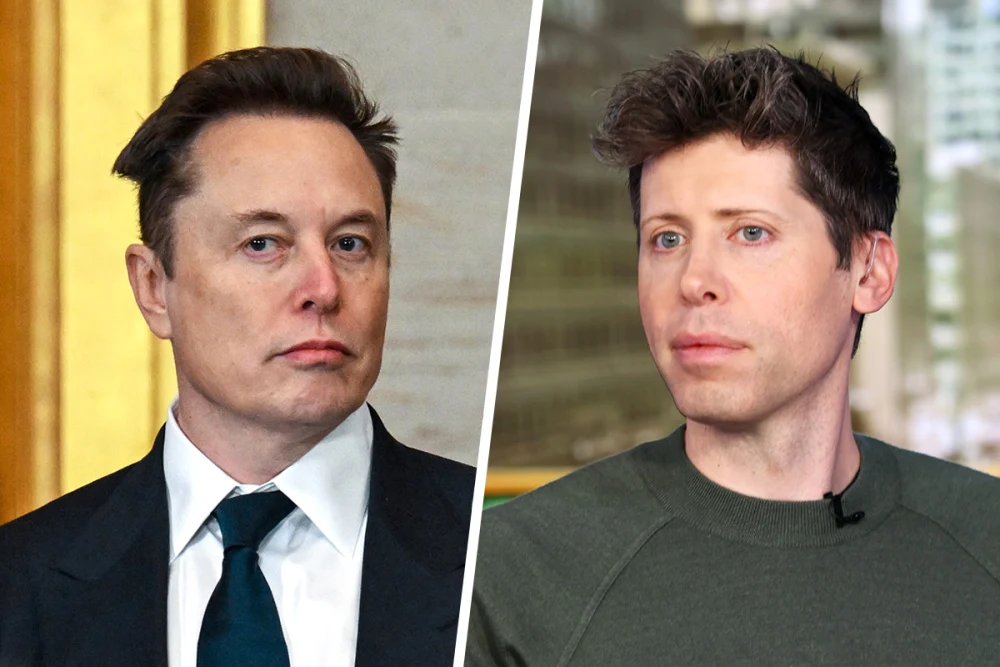
The Musk vs Altman legal showdown has wrapped its first major chapter, with a jury ruling that Elon Musk’s case against OpenAI’s CEO had run past the statute of limitations. Musk, predictably, has vowed to appeal. But here’s the twist — the jury didn’t actually examine the heart of Musk’s argument. They never weighed in on whether OpenAI deceived him, betrayed its founding mission, or quietly transformed itself from a humanity-first nonprofit into a money-printing juggernaut.
After reading the entire trove of documents released during the trial — yes, even some of the eye-glazing corporate registration forms — one uncomfortable conclusion keeps surfacing: Musk, despite being Musk, may actually have a point.
A Nonprofit Built on Idealistic Foundations
The early communications between Musk and Altman paint a remarkably different picture of OpenAI than the one we see today. The story begins around 2015, when Musk was deeply invested in fears that artificial general intelligence (AGI) could fall into the wrong hands. His worry wasn’t just about technology — it was about who would control it.
In one of the foundational emails, Sam Altman pitched OpenAI as a “mission-driven” venture whose core purpose was to develop the first general AI as a tool for human empowerment. Safety, he wrote, must be a “first-class requirement.” Governance would rest with a small board, and any technology developed would belong to the foundation, used “for the good of the world.”
Musk’s response was as direct as it gets: “Agree on all.”
By late 2015, the two were discussing serious money. Musk made it clear that the governance model — that no single entity could dominate the project — was essential. Altman assured him repeatedly that he was “very focused on getting this right.”
The Mission Statement That Set the Stage
When the founding mission statement was drafted, the language was unambiguous. OpenAI’s purpose was framed as advancing AI “unencumbered by an obligation to generate financial returns.” Altman even strengthened the wording, emphasizing that the lack of financial pressure would let the company focus on the “maximal positive human impact.”
The legal incorporation in Delaware reinforced this: OpenAI was registered as a nonprofit organized “exclusively for charitable and/or educational purposes,” explicitly stating that it was “not organized for the private gain of any person.”
This is the foundation Musk says he believed in. And on paper, it’s exactly what he was promised.
The Cracks Begin to Show
By 2017, internal communications hint at growing tension. Shivon Zilis, who acted as a go-between for Musk and OpenAI’s leadership, relayed concerns from co-founders Greg Brockman and Ilya Sutskever — primarily about Musk’s desire for outsized control.
To OpenAI’s credit, this is the strongest part of their counter-argument. The whole point of the project was to prevent any single individual from dominating AGI development. If Musk truly wanted majority control — as multiple internal documents suggest — that ambition contradicted the very mission he was championing.
Musk’s response when told they wanted to limit his power? Pure Musk. He told Zilis the team should “go start a company” and that he’d “had enough.”
The B-Corp Bombshell
Here’s where things get genuinely damning. In late 2017, Sutskever wrote to Musk laying out his concerns about both governance and AGI control. Musk fired back with one of his most direct ultimatums:
“Either go do something on your own or continue with OpenAI as a nonprofit. I will no longer fund OpenAI until you have made a firm commitment to stay.”
But behind the scenes, OpenAI’s leadership was already moving in a very different direction.
A November 2017 memo by Greg Brockman is one of the most revealing documents in the entire trove. In it, Brockman openly admits:
- He and Sutskever wanted to convert OpenAI into a B-corp (a for-profit hybrid).
- They could not honestly tell Musk they were committed to the nonprofit structure.
- If they switched three months later, it would be “a lie.”
- They couldn’t pursue the for-profit shift “without a very nasty fight.”
In short, internally, the path away from the nonprofit model was already being mapped out — even as the public narrative said otherwise.
Money, Microsoft, and a Fundamental Shift
In 2018, Zilis informed Musk that the leadership was weighing several options: stay nonprofit, raise equity funding, or pursue a private token offering. Around this time, Musk also began trying to recruit OpenAI talent for Tesla’s AI work, marking the beginning of the end of his involvement.
By 2020, OpenAI’s deal granting Microsoft an exclusive license to GPT-3 had Musk publicly fuming. On X (then Twitter), he wrote that OpenAI was “essentially captured by Microsoft.” Altman defended the move as the only viable way to raise the billions required to build AGI — but Musk called it hypocritical, demanding the company “at least change the name.”
By 2022, Musk hit the boiling point. After learning of OpenAI’s $20 billion valuation, he texted Altman directly:
“I provided almost all of the seed, A and most of B round funding. This is a bait and switch.”
Altman responded that the capped-profit structure was the only path forward to secure the capital needed while “giving AGI to humanity.”
The Boardroom Drama of 2023
In late 2023, Altman was famously fired by the OpenAI board — only to be reinstated days later after intense behind-the-scenes coordination involving Microsoft, board members, and Altman himself.
Internal exchanges between Altman, Microsoft’s Satya Nadella, and board member Bret Taylor reveal extensive planning, including:
- Strategies for public messaging
- Coordinated statements
- Backup plans to recreate OpenAI elsewhere if the board didn’t relent
- A ready-made subsidiary as a fallback option
It’s a striking glimpse into how thoroughly Microsoft had become integrated into OpenAI’s future — and how far things had moved from the original “for humanity” framing.
The Document That Says the Quiet Part Loud
Perhaps the most jarring snippet comes from a Brockman document, with internal commentary that reads almost like a confession:
“It is better for us to become increasingly kings of this industry. The choice defines us. Being the Kings of AI is not so bad.”
This is a long way from “for the good of the world.”
So… Was Musk Right?
Musk lost the case — but on a procedural technicality, not on the substance of his claims. And reading through the documents, the substance is hard to ignore. He poured money into what he believed was a charitable mission to safeguard AI for humanity. The internal communications show that OpenAI’s leadership eventually pivoted toward a for-profit structure, sometimes openly acknowledging the move would be a betrayal of what they had told him.
Yes, Musk wanted too much control. Yes, he’s hardly a model of consistency. And yes, his current AI project Grok hasn’t exactly earned a humanitarian reputation. But on the central allegation — that he was sold one vision and delivered another — the documents tell a story that’s tough to spin in OpenAI’s favor.
Sometimes the worst person you know really does make a great point.
Author