The Legionnaires’ disease NYC outbreak on the Upper East Side has now been traced to dozens of buildings, with city officials confirming that 31 cooling towers tested positive for the bacteria behind the illness.
Twenty-two people are currently hospitalized.
What the City Found
The Department of Health tested 183 buildings equipped with cooling towers across the affected area.
Of those, 31 came back positive in initial testing.
Any building that tested positive is now required to clean and disinfect its cooling tower immediately. The city has released the full list of addresses.
Buildings That Tested Positive and Have Been Cleaned
- 180 East End Ave.
- 1750 York Ave.
- 1660 Second Ave.
- 1438 Third Ave.
- 1511 Third Ave.
- 1551 Third Ave.
- 1071 Fifth Ave.
- 1080 Fifth Ave.
- 1001 Fifth Ave.
- 240 E. 82nd St.
- 8 E. 83rd St.
- 145 E. 84th St.
- 117 E. 85th St.
- 125 E. 87th St.
- 152 E. 87th St.
- 120 E. 87th St.
- 501 E. 87th St.
- 168 E. 88th St.
- 160 E. 88th St.
Buildings That Tested Positive and Await Cleaning
- 1875 Second Ave.
- 1110 Fifth Ave.
- 153 E. 78th St.
- 135 E. 79th St.
- 300 E. 79th St.
- 238 E. 81st St.
- 160 E. 84th St.
- 114 E. 85th St.
- 401 E. 88th St.
- 333 E. 91st St.
- 354 E. 91st St.
- 312 E. 95th St.
According to the city, all remaining buildings on this list are scheduled to be cleaned by Saturday.
What Residents Should Know
Despite the alarming address list, officials have been clear about one thing: ordinary daily activities remain safe.
The city says residents in affected neighborhoods can:
- Use their air conditioners normally
- Shower without concern
- Drink the tap water
That guidance may seem counterintuitive given that a bacterial contamination is involved. But it reflects how Legionella actually spreads.
Why Cooling Towers Are the Problem
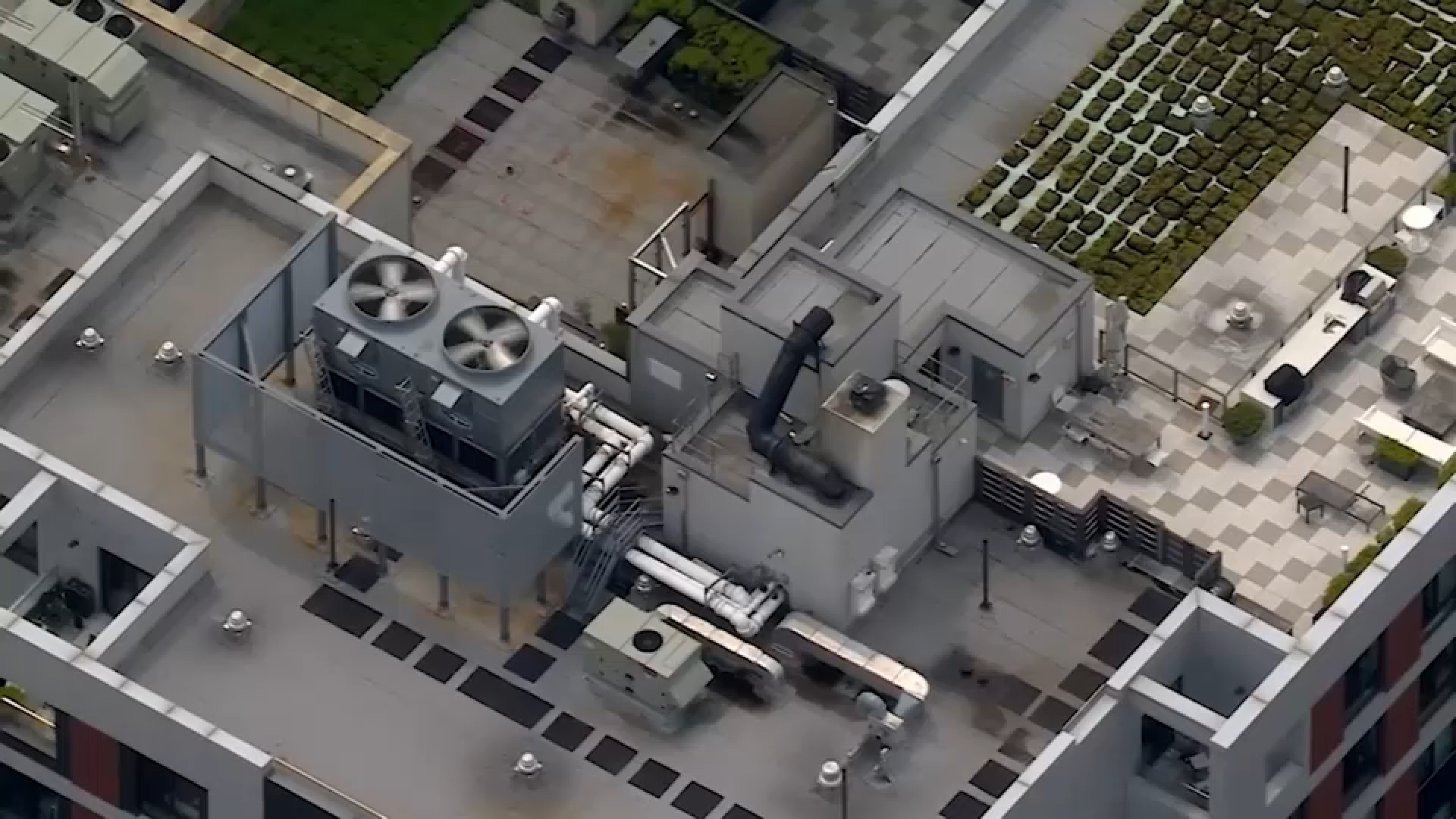
Legionella bacteria thrive in warm water systems. Cooling towers — the large rooftop units that dissipate heat from building air conditioning systems — are ideal breeding environments.
The danger arises when contaminated water is aerosolized. Cooling towers release fine mist into the air, and that mist can carry bacteria into the surrounding neighborhood, where people breathe it in.
This is why the disease clusters geographically around a source rather than spreading person to person.
It also explains why showering and drinking water remain safe. The city’s drinking water supply is a separate system entirely.
What Legionnaires’ Disease Actually Is
Legionnaires’ is a severe form of pneumonia caused by Legionella bacteria.
Symptoms typically appear within two to ten days of exposure and can include:
- Fever
- Cough
- Shortness of breath
- Muscle aches
- Headache
It is treatable with antibiotics, but it can be serious — particularly for older adults, smokers, and people with weakened immune systems or chronic lung conditions.
Anyone in the affected area experiencing flu-like symptoms with respiratory involvement should seek medical attention and mention their location.
The Response
The city’s approach has been to test broadly and remediate quickly.
Testing 183 buildings and identifying 31 positives is an aggressive sweep. Requiring immediate disinfection — with a deadline of Saturday for the remaining sites — suggests officials are treating containment as urgent.
Publishing the addresses is also notable. It gives residents information they can act on, rather than leaving them to guess whether their building is implicated.
What to Watch
The hospitalization count is the number that matters most. Twenty-two people are currently receiving treatment.
Because Legionnaires’ has an incubation period of up to ten days, additional cases may still emerge even after the cooling towers are disinfected. The bacteria may have already been inhaled by people who are not yet symptomatic.
For now, the guidance is straightforward: normal activities are safe, but anyone in the affected neighborhoods who develops respiratory symptoms should not wait to be seen.
Author