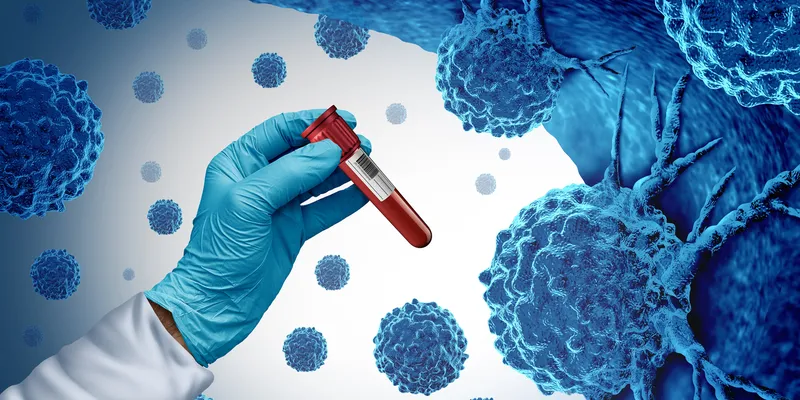
A new blood test developed at UCLA can simultaneously screen for multiple cancers and liver conditions — for under $20 — by reading chemical signals on DNA fragments floating through your bloodstream.
The problem with finding cancer late
Most cancers, caught early, are survivable. Most cancers, caught late, are not. That gap — between a stage one diagnosis and a stage four one — is often the difference between life and death, and yet our tools for catching cancer before it spreads have remained frustratingly limited.
A team of scientists at UCLA believes they may have found a better way. Described in the journal Proceedings of the National Academy of Sciences, their new blood test — called MethylScan — can detect multiple cancers, liver diseases and organ abnormalities from a single sample, simultaneously, at a cost that could eventually make broad population screening realistic.
“Early detection is crucial. Survival rates are far higher when cancers are caught before they spread. If you detect cancer at stage one, outcomes are dramatically better than at stage four.”
— Dr. Jasmine Zhou, senior author and professor of pathology & laboratory medicine, UCLA
Your blood already knows what’s happening inside you
Every day, somewhere between 50 and 70 billion cells in the human body die. As they break down, they release tiny fragments of their DNA into the bloodstream — what scientists call cell-free DNA, or cfDNA. Because cells from every organ contribute to this circulating pool, the blood becomes a kind of molecular diary of everything happening throughout the body.
The concept of reading that diary to detect cancer — known as a liquid biopsy — is not new. Some existing tests already scan blood for mutations in tumor DNA. But those tests tend to focus on a narrow set of genetic changes, require expensive, deep sequencing, and are often limited to detecting one type of cancer at a time.
MethylScan takes a different approach entirely. Instead of hunting for mutations, it reads DNA methylation — chemical tags that attach to DNA and help regulate how genes are switched on and off. These tags are highly tissue-specific, meaning different organs leave different methylation fingerprints on the DNA they shed. Crucially, those fingerprints change when cells become cancerous or diseased.
“DNA methylation reflects the health status of a tissue. It’s a very informative signal.”
— Dr. Wenyuan Li, co-corresponding author, UCLA
Cutting through the noise — cleverly and cheaply
There’s a catch. About 80 to 90 percent of cell-free DNA in the blood comes not from solid organs, but from normal blood cells. That overwhelming background makes it extremely difficult — and prohibitively expensive — to detect the faint signals that might indicate early disease in, say, the liver or lungs.
The UCLA team developed a technique to essentially clean up that noise before sequencing. Using specialized enzymes, they selectively cut away unmethylated DNA fragments — which largely originate from blood cells — leaving behind a much richer concentration of methylated DNA from solid organs. A genome-wide hybridization panel further enriches this signal, effectively amplifying the information most likely to reveal disease.
The result: dramatically less sequencing is needed, which dramatically lowers the cost. The researchers estimate that an effective sequencing depth of 300× per sample can be achieved using just 5 gigabytes of data — which would cost under $20 if data processing costs fall below $4 per gigabase. For comparison, many current liquid biopsy tests can run into the hundreds or even thousands of dollars.
What the early results show
The team tested MethylScan on blood samples from 1,061 people — a mix of cancer patients (liver, lung, ovarian, stomach), individuals with various liver conditions (hepatitis B, hepatitis C, alcohol-related liver disease, metabolic liver disease), people with benign lung nodules, and healthy participants. Machine learning algorithms were then used to interpret the complex methylation patterns.
For multi-cancer detection, MethylScan achieved a specificity of 98% — meaning very few false positives — while detecting around 63% of cancers across all stages and approximately 55% of early-stage cases. In high-risk liver cancer surveillance (patients with cirrhosis or hepatitis B), the test detected nearly 80% of cases.
Beyond detection, the methylation data also helped pinpoint which organ a disease signal was coming from — critical information for deciding what follow-up tests or imaging to order. The test could even distinguish between different types of liver disease, correctly classifying about 85% of patients, which could one day reduce the need for invasive liver biopsies.
“Being able to trace signals back to their source is important because a positive blood test needs to be followed by imaging or other diagnostic procedures directed at the right organ.”
— Dr. Wenyuan Li
What comes next
These are early results, and the researchers are clear that larger prospective clinical trials will be needed before MethylScan could be used in real-world screening programs. A study of 1,061 participants, however promising, is a proof of concept rather than a green light for clinical deployment.
But the direction is compelling. If the test holds up in larger trials, it could represent something genuinely new in preventive medicine: a single, affordable blood draw that functions like a body-wide health radar — scanning organs for distress signals before symptoms ever appear.
“This study demonstrates that blood-based methylation profiling can deliver clinically meaningful information across multiple diseases. It’s an exciting advancement that brings us closer to realizing the dream of a single assay for universal disease detection.”
— Dr. Jasmine Zhou
The dream, as Zhou frames it, is a single test that catches cancer, liver disease, and organ damage early — before damage becomes irreversible, and before the window for meaningful treatment closes. MethylScan is not yet that test. But it may be the clearest step toward it we’ve seen.
Author