Alberta Separation Referendum October 2026 Set to Spark National Debate
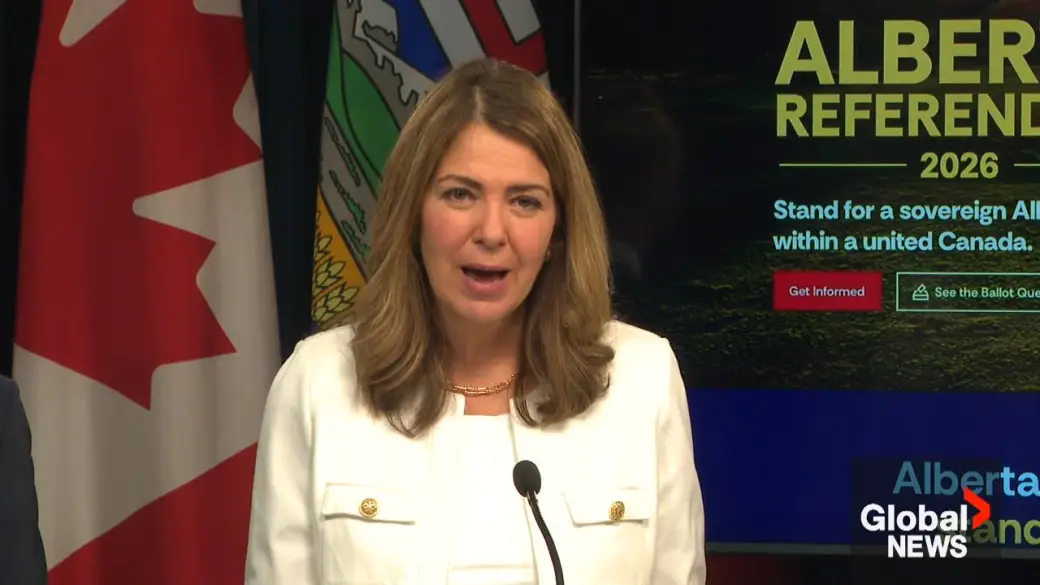
The Alberta separation referendum October 2026 is now officially on the calendar, and it’s already shaping up to be one of the most consequential political moments in modern Canadian history. Premier Danielle Smith confirmed on Thursday that her United Conservative Party government will hold a referendum on October 19, asking Albertans whether they want to stay in Canada or move toward a binding vote on separation.
The announcement has set off intense political reactions across the country, raising serious questions about Canadian unity, the future of Alberta’s economy, and the political durability of Prime Minister Mark Carney’s federal Liberal government.
A Vote That Could Reshape the Country
Smith framed the upcoming referendum as a chance to settle the growing debate over Alberta’s future once and for all. In her televised address, she said it was time to “have a vote, understand the will of Albertans on this subject, and move on.”
The question on the ballot will be clear and historic:
“Should Alberta remain a province of Canada, or should the government of Alberta commence the legal process required under the Canadian Constitution to hold a binding provincial referendum on whether or not Alberta should separate from Canada?”
While this vote is not itself a binding separation referendum, it would be the first formal step in that legal process if Albertans choose that path.
The Growing Separatist Movement
The separatist push in Alberta has gained noticeable momentum over the past several months. Driven largely by the grassroots group Stay Free Alberta, the movement claims to have gathered over 300,000 signatures in support of a separation referendum.
Several factors have helped fuel the movement, including:
- Long-running frustration with federal climate and energy policies
- Concerns over Ottawa’s role in Alberta’s economy
- Anger over federal gun control measures
- Worries about rising immigration levels
- A broader sense of Western alienation from Eastern political power
Although most polls show that the majority of Albertans still want to remain part of Canada, the political pressure has grown significant enough that Smith felt she needed to act.
Smith’s Balancing Act
Premier Smith finds herself in a delicate political position. While she has consistently said that Alberta should remain part of a “United Canada,” she’s also under heavy pressure from sections of her own party and constituents who are sympathetic to separatist ideas.
In her address, she clarified her personal stance:
“The position of the UCP caucus and UCP government is to build a strong and sovereign Alberta within the United Canada. I will therefore be voting for Alberta to remain in Canada, while continuing to work each and every day to restore and strengthen provincial rights under the Canadian Constitution.”
This careful messaging is designed to walk the line between honoring her party’s broader pro-Canada position and acknowledging the political weight of the separatist movement.
A Court Ruling That Changed the Game
A major turning point came last week when an Alberta court halted Stay Free Alberta’s petition campaign. The court ruled that the group had failed in its legal obligation to consult First Nations on their treaty rights before pushing forward with the separation petition. The decision is currently being appealed.
With the grassroots petition effort stalled, Smith’s government decided to step in with its own provincially backed referendum, ensuring the question still goes before the public.
Smith made it clear that she does not want a single court ruling to silence the hundreds of thousands of Albertans who have voiced their support for a referendum. She insisted that giving voters a direct voice on the issue is the only fair path forward.
Federal Response and National Implications
The federal Liberal government responded carefully. Dominic LeBlanc, President of the King’s Privy Council for Canada, said Ottawa noted Smith’s address but firmly believes Canada is stronger when its provinces work together.
He pointed to recent collaborations between Ottawa and Alberta on energy infrastructure and resource development as proof that productive partnership is still possible. Prime Minister Mark Carney, who recently visited Calgary to highlight unity efforts, had not immediately responded to Smith’s referendum announcement.
The broader concern in Ottawa is that the political momentum could spread, fueling instability not just in Alberta but across other provinces with their own grievances toward the federal government.
Economic Stakes Are Enormous
Beyond politics, the referendum carries significant economic risks. Both Carney and Smith have been working to attract major investment in Alberta’s energy sector and other industries. A prolonged separation debate could undermine investor confidence at exactly the wrong moment.
The Canadian Chamber of Commerce released a strong statement warning of the potential consequences. According to the group:
- Businesses need stability to make long-term investments
- Uncertainty over constitutional or political separation creates serious risks
- Job creation, talent attraction, and major project development could slow
- Canada’s global competitiveness could suffer at a critical time
For an economy that depends heavily on confidence and capital flows, even the prospect of separation can have ripple effects long before any actual vote.
Other Referendum Questions on the Same Day
Albertans aren’t just voting on separation in October. Smith’s government has packaged the referendum with nine other provincial questions covering issues related to immigration reform and constitutional powers.
Some of the additional referendum topics include:
- Whether temporary residents should face waiting periods before accessing social programs
- Whether non-citizens should pay fees for public services like health care and schools
- Whether voters should be required to show proof of citizenship before voting in provincial elections
- Several constitutional questions aimed at strengthening Alberta’s authority in areas like health care, education, and social services
This bundle of questions reflects a broader push by Alberta’s government to assert more provincial control and roll back what it views as federal overreach.
The Western Alienation Factor
Western alienation has been a recurring theme in Canadian politics for decades. Smith has repeatedly criticized what she calls “10 years of bad Liberal policy” under former Prime Minister Justin Trudeau, arguing that federal climate rules and energy restrictions damaged Alberta’s economy.
Many Albertans feel that:
- Their province sends more to Ottawa than it gets back
- Federal climate policies harm Alberta’s resource-based economy
- Eastern political priorities dominate national decision-making
- Their cultural and political values are often ignored
The October referendum may serve as both a political pressure release and a stress test for how deeply rooted those frustrations really are.
What Comes Next
With the vote set for October 19, the next several months will likely be intense. Political campaigns, public debates, and economic warnings will dominate the conversation. Both pro-Canada and pro-separation forces are expected to mobilize aggressively to influence the outcome.
Even though the referendum will not directly result in Alberta leaving Canada, it could open the door to a much more serious chapter in the country’s political history.
Final Thoughts
The Alberta separation referendum October 2026 represents a defining moment for both the province and the country. Whether Albertans choose to stay in Canada or move toward a binding vote on separation, the conversation has already shifted Canadian politics in lasting ways. Premier Danielle Smith has stepped into one of the most challenging political moments in the country’s recent history, and the world will be watching as Alberta decides what kind of future it wants to shape.
Author