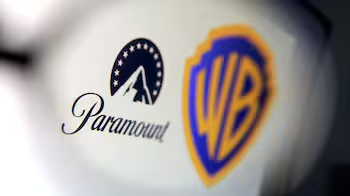
The Paramount Warner Bros merger is heading for a courtroom showdown. A group of US states, led by California and New York, is preparing a lawsuit to stop Paramount Skydance’s $110 billion takeover of Warner Bros, according to sources familiar with the matter. The filing is expected within weeks and would mark the most aggressive move yet by states determined to put themselves at the leading edge of antitrust enforcement.
Why the States Are Stepping In
It’s not yet clear exactly which states will sign on alongside California and New York, but the underlying motivation is. State officials argue that Washington has stepped back from policing big mergers, leaving them to fill the gap.
California Attorney General Rob Bonta, a Democrat, has been the loudest voice in the effort. He recently slammed what he described as the Trump administration’s “abdication” by federal antitrust agencies — bodies that, he pointed out, have far more resources than any individual state. Bonta promised a probe almost as soon as Paramount announced the deal, and his office confirmed Friday that the investigation remains active, while declining to say more.
The Stakes for Both Companies
A lawsuit doesn’t guarantee the deal dies. Plenty of attempts to block mergers ultimately fail. But even an unsuccessful challenge can be costly, because a judge can pause a transaction for months while the case unfolds.
That delay carries a real price tag here. Paramount has agreed to start paying shareholders a fee in October if the merger hasn’t closed — fees that add up to roughly $6.9 million per day. Every week tied up in court chips away at the deal’s economics.
Investors reacted quickly to the news. After Reuters first reported the looming lawsuit, Warner Bros shares slipped 3.6% in Friday afternoon trading, while Paramount deepened its losses to fall 6.7%.
Paramount’s Political Tailwinds
Analysts have suggested Paramount may have an easier path through federal review than a typical media giant would. Part of that calculation rests on connections at the top: Paramount CEO David Ellison is the son of billionaire Oracle co-founder Larry Ellison, who has cultivated ties with President Trump.
On the federal side, the Justice Department is expected to reach a decision before long. The DOJ sent subpoenas in late March seeking details on how the merger would affect studio output, content rights, streaming competition, and the movie theater business.
The Case for the Deal
Paramount, for its part, is framing the merger as a win for competition rather than a threat to it. A company spokesperson argued that blocking the combination would only hand entrenched players like Netflix an advantage they haven’t earned. Notably, Paramount prevailed over a competing Netflix bid to secure Warner Bros in the first place.
The company has also made concrete commitments to soften concerns:
- Keep both studios operating rather than folding one into the other.
- Produce a minimum of 30 theatrical films each year once the deal closes.
“We will continue to fight against any attempt to derail a deal that plainly benefits consumers, creators, and the industry as a whole,” the spokesperson said.
Hollywood Pushes Back
Not everyone is convinced. The merger would unite two of Hollywood’s four major studios, and that prospect has rattled much of the creative community.
Actors, writers, and other industry figures have voiced fears about job losses, with stars even signing an open letter opposing the deal. Theater owners have lined up against it too. Their worry is straightforward: combining the storied Warner Bros studio — the home of the “Harry Potter” and “Superman” films — with Paramount Pictures could leave cinemas with fewer movies to show, weakening competition across the board.
What Comes Next
The coming weeks will be pivotal. The states’ lawsuit could land at roughly the same time the DOJ signals its own intentions, setting up a tangle of legal and regulatory pressure on opposite ends of the spectrum — federal watchdogs potentially leaning toward approval while state attorneys general fight to stop it.
For Paramount, the clock is ticking and expensive. For Warner Bros, the future of one of Hollywood’s most iconic names hangs in the balance. And for the broader industry, the outcome may help define just how much consolidation regulators are willing to tolerate in an era when streaming has already reshaped the rules. The Paramount Warner Bros merger has become a test case — and its resolution will be watched far beyond the studio lots.
Author