Hantavirus Cruise Outbreak Sparks Health Monitoring Across Multiple US States
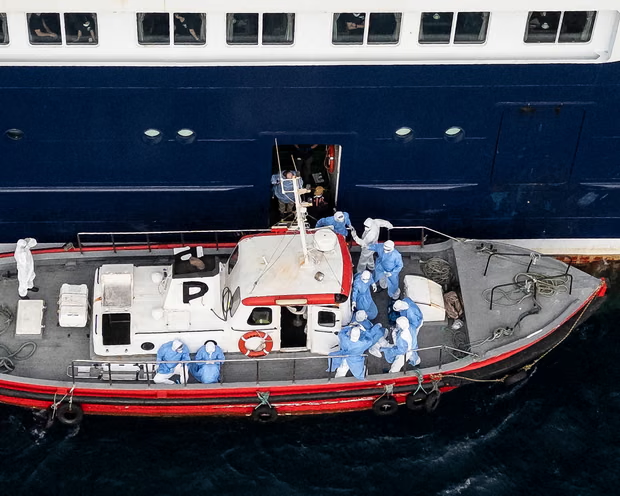
The hantavirus cruise outbreak linked to the Dutch-flagged MV Hondius has prompted public health officials to track passengers across at least five US states as the ship makes its way toward Spain. With confirmed and suspected cases climbing and three deaths already reported, authorities are working quickly to trace contacts, monitor symptoms, and arrange a repatriation flight for American travelers caught up in the unfolding crisis.
The MV Hondius and Its Troubled Voyage
The MV Hondius, a Dutch-flagged cruise vessel, departed Argentina on April 1 for a voyage across the southern Atlantic Ocean. The journey included stops at several destinations before the unexpected health emergency surfaced on board. The ship is now expected to arrive in Spain by Sunday, where passengers and crew will undergo further screening and assessment.
What was meant to be a memorable expedition-style trip has turned into one of the most closely watched cruise ship health incidents in recent memory.
Current Case Count and Fatalities
As of May 8, health authorities have confirmed five hantavirus infections among those connected to the voyage, while four additional cases remain under suspicion. Tragically, three people have died, underscoring the seriousness of the situation.
Although hantavirus infections in humans are relatively rare, they can be severe when they do occur. Fatality rates vary widely depending on the strain involved, ranging from as low as 1 percent to as high as 50 percent. There is currently no specific cure for hantavirus infections, but early medical attention can significantly improve survival outcomes.
Why the Andes Virus Is Different
Most hantaviruses are transmitted to humans through contact with infected rodents, often via their urine, droppings, or saliva. However, laboratory testing has indicated that the strain involved in the MV Hondius outbreak is the Andes virus, a notable exception within the hantavirus family.
The Andes virus is the only hantavirus known to spread directly between humans. This characteristic has raised concerns among health investigators, who suspect that some person-to-person transmission has occurred among passengers and crew. Scientists are now analyzing the virus’s genetic sequence and comparing it with samples from previous outbreaks to better understand its origin and behavior.
Contact Tracing Efforts Expand
A key development in the response involves passengers who disembarked on April 24 at St. Helena, a remote island in the South Atlantic. Several dozen travelers left the ship at that stop and are now being contacted for follow-up monitoring and testing.
In the United States, public health officials in at least five states are tracking passengers who returned home before the outbreak became widely known. These individuals are being asked to watch for symptoms, report any signs of illness, and cooperate with local health departments. American passengers still abroad are expected to be brought home through a coordinated repatriation flight.
Symptoms to Watch For
Hantavirus infections often begin with flu-like symptoms, including fever, muscle aches, fatigue, headaches, and gastrointestinal discomfort. In more severe cases, the illness can progress to respiratory distress or kidney complications, depending on the strain. Because early symptoms can resemble many common illnesses, prompt medical evaluation is critical for anyone with potential exposure.
Health officials are urging passengers and their close contacts to seek medical care immediately if symptoms appear, even if they seem mild at first.
Risk to the General Public Remains Low
Despite the alarming nature of the outbreak, both the World Health Organization and the United States Centers for Disease Control and Prevention have stressed that the broader public faces little risk. The cluster appears confined to those who were aboard the MV Hondius or in close contact with affected individuals.
Still, both agencies are continuing to monitor the situation closely. With the Andes virus’s ability to spread between humans, ongoing surveillance is essential to ensure the outbreak does not extend beyond its current scope.
Why Cruise Ships Pose Unique Challenges
Cruise ships have long been recognized as environments where infectious diseases can spread rapidly. Shared dining areas, close living quarters, and constant social interaction create conditions that allow viruses to move quickly through a population. While this outbreak appears to have started with rodent exposure rather than passenger-to-passenger contact, the suspected human transmission of the Andes virus has added a layer of complexity.
Investigators are looking into how the virus may have entered the ship in the first place, including possible contact with infected rodents at one of the voyage’s stops or in supplies brought on board.
Coordination Between Multiple Countries
The outbreak has triggered cooperation among health authorities across several nations, including Argentina, the Netherlands, Spain, the United Kingdom, and the United States. Each country is taking steps based on its own residents and the ports involved in the cruise’s itinerary.
Spain, the ship’s expected destination, is preparing to receive the vessel with medical teams ready to evaluate everyone on board. Crew members and remaining passengers are likely to face quarantine procedures, additional testing, and possibly extended observation depending on individual exposure levels.
What Passengers Can Expect Next
For travelers connected to the MV Hondius, the coming days will involve close communication with health officials, possible testing, and self-monitoring for symptoms. American passengers awaiting repatriation will need to follow specific guidance from US authorities once they arrive home.
For those already back in the United States, state-level health departments are expected to provide regular check-ins and clear instructions on what to watch for. Anyone who feels unwell is being urged not to delay seeking medical care.
A Developing Situation Worth Watching
The hantavirus cruise outbreak is still unfolding, and key details may shift as more test results come in and contact tracing expands. While the immediate threat to the wider public appears limited, the seriousness of the cases reported so far highlights why vigilance matters.
For now, the world is watching the MV Hondius as it approaches Spain, hoping the response is swift enough to contain the outbreak and prevent further loss of life.
Author