Spatial iPhone Holographic Display May Mark Apple’s Next Big Revolution
Smartphones have come a long way over the past decade, and many of the biggest leaps forward have come from advances in display technology. From bigger screens to high refresh rates and the rise of foldables, every major shift has changed how people interact with their devices. The next major breakthrough may be even more dramatic, and it could come in the form of a Spatial iPhone holographic display, reportedly being developed through a collaboration between Apple and Samsung.
If the rumours hold up, this could be one of the most exciting smartphone innovations of the decade.
The First Spatial iPhone Could Arrive by 2030
According to recent reports, Samsung is working on a brand-new display technology designed to bring true holographic effects to smartphones. The technology, currently being referred to as MH1 or H1, would feature a “nano-structured holographic layer” capable of producing 3D-like depth effects without requiring users to wear special glasses.
The information was first shared by leaker Schrödinger on Twitter, who explained that the display also relies on eye-tracking and a process called diffractive beam-steering. This involves tiny structures within the display itself that bend and redirect light toward the viewer’s eyes at very precise angles, creating the illusion of depth and dimension.
These rumours line up neatly with separate reports about Apple’s so-called “Spatial iPhone,” a device that’s reportedly in the very early stages of research and development. According to a follow-up post by the same leaker, the technology could be ready for commercial smartphones by around 2030.
Floating Images and Next-Level Depth
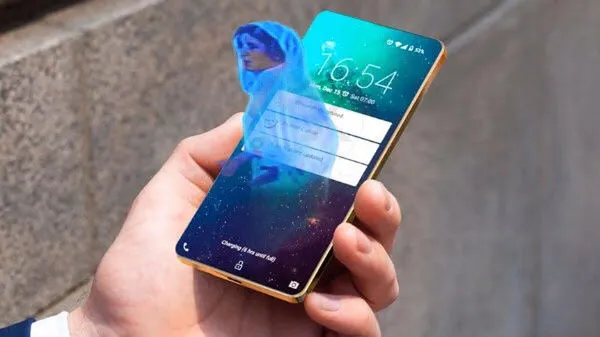
What makes this potential display so unique is its ability to show images that appear to float above the screen’s glass surface. The depth effects would be visible without any external accessories, like 3D glasses or VR headsets.
Samsung is also said to have developed a patented algorithm that lets users tilt their phones and look around objects within a video, almost as if they were peering into a real 3D scene. The leaker described this feature as offering a kind of “360-degree rotation” experience, which would be a significant step beyond anything currently available on a mobile device.
Even more impressively, the display is reportedly capable of maintaining full 4K image quality for standard 2D content. The holographic effects would only kick in when needed, allowing the screen to switch between regular sharpness and immersive depth without compromise.
That ability would be a huge breakthrough. Most existing 3D display technologies, including lenticular lens-based screens, struggle to balance depth effects and image quality. If Samsung manages to keep visuals crisp while adding holographic functionality, it could set a completely new standard for smartphone displays.
Apple’s Long-Term Spatial Vision Could Finally Pay Off
Apple has been quietly exploring various 3D display and spatial technologies for years. The company has filed numerous patents related to immersive visual effects and has steadily added spatial audio, spatial photos, and spatial video features to recent iPhones.
Most of Apple’s earlier spatial ambitions have revolved around the Apple Vision Pro and its broader push into AR and VR. However, those investments could now serve as a strong foundation for adopting Samsung’s holographic display technology in future iPhones.
If Apple does indeed launch a device like the rumoured iPhone 22 Pro in 2030 with a holographic display, it would already have a massive library of compatible spatial content ready to go. Users could potentially watch their existing photos, videos, and movies in a way that truly pops off the screen.
Of course, this remains a rumour about technology that’s still in its early stages. While the source has a strong track record, plenty can change between now and 2030, and it’s far from guaranteed that the technology will arrive exactly as described.
Could This Be the Next Smartphone Revolution?
Apple’s expected future CEO, John Ternus, recently hinted that blending the physical and digital worlds is something the company sees as inevitable. In an interview, he mentioned that Apple is working on some “pretty cool” upcoming products. A holographic iPhone would fit that description perfectly, and it could easily mark the next major shift in consumer technology, similar to how the original iPhone redefined the industry back in 2007.
Still, there are real questions about whether this technology can work for everyone. Some users with vision-related health conditions struggle to enjoy 3D effects on traditional displays, and it’s unclear how holographic screens would perform for people with limited or impaired vision. Many users may experience only blurry visuals or no depth effect at all, depending on how the system handles different eyesight conditions.
For Apple and Samsung, addressing accessibility will be crucial. If they can develop holographic technology that works for everyone, including those with vision limitations, they could genuinely open a new chapter in the smartphone era.
A Display-Driven Future for Apple
In a world increasingly dominated by AI-driven features, this rumour is a powerful reminder that hardware breakthroughs still matter. A truly revolutionary display could redefine how people use smartphones, watch content, and interact with digital experiences.
Whether the Spatial iPhone holographic display arrives in 2030 as planned or takes longer to perfect, one thing is clear. Apple is once again positioning itself to lead the next wave of innovation in mobile technology, and Samsung’s display advancements could play a major role in making that vision a reality.
If everything aligns, the next decade could bring an entirely new way of experiencing your smartphone screen, and it might just feel like science fiction finally becoming real.
Author