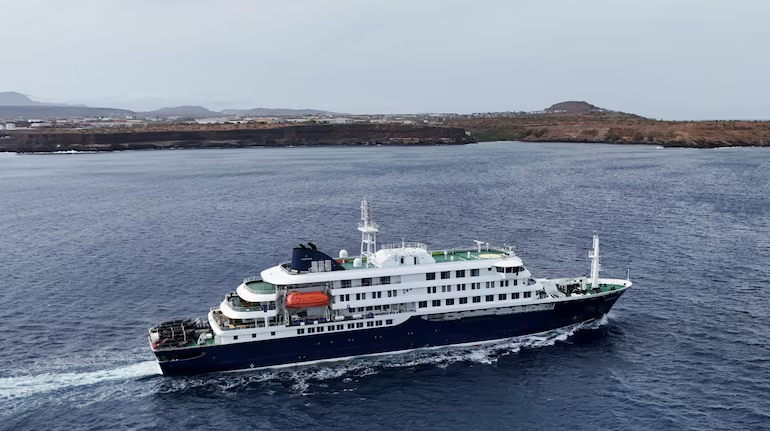
Hantavirus Outbreak Sparks Global Alert as 5 U.S. States Track Cruise Ship Passengers
The recent hantavirus outbreak tied to a cruise ship has triggered urgent monitoring efforts across multiple countries, with health officials racing to prevent further spread. In the United States, five states have already begun tracking residents who may have been exposed, while international agencies continue to investigate the situation closely.
Although no confirmed cases have been reported on American soil so far, the unfolding situation has put public health teams on high alert.
Multiple U.S. States Actively Monitoring Residents
Health authorities in Arizona, California, Georgia, Texas, and Virginia are currently keeping a close eye on residents who recently travelled aboard the affected cruise ship. According to multiple reports, these states are conducting follow-up checks to identify any signs of infection among returning passengers.
So far, the U.S. Centers for Disease Control and Prevention has classified the outbreak as a “Level 3” emergency response. While that’s the lowest level of emergency activation the agency uses, the designation still highlights how seriously U.S. health officials are taking the situation.
The Cruise Ship at the Center of the Outbreak
The outbreak is connected to the MV Hondius, a Dutch vessel operated by Oceanwide Expeditions. According to the company, 29 passengers, including six Americans, could potentially be at risk of carrying the virus. These individuals disembarked the ship at St. Helena on April 24, shortly after the first passenger linked to the outbreak passed away.
What makes the situation more difficult is that the current locations of many of these passengers remain unknown. As travellers from various countries scattered across the globe after leaving the vessel, public health agencies have had to rely on extensive coordination to track down anyone who may have come into contact with infected individuals.
New Suspected Cases Emerge Internationally
The outbreak continues to evolve, with two newly suspected cases identified on Friday. One involves a British national on the remote South Atlantic island of Tristan da Cunha, who had earlier disembarked the cruise ship.
The second case involves a woman in Spain’s province of Alicante. She is reported to have been on the same flight as a cruise ship passenger who later flew to Johannesburg and died, raising concerns about potential exposure during travel.
To date, three deaths have been linked to the outbreak. These include a Dutch couple and a German national, all of whom were on the cruise ship.
What the WHO Is Saying
Before Friday’s new cases emerged, the World Health Organization had reported five confirmed hantavirus cases along with three suspected ones. Of the confirmed cases, only one death had been verified as caused by the virus. The other two deaths were still being investigated and have not officially been attributed to hantavirus.
According to WHO experts, those who contracted the virus had been in “close contact” within a confined setting, suggesting that the outbreak occurred under specific conditions rather than through general or widespread transmission.
Infectious disease epidemiologist Maria Van Kerkhove urged the public not to panic, emphasising that hantavirus does not behave like more familiar respiratory viruses. During a press briefing, she made it clear that the virus is not similar to COVID-19 or influenza and spreads in very different ways. Her message was meant to reassure travellers and the general public that this outbreak, while serious, is unlikely to lead to a global health crisis on the scale of recent pandemics.
Cruise Ship Heading to Tenerife Despite Concerns
The cruise ship at the heart of the outbreak is currently making its way to Spain’s Canary Islands. Despite resistance from local officials in Tenerife, Spain’s health minister has firmly backed the plan to allow the vessel to dock there.
The decision has sparked debate, with some local leaders worried about possible health risks to nearby residents. However, national authorities have argued that proper safety measures and medical protocols will be in place to handle any potential issues. The docking is expected to be closely monitored to ensure both passenger safety and public health protection.
Why Hantavirus Is Drawing Global Attention
Hantavirus is a rare but serious illness that can lead to severe respiratory or kidney problems, depending on the strain. It typically spreads through contact with infected rodents or their droppings, but in confined environments like cruise ships, transmission patterns can become more complex. Although it does not spread easily from person to person like a common cold or flu, an outbreak in a closed environment such as a vessel can still create serious health concerns.
Health agencies around the world are now working together to ensure passengers who left the ship are tracked, screened, and supported if needed. The cooperation between U.S. authorities, European health agencies, and the WHO highlights how interconnected modern travel has made global health responses.
A Reminder of Global Travel’s Health Risks
The current hantavirus outbreak serves as a strong reminder that international travel can bring health challenges that quickly cross borders. With cruise ships often hosting passengers from multiple countries, even a small outbreak can demand a coordinated worldwide response.
For now, U.S. health officials in the five impacted states are continuing their monitoring efforts, while global agencies investigate the source of the outbreak more deeply. As authorities work to contain the situation, travellers and the public are being urged to stay informed but not alarmed.
If the response so far is any indication, the global health community is taking the threat seriously without sounding the alarm bells of a major pandemic. With careful tracking, transparent communication, and rapid action, officials hope to bring the outbreak under control before it spreads any further.
Author