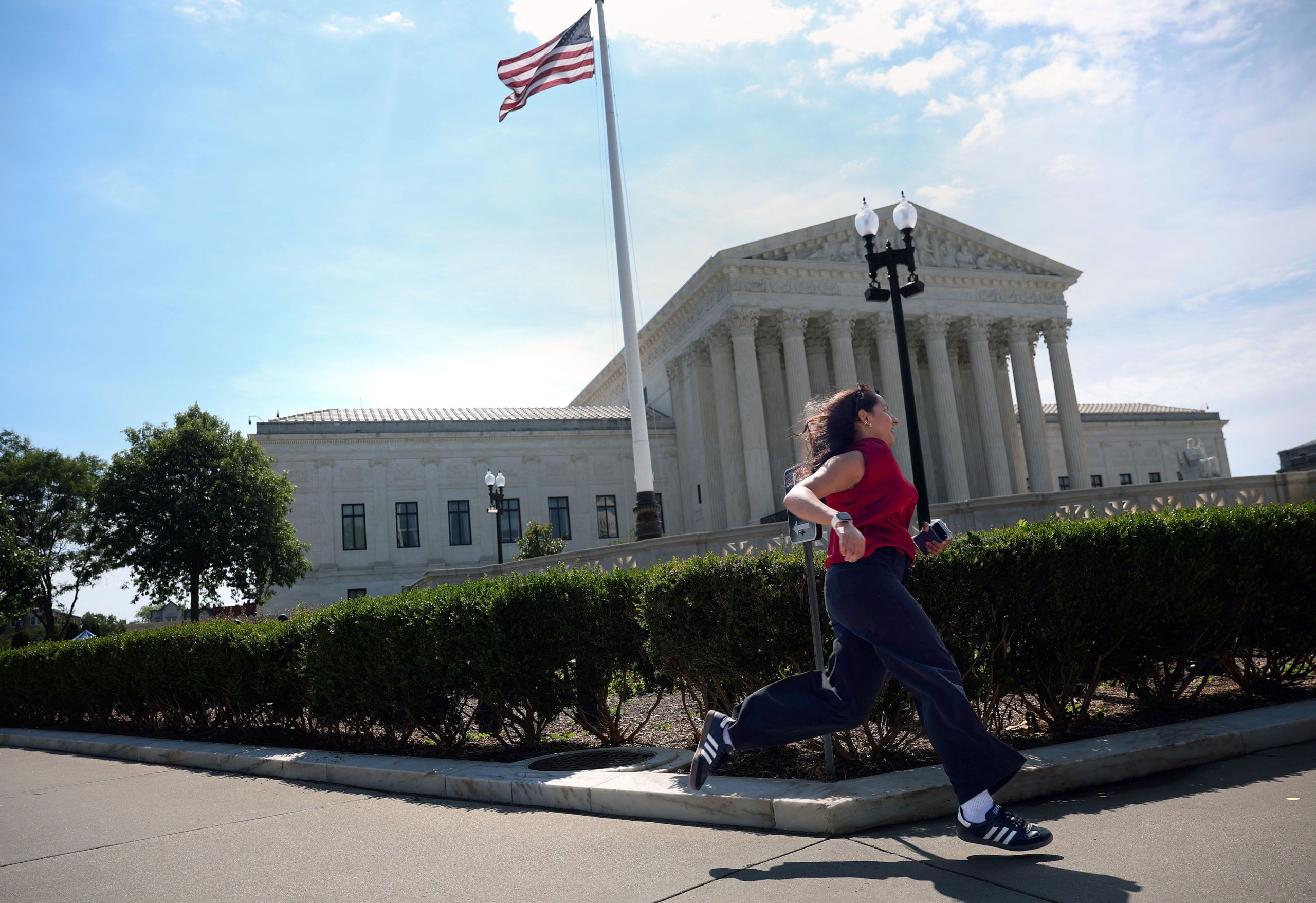
Supreme Court immigration rulings handed President Donald Trump two of the most consequential legal wins of his second term on Thursday, clearing a path that could reshape the lives of millions of people living and arriving in the United States. In a pair of decisions split sharply along ideological lines, the justices empowered the administration to strip protections from immigrants already settled in the country and to turn away asylum seekers before they ever set foot on American soil.
The outcome marks the newest chapter in an unfolding story: a conservative-led court repeatedly signing off on the White House’s hardline approach to the border.
A Major Shift on Temporary Protected Status
The first ruling, decided 6-3, allows the administration to end temporary humanitarian protections that had shielded hundreds of thousands of Haitian and Syrian migrants. These individuals had been permitted to stay because returning home was considered too dangerous given the instability in their countries.
But the impact stretches far beyond those two groups. The decision touches roughly 1.3 million immigrants from 17 nations who currently rely on temporary protected status, commonly known as TPS. A year earlier, the court had already permitted the administration to cancel that same designation for Venezuelans, signaling where the legal winds were blowing.
For many families, the news landed like a thunderclap. People who built careers, bought homes, and raised children in the U.S. now face the prospect of losing everything they have established.
Voices From the Affected Communities
The human weight of the decision was impossible to ignore. Among those caught in the uncertainty is a Syrian TPS holder who came to the country in 2015 on a student visa and went on to pursue a dual degree in business and political science. Her sister is a U.S. citizen working as a physician, and her parents hold green cards.
She described the ruling not as an abstract legal event but as a personal earthquake, pointing to the fear of being separated from loved ones and the anxiety of an unknown future. Her sentiment echoed across immigrant communities in New York, Florida, and beyond, where many had counted on the courts to act as a safeguard.
Turning Migrants Away at the Border
The second ruling, also divided along ideological lines, concerned asylum. The justices concluded that migrants arriving at the U.S.-Mexico border have no right to request asylum until they physically enter the country. In practical terms, this means border agents can now turn people back before they cross.
The decision drew an unusually strong reaction from Justice Sonia Sotomayor, who read her dissent aloud from the bench, a gesture reserved for cases where a justice feels deep disagreement.
Why the Majority Sided With the Administration
The court’s conservative majority grounded both opinions in the literal text of the law rather than the broader consequences. On the asylum question, the majority reasoned that, in plain language, a person cannot be said to “arrive in” a place before actually entering it. By that logic, a migrant must step across the border to gain the opportunity to seek asylum.
On the TPS ruling, Justice Samuel Alito acknowledged the contributions Haitian immigrants have made to the country over the years. Yet he maintained that the statute left no room for interpretation, since it explicitly bars judicial review of the Homeland Security secretary’s decisions to end protections. In his words, the meaning was clear and broad.
Alito also rejected the argument that the decision to end protections for Haitians was driven by racial bias, even as plaintiffs cited inflammatory campaign-trail claims about Haitian residents in Springfield, Ohio.
A Forceful Dissent
The liberal justices pushed back hard. Justice Elena Kagan, joined by Sotomayor and Ketanji Brown Jackson, argued that the rhetoric surrounding the Haitian community carried unmistakable racial undertones, suggesting that race had influenced the push to remove them.
Sotomayor, in her asylum dissent, reached into history for a warning. She recalled the MS St. Louis, a ship carrying roughly 900 Jewish refugees fleeing Nazi Germany that was turned away from American shores during World War II, only to return to Europe where many passengers later perished. She argued that such tragedies helped shape the modern asylum system and warned that the majority’s reading could invite similar outcomes, predicting bluntly that more lives would be lost and more people would attempt dangerous crossings.
A Pattern of Victories
These rulings did not arrive in isolation. Over the past two terms, the court has steadily validated much of the administration’s aggressive immigration strategy. Among the notable moments:
- The justices lifted restrictions on immigration raids in Southern California.
- They temporarily permitted the deportation of noncitizens to third countries that are not their homelands.
- Earlier in the same week, the court cleared the way for officials to deny entry to certain green-card holders.
Still, the court has not been a rubber stamp. On occasion, it has reined in the administration, including a decision requiring officials to facilitate the return of a Maryland resident who had been deported and detained abroad, and a temporary halt to deportations of Venezuelans under a contested wartime authority.
Celebration on One Side, Concern on the Other
Supporters of tighter immigration controls welcomed the decisions enthusiastically. A senior Homeland Security official called the rulings victories for the rule of law and common sense, framing them as new tools to strengthen border enforcement. Officials in Republican-led states, including Iowa, which joined more than 20 others backing the end of TPS, emphasized that “temporary” protection was never meant to be permanent.
Yet even some Republicans expressed unease about the policy implications. Ohio’s governor, who had publicly dismissed false campaign claims about Haitian residents, said that whatever the legal reasoning, sending people back to Haiti made little sense given the country’s collapsing government, rampant gang violence, and battered economy.
What Comes Next
The court is not finished with immigration. A highly anticipated ruling on birthright citizenship, the long-standing principle that nearly everyone born on U.S. soil is automatically a citizen, is expected within days. Trump moved to challenge that guarantee on his first day in office, and the outcome could prove even more far-reaching than Thursday’s decisions.
For now, the message from the nation’s highest court is clear: the administration has gained significant legal momentum, and millions of immigrants are left waiting to see how their futures will unfold.
Author