The first Ebola case in France has been confirmed, marking the first time the deadly virus has been detected outside Africa during the current 2026 outbreak. French authorities announced on Wednesday that a doctor who had flown back from the Democratic Republic of Congo, where a major outbreak is underway, tested positive for the disease on French soil.
A First for France
This is the first time France has ever detected an Ebola case within its borders. While two patients were transported to France during the 2014 West African outbreak, both had already been diagnosed abroad before arriving.
The health ministry confirmed it had identified what it called the first positive case of Ebola virus disease on national territory. The patient arrived in Paris on Tuesday after boarding a commercial flight from Kinshasa and was described as almost asymptomatic, suffering only from headaches at the time.
What Happened on the Flight
The doctor traveled on an Air France flight, and the situation evolved during the journey. According to the ministry, the patient’s condition slightly deteriorated mid-flight. Upon landing in Paris, the individual was immediately isolated and taken into care, even before the disease was officially confirmed.
Officials reported that the patient was in stable condition with a very low viral load. Air France said it had handed over the passenger list to authorities, who are now managing contact with those who shared the flight.
Health Minister Stephanie Rist later said that five other passengers had been identified as possible contacts and placed in isolation as a precautionary measure. Prime Minister Sebastien Lecornu’s office said he was monitoring the situation very closely, though the health ministry emphasized that the risk of transmission remained low.
Global Health Officials Weigh In
The reassurance extended beyond France. World Health Organization chief Tedros Adhanom Ghebreyesus said Wednesday that the global risk remains low.
The patient was identified as a doctor working with ALIMA, the Alliance for International Medical Action, an international medical humanitarian organization. The group said it was working to understand how the contamination could have occurred, particularly notable because humanitarian workers are normally required to undergo a three-week quarantine after contact with infected cases.
According to diplomatic sources, meetings were scheduled to discuss an appropriate response, including possible movement restrictions.
The Outbreak in Congo
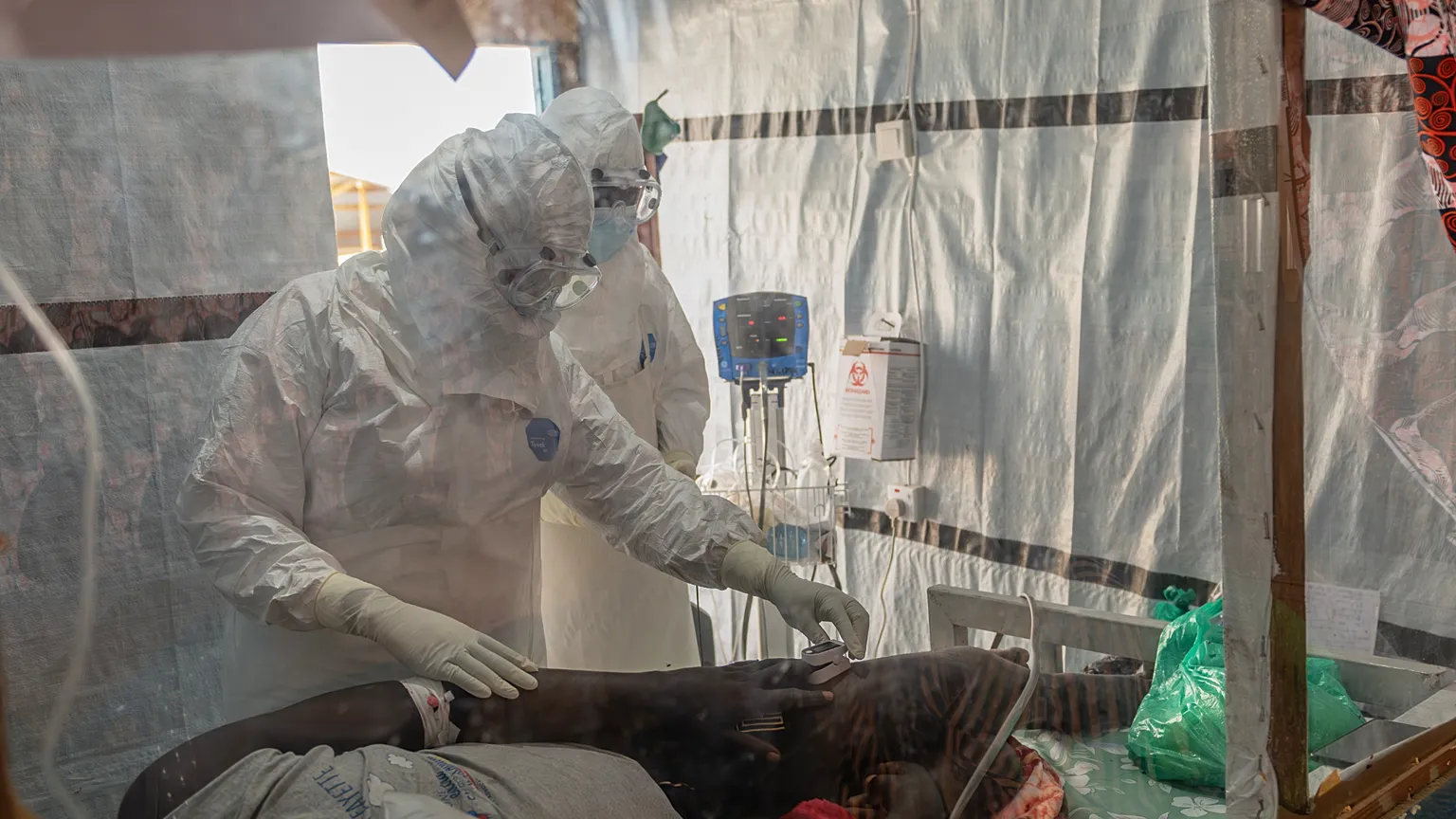
The case in France traces back to a serious situation unfolding in central Africa. The DRC’s 17th Ebola outbreak was declared on May 15 after several unexplained deaths in the mineral-rich eastern Ituri province, a region troubled by armed groups.
The toll has been significant. According to the latest official figures:
- More than 1,000 cases have been recorded.
- At least 267 deaths have occurred.
- The fatality rate stands at roughly 25 percent.
Many experts believe the true scale may be underestimated, since the outbreak is affecting remote and hard-to-reach regions. The outbreak has also spread to neighboring Uganda.
A Strain Without a Vaccine
One of the most concerning aspects of this outbreak is the specific strain involved. The Bundibugyo strain driving these infections has no approved vaccine or treatment. Existing Ebola vaccines, developed between 2018 and 2019, only work against the Zaire strain, which was responsible for previous major outbreaks.
A Recent Recovery Offers Hope
There has been at least one encouraging outcome. In May, an American surgeon who contracted Ebola in the DRC was flown to Germany for treatment. A Berlin hospital discharged the patient earlier this month, reporting a full recovery after 17 days of care.
The doctor, identified as Peter Stafford of the Serge charity, received treatment that included experimental therapies currently being trialed for this type of virus, according to the hospital.
Assessing the Risk
Despite the alarming nature of any Ebola case reaching a new continent, public health experts continue to stress that the risk of a worldwide spread remains low. This is largely due to the relatively low contagiousness of the Ebola virus, which spreads through direct contact with bodily fluids rather than through the air.
For now, French authorities are focused on tracing contacts and containing any potential spread, while health officials around the world watch the situation closely. The confirmed case serves as a reminder of how interconnected global health has become, even as the broader transmission risk stays contained.
For accurate, up-to-date guidance on Ebola, including symptoms and prevention, the World Health Organization and national health authorities remain the most reliable sources. Anyone with specific health concerns or potential exposure should contact a qualified medical professional or their local health authority directly.
Author