The Philippines earthquake in Mindanao has left a nation grieving and a region in ruins, after a 7.8-magnitude quake—the most powerful to strike the country in 50 years—killed at least 55 people and unleashed widespread devastation across the south.
The disaster has triggered days of frantic rescue work, mass displacement, and a long, uncertain road to recovery for one of the Philippines’ most populous islands.
A Painful Search Through the Rubble
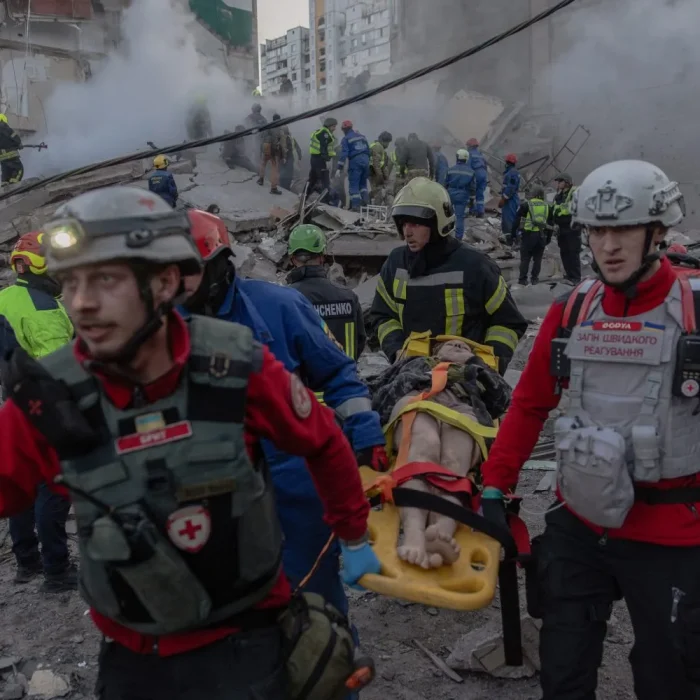
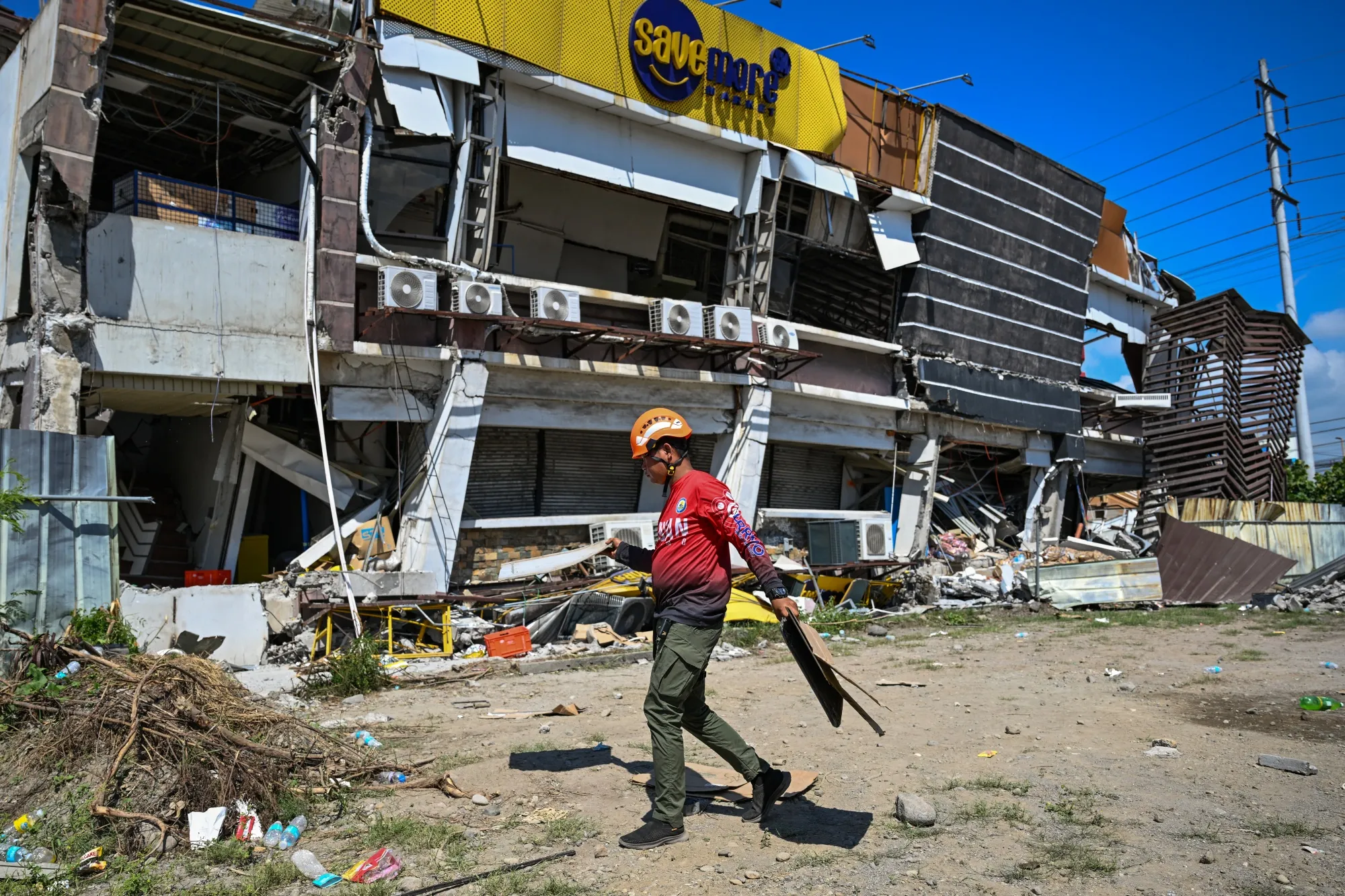
In General Santos City, the human cost has played out in heartbreaking scenes. Just before midnight, a rescue team pulled a body from the wreckage of a destroyed grocery store, prompting the victim’s family to wail in anguish.
For Rene Baliong, who leads the search and rescue effort, even that grim moment carried a sliver of mercy. “While tragic, it offered the family a painful consolation,” he said. “They have a body to bury.”
Baliong’s team had worked nonstop for days, their hopes briefly lifted when they pulled a survivor alive from the rubble on Tuesday. Still, the scale of loss remains staggering.
The Toll So Far
The earthquake’s impact has been measured in lives, injuries and displacement:
- At least 55 people confirmed dead, with dozens still missing
- More than 1,120 injured
- Over 45,000 displaced, many fleeing after a tsunami warning
The Most Powerful Quake in Decades
Monday’s earthquake was triggered by movement in the Cotabato Trench. According to Teresito Bacolcol, director of the Philippine Institute of Volcanology and Seismology, it was the strongest since that same undersea depression set off an 8.1-magnitude quake and tsunami waves back in August 1976.
The destruction it left behind was severe. A landslide buried homes and killed 18 people in the mountainside town of Glan, while at least 13 died in General Santos City when buildings collapsed.
A City Crippled
The damage to General Santos City alone was extensive. At least 19 major commercial buildings—including a mall and a hotel—were damaged, alongside more than 19,000 homes.
The quake also severed basic services. With the city’s water pipes bursting during the shaking, the government scrambled to provide food and water filtration, said Rodrigo Sosmeña, regional director for the office of civil defence.
For residents, even daily survival became a struggle. University professor Rufa Cagoco Guiam described the difficulty of finding necessities with the major malls shuttered. “I’m going around the city now looking for a supermarket to buy food and water,” she said.
The Emotional Aftershock
Beyond the physical wreckage lies a quieter crisis. The earthquake struck just as students returned from a two-month summer break, magnifying its psychological impact.
“I think we underestimate the mental health toll that an earthquake like this can take on people, especially children,” said Drew Strobel of the International Federation of Red Cross, noting that many people were already deeply traumatized.
The timing was especially jarring for students. Many watched their school buildings sway as they gathered in fields to sing the national anthem before classes began. Ten schools were damaged, and 6,000 remained closed pending safety assessments.
The Red Cross has stepped in to provide mental health support, hot meals, and rescue assistance, while assessing the broader hit to livelihoods as jobs are disrupted and tourism is expected to decline.
A Recovery Threatened by the Weather
Looking ahead, the path to recovery may grow even harder. Sosmeña warned that a predicted El Niño, complicated by the south-west monsoon, could bring both flooding and a severe dry spell to the region.
His greatest worry is agriculture. The area is among the Philippines’ top rice-producing regions, and coconut farming sustains parts of the local economy in Sarangani. With abnormal weather looming and infrastructure already weakened by the quake, the stakes are high.
“These are the main source of livelihood of the people,” Sosmeña said, describing how damaged infrastructure and unpredictable conditions are forcing communities to brace for what’s next.
Picking up the pieces, he admitted, “is not an easy job”—a sober acknowledgment that for Mindanao, the hardest part of this disaster may still lie ahead.
Author