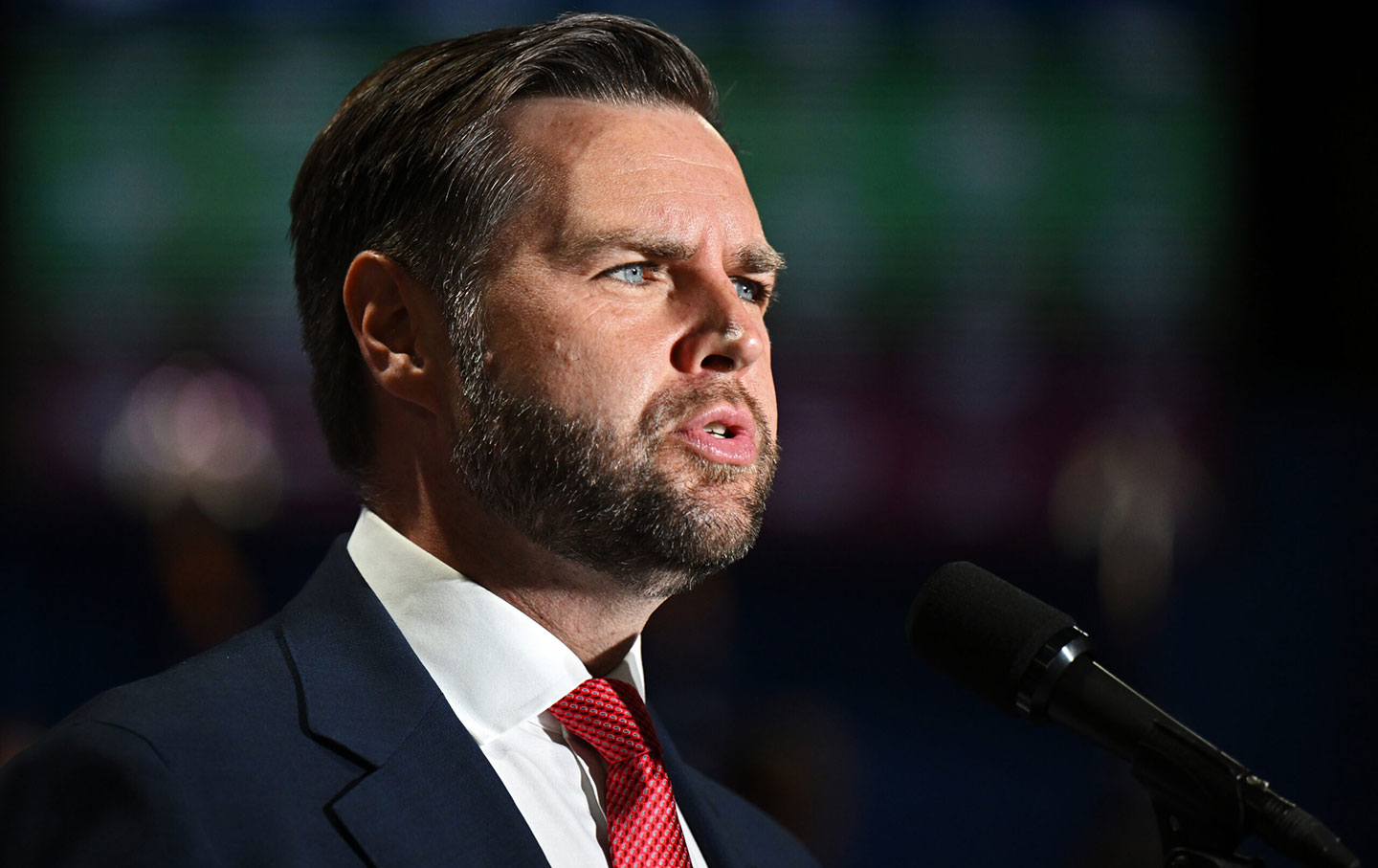
The J.D. Vance conversion story is really two stories braided together, one spiritual and one political, and both sit at the heart of the vice president’s new book. In Communion: Finding My Way Back to Faith, Vance traces his path to Catholicism while quietly laying groundwork for what many believe could be a 2028 presidential bid. The result is a memoir that doubles as a statement of identity from a man whose journey has already taken several sharp turns.
A Brush With the Guardrail
The book opens on a moment Vance describes in almost mystical terms. Driving alone back to his Marine Corps base in North Carolina after his grandmother’s funeral, a downcast Vance was navigating Virginia’s Appalachian roads when slick conditions sent his car sliding toward a guardrail. Rather than crashing through and tumbling down the mountainside, he says, the vehicle inexplicably came to a halt.
He calls it an almost “supernatural experience,” one that lingered uncomfortably even during his years as a committed atheist. As he writes, the memory seemed to exist to needle him, to chip away at his certainty that he alone sat in life’s driver’s seat.
A Sequel to Hillbilly Elegy
Communion functions as a kind of follow-up to the book that made Vance famous. Where Hillbilly Elegy painted a portrait of working-class white America and launched him into the national spotlight, this new work turns inward, reflecting on his 2019 embrace of Catholicism.
In an interview, Vance defended the idea of political leaders speaking openly about what shapes and inspires them. He said the book was meant to project a sense of humility and grace, qualities he believes leadership demands.
But a presidential memoir rarely exists in a vacuum, and much has shifted in the decade since his debut, both for the country and for Vance himself.
From Never Trumper to Trump’s Vice President
The book’s second conversion may be its most politically loaded. Vance was once a vocal Trump skeptic, and Communion charts his transformation into Trump’s running mate and vice president.
He frames the shift as a matter of conviction rather than opportunism, arguing he came to see Trump as an effective president. He acknowledges, though, that not everyone will buy it. To his critics, he concedes, the move looked like a cynical grab for power, and he admits he likely won’t change their minds.
The book softens the sharpness of his earlier opposition. Years ago, Vance had called Trump “reprehensible,” labeled him an “idiot,” and even floated the possibility that he could become “America’s Hitler,” once memorably describing him as “cultural heroin.” In Communion, he reframes that period through the lens of media culture, suggesting that criticizing Trump functioned as a form of “social immunity” that earned him praise in elite circles.
His turn came, he writes, as he watched friends and family across Ohio and Kentucky rally behind Trump, untroubled by his blunt style. Vance decided to focus less on Trump’s manner and more on his policies. By the time he ran for Senate in 2022 with Trump’s endorsement, he was fully aligned with the movement.
A Softer Tone and Fewer Curses
One of the more telling shifts is stylistic. Readers familiar with Vance’s combative social media presence may be struck by the gentler voice on the page. He even curses less than he did in his first book.
Asked whether the toned-down language was an effort to broaden his appeal, Vance sidestepped the question. He admitted he “curses like a sailor” but said he’s been trying to cut back, partly because of young children at home and a wife who’d prefer fewer obscenities.
Faith, Family, and Mamaw
Much of the memoir dwells on Vance’s spiritual upbringing, which he describes as deeply felt but loosely organized. His family rarely attended church, and their faith was tied more to oral tradition and kinship than to any institution.
At the center of it all stands his grandmother, Mamaw, who largely raised him. Vance paints her religion as gloriously unconventional, noting that she loved profanity and owned nineteen loaded handguns at the time of her death. Her God, he writes, mirrored her: loving and forgiving, yet tough, demanding, and possibly armed.
He also acknowledges a striking divergence between them. Mamaw believed abortion should be legal and that government should stay out of women’s personal choices, a sharp contrast with Vance’s own self-described “100 percent pro-life” stance, which has shifted in its details over the years.
Why Catholicism
Catholicism was initially foreign to Vance, but as he matured, its teachings began to grip him intellectually in a way nothing in his earlier secular or religious worlds had. He was drawn to what he calls its rich social tradition, which deepened his understanding of his relationships with others and with himself.
When pressed on how a “Christian creed” squares with the constitutional separation of church and state, Vance pointed to the nation’s founding, when several colonies had officially established churches. The framers, he argued, never wanted Congress mandating religion, but they did expect public faith to play a meaningful role in public life.
A Wife Who Led Him Back
In an irony Vance himself appreciates, his Hindu wife, Usha, played a central role in guiding him back toward Christianity. He credits her openness to exploring ideas and questioning received wisdom with helping propel his return, and with making it possible for him to write about the journey at all. The Lord, he notes, works in mysterious ways.
Tension With the Vatican
Vance has not shied away from friction with the Catholic Church, and the book reflects that. He recounts a meeting last year with Pope Francis, who died the day after, and describes finding the Vatican’s criticism of Trump administration immigration policy frustratingly disconnected from the hard realities of governing. As the most senior Catholic in the U.S. government, he writes, he found the Vatican unwilling to move beyond what he saw as trite platitudes.
That tension has sharpened under Pope Leo XIV, the first American pontiff, who has emerged as a pointed critic of the administration’s immigration approach and its handling of the war with Iran. Vance has publicly pushed back, even cautioning the pope to be careful when speaking about theology after Leo appeared to criticize the Iran conflict, a war Trump launched despite Vance’s own reservations.
The Immigration Question
Vance attempts in the book to reconcile his hardline immigration record, which once included spreading unverified rumors about immigrants in Ohio, with his Christian convictions. He frames the issue as one of unavoidable trade-offs, arguing that law enforcement is inherently difficult and that applying moral principles in a messy world means weighing competing values.
Looking Toward 2028
The book never states outright whether Vance will run in 2028, but the signals are there: the softened tone, the spiritual depth, the careful distance from his more combustible public persona. With Trump’s MAGA coalition showing cracks over issues like the Iran war and the Epstein files, Vance was asked whether he might be positioned to bridge those divides.
His answer was characteristically cautious, deferring to Trump as the figure best placed to lead the movement. It was a calibrated response, one designed not to alienate the president even as Trump’s popularity wavers.
Should Vance ultimately run, he’ll have to account for how he applied his principles in service to Trump. The loyalty that once looked like a savvy bet may grow more complicated as the political ground shifts. As his story makes clear, his latest conversions may not be his last.
Author