Five Coffins Through Mehran: The Repatriation That Underlines Iran’s Losses in Iraq
Iranian state media reported that the bodies of five members of the Islamic Revolutionary Guard Corps killed in this week’s joint American-Saudi strikes in Iraq have been returned to Iran.
The IRNA news agency said they were brought across the Mehran border crossing in western Ilam province — a route that has carried the remains of Iranians killed in Iraq for decades.
The detail is small. What it confirms is not.
What the Strikes Targeted
American and Saudi aircraft struck Iran-aligned militia positions across eastern Iraq on Tuesday night into Wednesday. Reports indicate seven paramilitary sites were hit, with strikes recorded in Diyala province and in the northern province of Nineveh.
US Central Command described the targets as logistics and weapons sites, and framed the operation as a strong response to more than 30 drone attacks over the preceding 72 hours — attacks it said were directed by the IRGC against American forces and Saudi energy infrastructure.
Riyadh had confirmed that its air defences intercepted multiple drones aimed at oil facilities in the kingdom’s Eastern Province, attributing them to Iran-aligned groups operating from Iraqi territory. Saudi Arabia’s Defence Ministry later confirmed its participation, describing the operation as coordinated with CENTCOM and justified as self-defence under Article 51 of the UN Charter.
It was the first time Saudi Arabia has joined the United States in a bombing campaign inside Iraq.
The Casualty Figures Do Not Agree
This is a case where the numbers vary considerably by source, and the variation is worth laying out rather than smoothing over.
The Hashed al-Shaabi, the Iraqi armed coalition that includes several powerful pro-Iran factions, said at least 20 of its members were killed and 32 wounded, with extensive property damage.
The Revolutionary Guards initially said four of its own personnel had died, describing them as military advisers embedded with the militias. Iran’s Mehr News Agency named four men — Ali Asghar Astaneh, Abolfazl Motaqi, Morteza Akbari and Amir Abbas Darhamforoush — reporting that all four came from Kashan in central Iran, without specifying their roles.
IRNA has now reported five bodies returned.
Separately, the New York Times cited an unnamed US official putting the number of Iranian advisers killed at roughly 20, including technical experts alongside IRGC personnel.
That is a fivefold discrepancy between the Iranian and American accounts. Neither has been independently verified. Governments have obvious reasons to shade in opposite directions here — Tehran to minimise the appearance of losses among its own forces, Washington to emphasise the operation’s effectiveness.
Who Was Hit
The Hashed al-Shaabi, also known as the Popular Mobilisation Forces, occupies an unusual position that makes strikes against it diplomatically fraught.
It was formed in 2014 as a coalition of militias responding to the Islamic State’s advance, and was subsequently incorporated into Iraq’s official state security architecture. Its fighters draw state salaries. At the same time, several of its most powerful constituent factions maintain close ties to Tehran and act with considerable autonomy.
Striking it therefore means striking something that is simultaneously an Iranian-aligned proxy network and a formal component of a partner government’s security forces.
That tension explains Baghdad’s reaction.
Iraq’s Position
Iraq’s National Security Council denounced the operation as unacceptable aggression, according to the state news agency.
Iran condemned the strikes as a violation of Iraqi sovereignty and territorial integrity.
Militia leaders went further, reportedly giving the Iraqi government a one-week deadline to respond to the attacks — a demand that puts Baghdad in an impossible position between the United States, which it depends on for security cooperation, and armed groups it nominally commands but does not fully control.
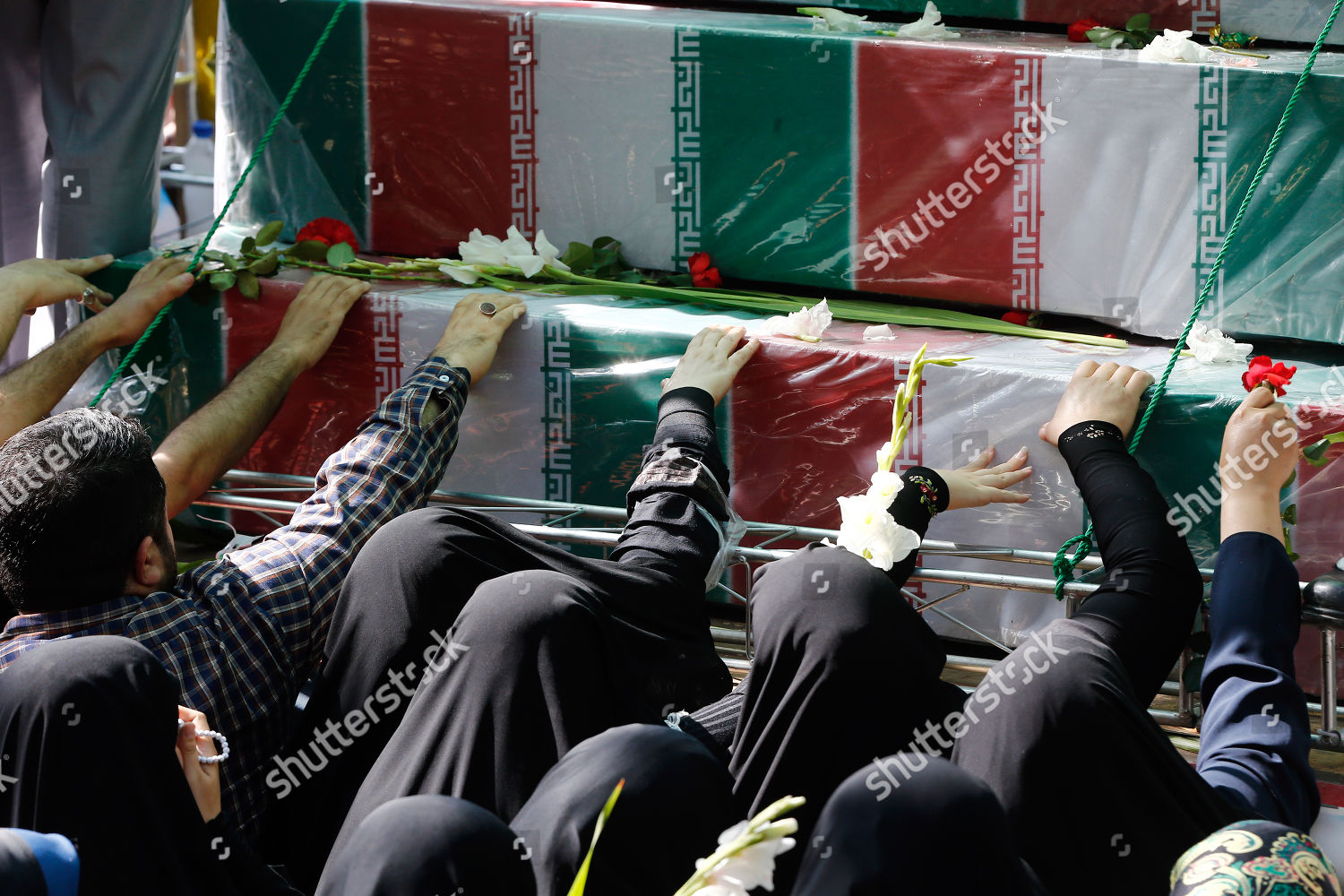
Thousands attended a funeral procession in Baghdad on Wednesday for fighters killed in Diyala. Photographs showed coffins draped in Iranian flags alongside Iraqi ones — an unusually direct public acknowledgment of who was operating there.
Why the Guards Were There
The Quds Force is the branch of the Revolutionary Guards responsible for operations outside Iran, and Guards personnel killed abroad are frequently affiliated with it.
Iran has spent two decades building relationships with Iraqi armed factions, supplying training, weapons and advisers. That network is central to how Tehran projects influence across the region without deploying conventional forces.
It is also, from the American and Saudi perspective, the mechanism through which attacks on Gulf energy infrastructure are organised while allowing Iran a degree of deniability.
The precedent for direct action against it is well established. In January 2020, an American airstrike near Baghdad airport killed Quds Force commander Qasem Soleimani along with Abu Mahdi al-Muhandis, the deputy leader of the Hashed al-Shaabi.
The Wider Sequence
These strikes sit inside a rapidly compounding chain of events.
Iran launched ballistic missiles at American forces in the region on Tuesday, all of which were intercepted, including several shot down over Jordan. The United States responded Wednesday night with what it called a heavy wave of strikes against Revolutionary Guard command centres, missile and drone facilities and maritime capabilities inside Iran. Iranian state media reported civilian deaths on Qeshm Island.
Iran’s military said it launched drone strikes on American facilities in Kuwait, where a worker was reported killed. A drone caused fires aboard two vessels at Egypt’s Damietta port, with no claim of responsibility.
Saudi Defence Minister Prince Khalid bin Salman travelled to Washington and met both the vice president and the president, reportedly to convey that the Iraq strikes reflected a willingness to defend the kingdom rather than an appetite for wider escalation.
What the Repatriation Signifies
Returning bodies through Mehran is, in one sense, routine. In another, it is a public act.
Iran has generally been careful about acknowledging losses among Guards personnel abroad, framing them as advisers and honouring them as such. The transfer confirms Iranian military presence at sites Washington and Riyadh identified as legitimate targets — which supports the operational rationale offered for the strikes, whatever one makes of their legality or wisdom.
It also creates domestic obligations. Funerals for Guards killed abroad are political events in Iran, and they generate pressure for response.
Tehran has already promised retribution for the strikes on its own territory, with the Revolutionary Guards warning that the aggressor will be punished. Five coffins arriving at a border crossing add weight to that commitment, whether or not anyone in Tehran wants the escalation it implies.
Author
-
Lucienne Albrecht is Luxe Chronicle’s wealth and lifestyle editor, celebrated for her elegant perspective on finance, legacy, and global luxury culture. With a flair for blending sophistication with insight, she brings a distinctly feminine voice to the world of high society and wealth.