Israel Election Deadlock: Netanyahu and Eisenkot Both Fall Short as Likud Alleges a “Stolen” Vote
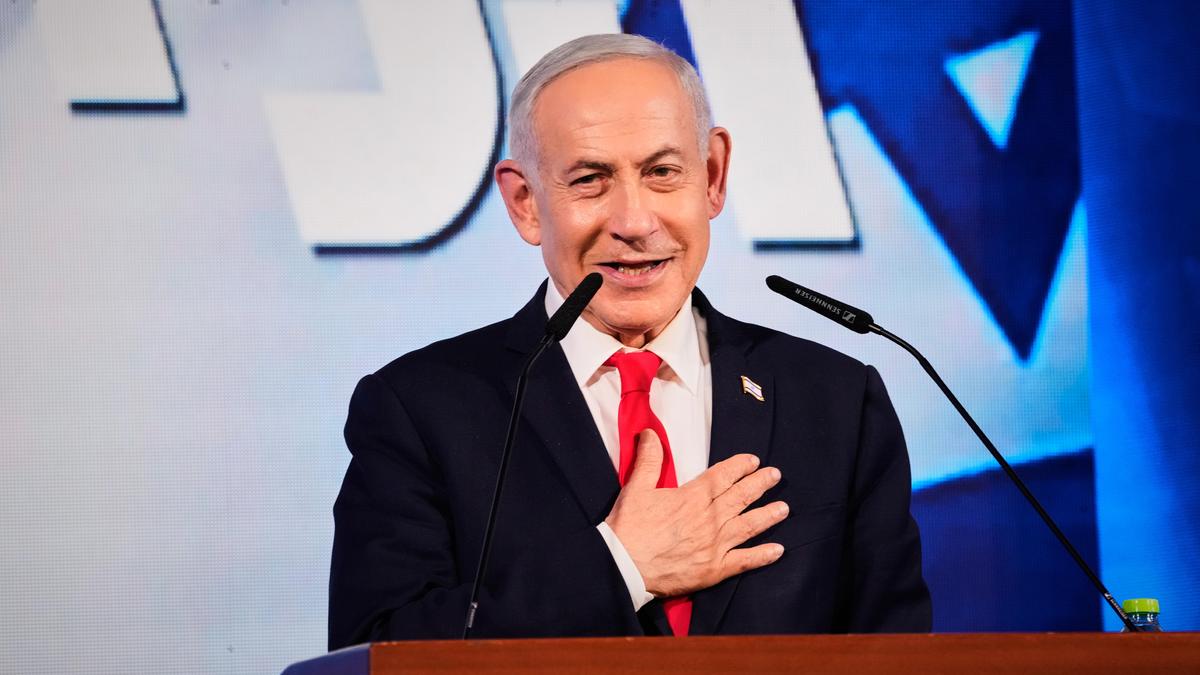
The Israel election deadlock is now official. With every ballot counted, neither Prime Minister Benjamin Netanyahu’s right-wing bloc nor the opposition alliance headed by former army chief Gadi Eisenkot has reached the 61 seats required to govern. What follows is likely to be weeks of intense bargaining, legal challenges, and market jitters, all unfolding while the country remains on a war footing with Iran.
Adding to the volatility, Netanyahu’s Likud party has escalated claims that the election was stolen through foreign manipulation and the mobilisation of Arab voters, an allegation that has not been backed by evidence but has already triggered a security service investigation.
The Numbers Behind the Stalemate
Israel’s parliament, the Knesset, has 120 seats, so any coalition needs at least 61 to command a majority. According to the Central Elections Committee, the final tally breaks down as follows:
Netanyahu’s Likud and its hard-right partners: 53 seats, down from 64 in the 2022 election.
Eisenkot’s opposition bloc: 48 seats.
The Arab-led Joint List and Ra’am: a combined 19 seats, the strongest showing ever for Arab parties.
The arithmetic is unforgiving. Netanyahu’s camp lost significant ground, but the opposition cannot reach a majority on its own either. The Arab-led parties hold the balance, yet most members of Eisenkot’s bloc have refused to build a government that depends on them, and Eisenkot himself has said neither party currently satisfies his conditions for partnership.
Likud Cries Foul
As exit polls began showing losses for the prime minister’s bloc, a narrative took hold among his supporters that the result had been engineered from abroad. By Thursday, Likud had issued a formal statement asserting that foreign interference was designed to enable an outside takeover of the Knesset, promote the Islamisation of the country, and bring down the right-wing government. No proof accompanied the claim.
The accusation gained some institutional traction a day earlier when Supreme Court Justice Noam Sohlberg, who heads the Central Elections Committee, asked the Shin Bet to look into what he described as serious suspicions of improper influence involving money from foreign sources. Crucially, Sohlberg stressed that he could not vouch for the truth of those suspicions and simply wanted them verified.
Qatar, which has been singled out as allegedly trying to drive Arab turnout, flatly rejected any involvement, calling the accusations both absurd and dangerous.
Opposition figures have taken a two-track stance. They support a thorough investigation but warn against exploiting unproven claims to delegitimise the outcome or pressure the certification process.
Timeline for Certification and Challenges
Although counting has finished, the results are not yet final. The elections committee says minor adjustments remain possible before the official figures are handed to President Isaac Herzog next Wednesday. From there, the calendar runs as follows:
November 10: the new Knesset is sworn in.
November 18: deadline for parties to lodge challenges to the results.
Any legal fight over alleged interference would have to play out within that window, which keeps uncertainty alive for several more weeks.
Markets React to Political Uncertainty
Financial markets have not waited for the politics to settle. On Wednesday, the shekel suffered its sharpest intraday fall since 2023 before clawing back some losses. Tel Aviv’s main stock index was down 4.1 percent for the week as of Friday morning.
Eirini Tsekeridou, a fixed-income analyst at Julius Baer, said investors should brace for choppy trading until a government is in place and decides how to handle fiscal tightening alongside wartime spending. She added that Israel’s underlying economic strength and its monetary policy framework should cushion the impact.
The link between politics and markets is direct: without a functioning coalition, major budget decisions and war-related appropriations remain in limbo.
Netanyahu’s Survival Instincts
A prolonged impasse would not necessarily weaken the prime minister. If no coalition emerges, Netanyahu stays on as caretaker leader through further negotiations or even another election, allowing him to retain control over security policy during a critical period.
P R Kumaraswamy, emeritus professor at Jawaharlal Nehru University, pointed out that Netanyahu has earned his reputation as a political survivor and did not become Israel’s longest-serving prime minister by chance. He expects the current approach on Iran and Gaza to remain unchanged in the near term.
That continuity matters beyond Israel’s borders. The possibility of renewed conflict with Iran remains one of the biggest risks hanging over the region, and a caretaker government with Netanyahu at its head would likely keep existing military planning on track.
How Coalition Building Will Unfold
Starting next week, President Herzog will meet with party leaders and decide who has the best prospect of assembling a majority. Netanyahu, with the larger bloc, may receive the first mandate.
The process follows a set structure:
The chosen leader gets 28 days to form a coalition.
That period can be extended by up to 14 additional days.
If the attempt collapses, the mandate may pass to another leader or new elections may be called, with Netanyahu remaining in office in the meantime.
History offers little comfort for anyone hoping for a quick resolution. According to the Israel Democracy Institute, past government-formation efforts have taken anywhere from 20 to 100 days.
The Unity Government Option
One scenario that could break the stalemate is a national unity government. Netanyahu may argue that with Israel facing threats on multiple fronts, rival parties have a duty to set aside their differences and govern together. The pitch has emotional appeal in wartime.
Yet many of his opponents have already rejected the idea outright, arguing that unity under Netanyahu would amount to rewarding a leader they believe voters tried to replace. Whether that resistance holds under pressure will be one of the defining questions of the coming weeks.
What to Watch
The next month will test Israel’s political institutions on several fronts at once: the credibility of the vote amid interference claims, the ability of a fractured Knesset to produce a government, and the resilience of an economy already strained by conflict. For now, the only certainty is that the uncertainty will last a while longer.
Author