Sweden Government Formation Stalls as Magdalena Andersson Fails to Build Left-Wing Coalition
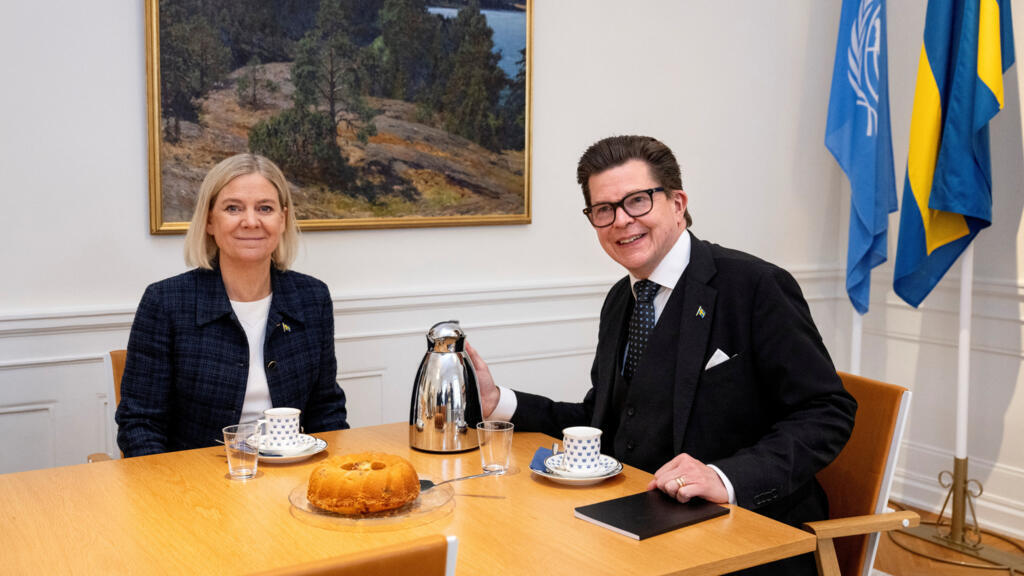
Sweden government formation has hit a major roadblock. Social Democratic leader Magdalena Andersson announced on Monday, September 28, that she had been unable to put together a government with the other three parties in the left-wing bloc. Her admission comes just over two weeks after the country’s general election on September 13 and leaves Sweden facing an uncertain political path ahead.
Attention now turns to outgoing Prime Minister Ulf Kristersson, who is expected to get the next chance to try to form a government.
Andersson Admits Defeat
Speaking to reporters, Andersson said that after holding talks with potential partners, she had concluded there was no realistic way for her to lead a new government at this stage.
The announcement is a significant setback for the Social Democrats. Although the left-wing bloc won more seats than its rivals, turning that narrow advantage into a working government has proved far harder than expected.
Andersson, who has previously served as Sweden’s prime minister, had hoped to return to power by uniting the four parties on the left side of Swedish politics. Differences among those parties, however, appear to have been too great to overcome.
A Knife-Edge Election Result
The September 13 election produced one of the tightest outcomes in recent memory. The left-wing bloc secured 176 seats in parliament, while the right-wing bloc won 173.
How the Numbers Break Down
Sweden’s parliament, the Riksdag, has 349 seats in total. That means:
- A majority requires 175 seats
- The left-wing bloc holds 176 seats, just one above that line
- The right-wing bloc holds 173 seats, two short of a majority
On paper, the left appeared to be in a strong position. In practice, a bloc is only as strong as the willingness of its members to work together, and that unity has not materialised.
What Happens Next
Under Sweden’s system, the speaker of parliament leads the process of forming a new government. The speaker meets with party leaders and then nominates someone to try to build a government that parliament will accept.
With Andersson stepping aside, the speaker is expected to hand that task to another party leader, most likely Ulf Kristersson.
Kristersson’s Uphill Battle
Kristersson, leader of the Moderate Party, currently heads a caretaker government while negotiations continue. His right-wing bloc includes the far-right Sweden Democrats.
Having narrowly lost the election, Kristersson faces a difficult challenge. His bloc does not have enough seats on its own to command a majority, which means he would need to win over at least some support from outside his current alliance.
After the election result became clear, Kristersson said he was prepared to look at ways of forming a majority among what he described as non-socialist parties.
The Center Party Holds the Key
Much of the attention now centres on the Center Party, which could play the role of kingmaker.
A Party Caught in the Middle
The Center Party is currently counted as part of the left-wing bloc. However, it has historically been aligned with the right, which makes it a natural target for Kristersson as he searches for extra support.
Kristersson is widely seen as hoping to persuade the Center Party to switch sides or at least back a government led by him.
A Firm Line on Extremes
That plan faces a major obstacle. The Center Party is strongly opposed to any government that includes the far-right Sweden Democrats.
Party leader Elisabeth Thand Ringqvist has made her position clear. She has ruled out joining or supporting any government that gives influence to parties on either the far left or the far right.
That stance creates a difficult puzzle for both blocs:
- The left-wing bloc struggles to unite because the Center Party is uneasy with far-left influence
- The right-wing bloc cannot easily attract the Center Party because of the Sweden Democrats’ role
Why Coalition Building Is So Difficult
Swedish politics has become increasingly fragmented in recent years. With several parties holding strong positions on key issues, building stable coalitions has turned into a complex balancing act.
The rise of the Sweden Democrats has been especially significant. Their growing influence has divided centrist parties, some of which are willing to cooperate with them while others refuse outright. This division makes it harder for either side to secure the numbers needed to govern.
Possible Scenarios Ahead
Several outcomes are now possible as negotiations continue:
- Kristersson manages to win over enough support to form a right-leaning government
- A compromise arrangement emerges involving a minority government supported by other parties on specific issues
- Talks drag on for weeks as parties struggle to find common ground
- In an extreme case, continued deadlock could eventually lead to a fresh election
Sweden’s system allows several attempts to approve a new prime minister before a new vote becomes necessary, giving parties some time to negotiate.
What This Means for Sweden
For now, Sweden remains under a caretaker government, able to handle day-to-day affairs but limited in its ability to push through major new policies. The longer negotiations continue, the more pressure will build on party leaders to find a workable solution.
The situation highlights how a narrow election result does not always produce a clear winner. Even with a majority of seats, the left-wing bloc could not agree on a path to power, and the right-wing bloc now faces its own set of hurdles.
A Test of Political Compromise
The coming weeks will test the ability of Sweden’s political leaders to put aside differences and find common ground. The Center Party’s decisions may prove crucial, and its refusal to support governments influenced by the far left or far right leaves little room for easy answers.
As Kristersson prepares to take his turn at the negotiating table, one thing is clear: forming Sweden’s next government will require careful diplomacy, difficult compromises and, perhaps, a surprising political shift.
Author