Oleshky Humanitarian Crisis: Trapped Ukrainian Town Faces Starvation as Russia Blocks Aid and Evacuation
The Oleshky humanitarian crisis is rapidly becoming one of the most alarming situations of the war in Ukraine. In this small Russian-occupied town in the Kherson region, around 2,000 people remain trapped without reliable access to food, clean water, medicine or electricity. International observers now warn that civilians there face a serious risk of dying, while Russian forces are accused of blocking both aid deliveries and evacuations.
A Lifeline From the Sky
With no safe route into the town, Ukrainian forces have turned to drones to keep residents alive. In one of the biggest operations of its kind during the war, they delivered about four tonnes of food to Oleshky by air.
Drone deliveries across the Dnipro River have been running since March, according to the regional administration. Details about when and where each delivery takes place are kept secret for security reasons. Ukrainian troops are positioned on the right bank of the river, just a few kilometres from the town.
Regular food supplies have not reached Oleshky since May, making these airborne deliveries a critical lifeline.
Russia Accused of Blocking Supplies
Oleksandr Prokudin, head of the Kherson regional military administration, says Russian forces are actively working to stop aid from reaching residents. According to him:
- Troops are shooting down drones carrying food
- Supplies that land are being seized or sold on
- Residents caught with aid parcels are being detained
Locals also report that soldiers are going from house to house searching for food dropped by drones. Ukrainian officials further claim that anyone suspected of contact with Ukrainian authorities or military faces the threat of immediate execution.
A Town Emptied by War
Before Russia’s full-scale invasion in February 2022, Oleshky was home to around 25,000 people. The town fell under Russian control in the early days of the war.
Today, regional authorities estimate that about 2,000 residents remain, including close to 50 children. The All-Ukrainian Council of Churches and Religious Organisations believes the true number may be higher, with more than 6,000 people still living in the town and nearby areas, among them roughly 200 children.
The Dam Disaster That Made Everything Worse
Life in Oleshky took a dramatic turn for the worse in June 2023, when the Kakhovka hydroelectric dam was destroyed. The resulting floods swept across large parts of the region, damaging hundreds of homes and contaminating wells and sewage systems.
Between 200 and 300 people are believed to have died in Oleshky as a result of the flooding alone.
Surviving Day to Day
Since then, conditions have only deteriorated. According to reports from inside the town, residents:
- Depend mainly on vegetables from their own gardens
- Suffer from ongoing shortages of medicine
- Move between abandoned buildings to avoid drone strikes
- Try to protect themselves from looting by Russian troops
Harrowing Accounts From Inside
Those with knowledge of the situation paint a deeply disturbing picture.
Tetyana Hasanenko, who works for the Oleshky city military administration, told ABC News that bodies are being left unburied on the streets. She said more than 100 bodies are currently being kept in the basement of the town’s hospital, which has had no power for four years.
Ukrainian musician Artem Pivovarov described residents being driven to eat grass and weeds in order to survive. He said mined roads make escape extremely dangerous, while shelling and drone attacks continue nearby. He added that bodies are reportedly left in the streets for months because no one is available to collect them.
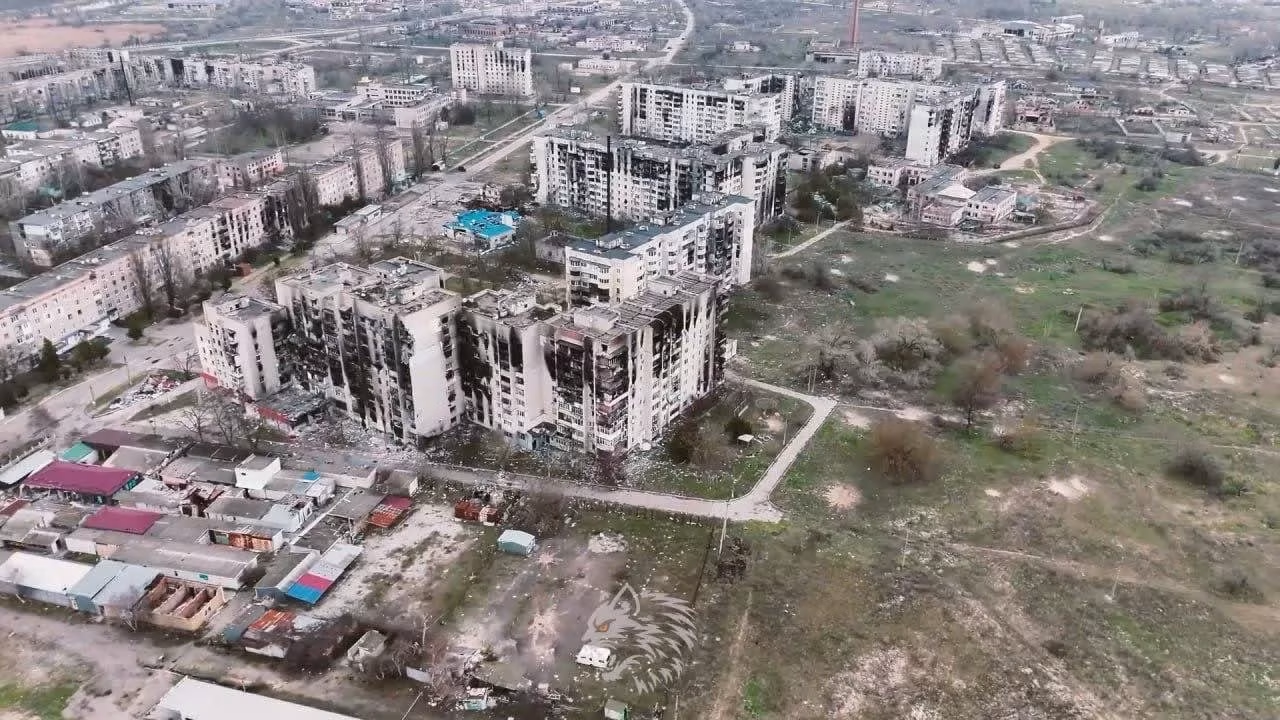
In April, the 34th Separate Marine Brigade “Borysfen,” which has taken part in the drone deliveries, released footage from Oleshky. The brigade said the images showed a town that Russian forces had reduced to a ghost town.
Evacuation Plan Stuck
Kyiv has prepared a humanitarian evacuation plan, and the International Committee of the Red Cross has said it is ready to take part.
However, Ukraine’s human rights ombudsman Dmytro Lubinets said Russia has yet to confirm that it will allow the mission to go ahead. Without guaranteed access, volunteers are unable to enter the town independently.
Kyiv Calls for International Pressure
Foreign Minister Andrii Sybiha has urged international organisations to push for humanitarian access. He accused Russia of intentionally creating a humanitarian disaster in the occupied parts of the Kherson region by cutting off food and medicine, blocking aid and evacuations, and using small attack drones to target people on the streets.
Global Alarm Grows
International bodies have also raised serious concerns.
In June, the UN mission in Ukraine described conditions in Oleshky as desperate, warning that thousands of civilians faced a grave threat to their lives, with no food and no access to healthcare.
Michael O’Flaherty, the Council of Europe’s Commissioner for Human Rights, said he was deeply alarmed by how quickly the crisis was worsening. He noted that civilians, including children, are trapped without enough food, medicine, healthcare, running water or electricity, and that reports suggest they are at high risk of death.
O’Flaherty reminded Russia that, under international humanitarian law, an occupying power is responsible for ensuring civilians have access to food and medical supplies.
Raising Awareness Around the World
Public figures and ordinary Ukrainians are working to keep Oleshky in the spotlight.
Ukrainian tennis player Oleksandra Oliinykova, currently ranked 47th in the world, urged her social media followers to look up Oleshky and learn about the humanitarian disaster unfolding there.
At a recent football match between Hungary and Ukraine, Ukrainian fans held up a banner calling on the world to save Oleshky.
A Race Against Time
For the people still trapped in Oleshky, every day without secure access to food and medicine increases the danger. Drone deliveries are keeping some residents alive, but they cannot replace a safe humanitarian corridor or a proper evacuation.
Unless Russia agrees to allow aid and evacuation efforts to proceed, the situation is likely to grow even worse. The international community now faces growing pressure to act before this small town becomes the scene of an even greater tragedy.
Author