




Russia in Africa: Political Lifelines, Limited Investment, and a Growing Count of the Dead
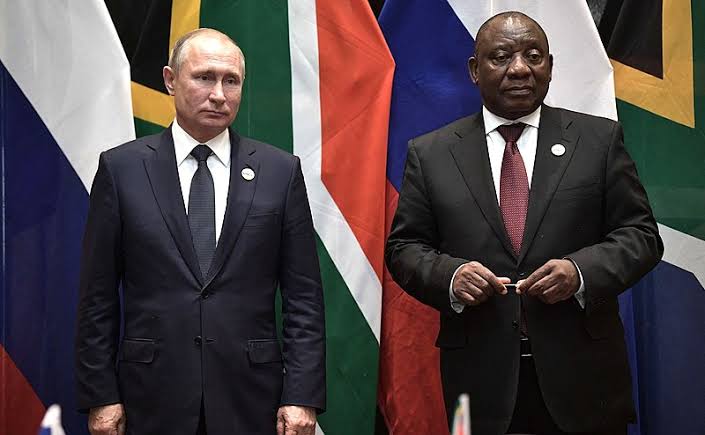
Russia Africa relations are once again in the spotlight as leaders from across the continent arrive in Moscow for the third Russia-Africa Summit. The gathering is meant to project an image of a confident Kremlin with friends in every corner of Africa. Yet beneath the ceremony lies an awkward truth: what Russia offers is overwhelmingly political and military, while its economic contribution remains a fraction of what China or Europe provides.
To understand the relationship, it helps to trace how it has evolved over the past seven years, from mercenaries in a looted palace to grieving mothers waiting for coffins.
From a Palace Outside Bangui to a War in Ukraine
In 2019, Russian fighters from the Wagner Group had made themselves at home in Berengo Palace, the former residence of Jean-Bédel Bokassa, the Central African Republic’s self-declared emperor. One of the first things they wanted to talk about was not the African country they had been sent to protect, but the one they had come from. A fighter who gave his name as Vladimir summed up the mood in a few words: Russia had returned to Africa.
The years since have reshaped that presence dramatically. Wagner’s founder, Yevgeny Prigozhin, is dead. Across the Sahel, the private mercenary brand has been replaced by Africa Corps, a force run directly by Russia’s Ministry of Defence. And Moscow’s own war in Ukraine has drawn Africans into its ranks, some recruited through deception.
The human toll is now measurable. An investigation by Journalists for Justice had documented 502 African deaths in that war by June 2026.
A Mother’s Wait in Douala
In Cameroon’s commercial capital, the numbers become personal. A woman known as Mama Regina lives with a portrait of her son Moses on the wall. He left for Russia to fight and has not come home. She describes him simply as handsome, her eyes red from holding back tears, and like many families she is waiting for a body to bury.
Her grief is part of a wider pattern: Africans mourning men who died in a distant conflict that had nothing to do with their own countries. For some of these families, comfort has come from an unexpected place. A small but expanding Russian Orthodox community has taken root in Cameroon, led by a local pastor trained in St Petersburg who says his mission is to spread the gospel.
A Summit Measured in Attendance
The scale of the Moscow summit tells its own story about the state of the partnership:
In 2019, the first summit in Sochi drew 43 African heads of state or government.
In 2023, after the invasion of Ukraine, only 17 leaders travelled to St Petersburg. Putin used the occasion to promise free grain to six countries, which was later delivered.
This year, the Kremlin anticipates delegations from 48 countries, with 22 heads of state expected.
Attendance has recovered from the 2023 low, but the reasons for showing up are revealing. According to Beverly Ochieng, an analyst based in Dakar, the economic case for attending is far weaker than for comparable summits hosted by Washington or Beijing. Moscow simply does not put large investment packages on the table. Political considerations, she argues, are the real draw.
What the Juntas Get
For the military governments of Mali, Burkina Faso, and Niger, the appeal is direct and existential. Russia offers help staying in power. After France was pushed out of the region, Moscow filled the gap with troops, equipment, and diplomatic cover.
The results on the ground are mixed at best. Armed groups continue to launch attacks across the Sahel, and Human Rights Watch has accused Africa Corps units in Mali of killing civilians and torturing people in custody. Security has not improved in the way these governments promised their populations.
Playing the Anti-Colonial Card
Russia’s advantage in Africa is partly historical. During the decolonisation era, the Soviet Union educated and trained generations of African military officers, politicians, and students. That legacy lingers in personal networks and in memory. Ochieng herself studied Russian at the Soviet embassy in Kenya.
Moscow continues to lean heavily on the argument that it never colonised the continent, positioning itself as a partner free of the baggage carried by former European powers. For many audiences, that message still resonates.
The Economic Reality
Russia is under heavy Western sanctions and needs new markets and resources. Its commercial footprint in Africa is growing but remains modest:
In Mali, work has started on a gold refinery backed by Russia’s Yadran Group, with the Malian state holding 62 percent.
In Guinea, the aluminium giant Rusal runs bauxite mines and an alumina plant.
In Niger, subsidiaries of Rosatom are in talks over uranium projects following the seizure of a mine previously operated by France’s Orano, though a separate dispute over selling existing uranium stockpiles remains unresolved.
Putin has framed these ventures as shared development rather than extraction, insisting earlier this month that Russia has no intention of taking anything from Africa.
The trade figures put the relationship in perspective. Russia’s trade with Africa stood at roughly 28 billion dollars in 2025. China’s reached 348 billion dollars. The European Union exchanged nearly 355 billion euros in goods with the continent in 2024. Whatever Moscow’s ambitions, it is not an economic heavyweight on the continent.
Survival Without Loyalty
Sergey Eledinov, a former Russian officer who now works as a security analyst, sees a structural weakness in Moscow’s model. Propping up a government does not guarantee that government’s gratitude. Once a regime feels secure, it is free to shop around for other partners. In his words, survival generates options rather than loyalty.
Ochieng adds a similar warning about optics. Russian flags waved at street demonstrations in Bamako or Niamey are often read abroad as proof of popular enthusiasm for Moscow. She cautions that such images do not mean Africans broadly identify as pro-Russian; they reflect specific political moments rather than a continental mood.
What the Summit Really Signals
For the Kremlin, the value of the Moscow gathering lies less in signed contracts than in the photographs. Hosting dozens of delegations allows Russia to show that it retains political relevance and international partners at a time when much of the West treats it as a pariah.
For African governments, the calculation is more pragmatic. Russia is useful for security guarantees, diplomatic backing, and leverage against other powers. It is not, at least for now, the partner that will build railways, fund ports, or transform economies.
The relationship, in short, rests on politics and guns rather than trade and investment. That foundation can hold for a while, but as Mama Regina’s empty wait suggests, its costs are being paid by ordinary people far from the summit halls.
Author