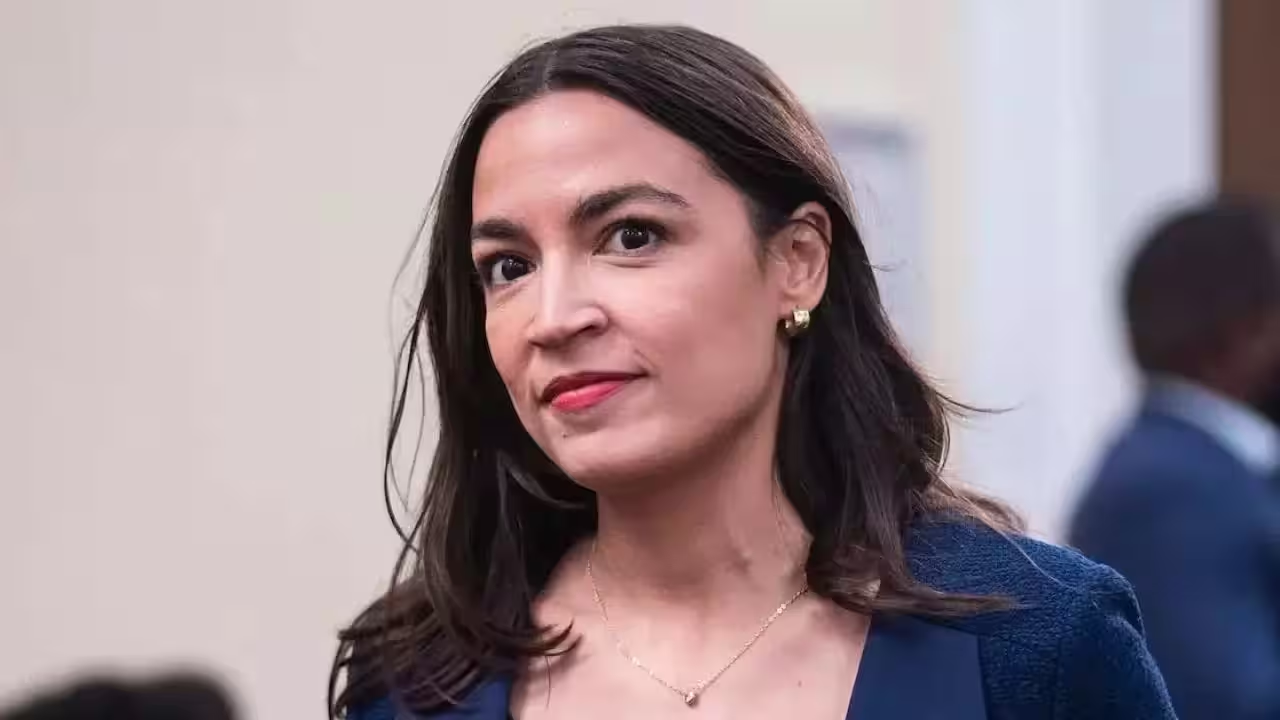
Speculation about an Ocasio-Cortez 2028 run has followed the New York congresswoman for years, and on Sunday she did nothing to quiet it. Asked directly on ABC’s “This Week” whether a presidential campaign is in her plans, she neither committed nor closed the door.
Her first answer was the disciplined one. She said her attention is on winning the midterms and that she is currently running for Congress.
Host Jonathan Karl pressed. That is when the more interesting sentence arrived. She said she has not ruled out the possibility, and described herself as humbled by the level of support she has seen. Then she steered back to November.
The Senate Question Too
Karl also raised a second scenario: a 2028 Senate run in New York, the cycle when Senate Minority Leader Chuck Schumer faces reelection.
Ocasio-Cortez, 36, said anything is possible at this point.
That is a notably relaxed answer about the prospect of challenging her own party’s Senate leader, and it reflects how much her standing has shifted since she arrived in Washington.
It also matches what she told Politico in July while campaigning in Michigan, when she said she could not claim to have ruled out a presidential bid.
Why the Question Keeps Getting Asked
The persistence of the speculation is not manufactured. It rests on a track record.
Ocasio-Cortez has spent years converting her national profile into leverage for insurgent progressive candidates, repeatedly backing challengers who went on to defeat better-funded establishment opponents.
The most recent example came last week in Michigan, where Abdul El-Sayed won the Democratic Senate primary against Rep. Haley Stevens. El-Sayed campaigned on rejecting funding for Israel and implementing Medicare for All, and prevailed despite tens of millions of dollars spent attacking him by groups supporting Stevens.
Her endorsement was part of what powered that result. So was backing from Sen. Bernie Sanders, who twice ran for president as an anti-establishment alternative.
Asked about the win, Ocasio-Cortez framed it as evidence of something broader. She described the party as entering a period of renewal, and pointed to what she called an ascendant wave of young candidates energizing the Democratic coalition and expanding the range of options available heading into November.
The Sanders Succession Problem
There is a structural reason her name keeps surfacing.
Sanders has effectively taken 2028 off the table, which leaves an obvious vacancy at the head of the movement he launched in 2016. Someone has to carry it, and no one has an equivalent claim.
Ocasio-Cortez has been the most visible candidate for that role, touring the country alongside Sanders since the last presidential election, headlining rallies built around opposition to oligarchy and support for Medicare for All.
Whether she wants the job is precisely the question she keeps declining to answer.
Looking Back at 2018
Karl asked her to reflect on how far she has come since her first campaign, when she unseated a long-serving incumbent in New York’s 14th District and stunned the Queens Democratic establishment.
She called representing the working people of her district the greatest privilege of her life. What changed her, she said, was arriving with enormous aspirations for the country and then getting the actual opportunity to be in the arena trying to improve it, difficulties included.
She added that she loves that it is hard, and that she values having to engage with people and officials across the country in pursuit of goals like guaranteed healthcare for every American.
A Personal Decision Made Public
The interview also turned to something she shared on Instagram last week.
On Saturday, Ocasio-Cortez posted videos of herself administering the first injections in the egg-freezing process. In those posts, she explained that she had been weighing the decision for a long time, that there is not much information available about it, and that the process can feel intimidating.
Asked why she made it public, she connected it directly to the current policy environment. With the administration restricting reproductive care for women nationwide, from abortion access to the ability to carry a healthy pregnancy, she said leaders have a responsibility to discuss these processes openly, particularly for working women, and to normalize them.
What It Adds Up To
Nothing she said on Sunday amounts to an announcement. Politicians in her position rarely commit two years out, and there are practical reasons not to: an early declaration invites sustained attacks, complicates fundraising for other candidates, and turns every subsequent statement into a campaign document.
What she did instead was keep every option live while directing attention to the midterms, which is exactly what someone would do whether or not they intend to run.
For now, the answer to the 2028 question remains the same one she has been giving since July. Not ruled out.
Author
-
Lucienne Albrecht is Luxe Chronicle’s wealth and lifestyle editor, celebrated for her elegant perspective on finance, legacy, and global luxury culture. With a flair for blending sophistication with insight, she brings a distinctly feminine voice to the world of high society and wealth.