Netanyahu’s Future Hangs in the Balance as Israel’s Election Deadlock Deepens
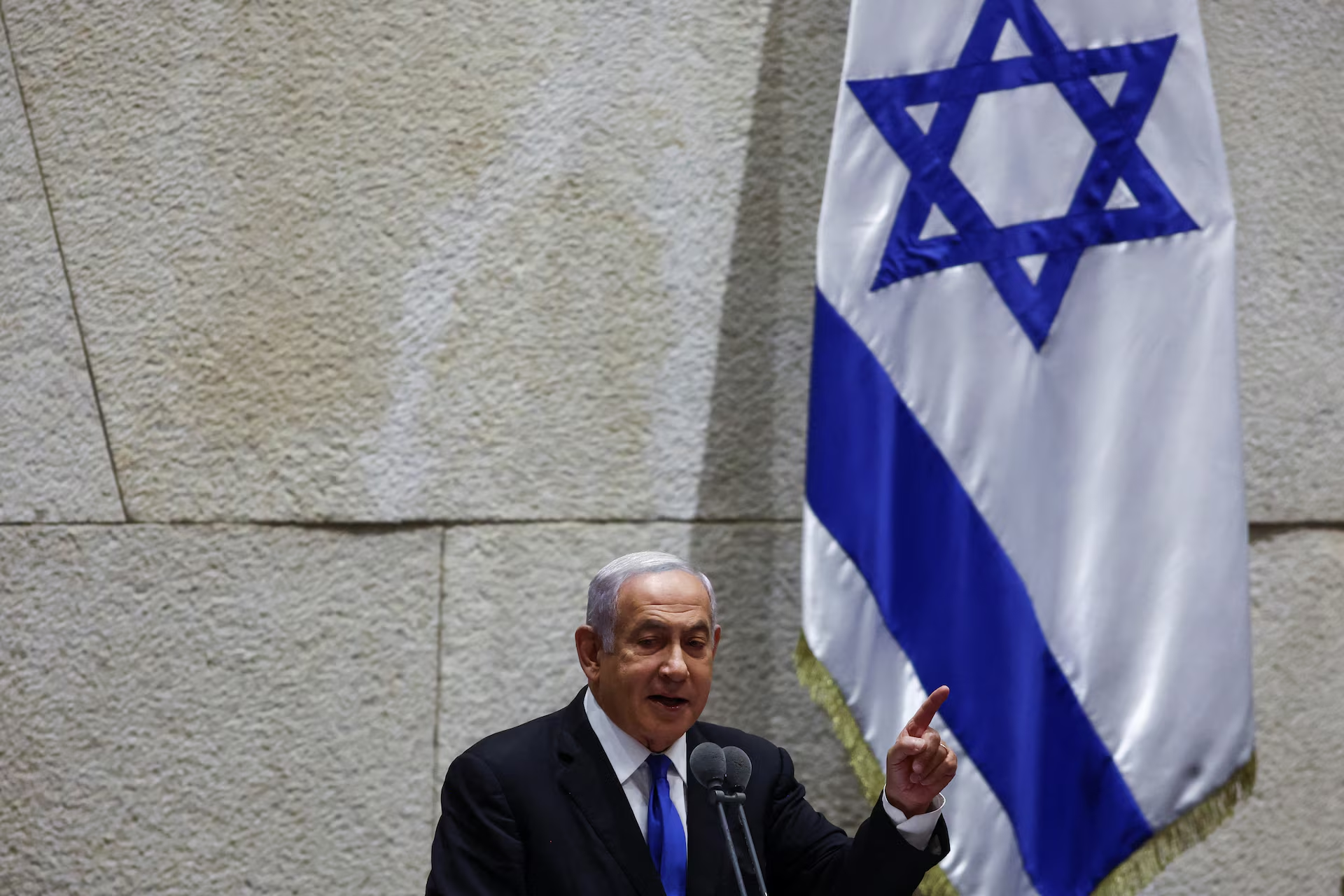
The Netanyahu political future question has never felt more open. Israel’s election produced no clear winner, leaving the long-serving prime minister without a majority but also without a rival capable of replacing him outright. According to Yossi Mekelberg, an associate fellow at Chatham House who analysed the outcome for CGTN Europe, the opposition actually came out ahead in both votes and seats, yet internal disagreements over cooperating with Arab parties could unravel any attempt to form an alternative government. The stakes for Netanyahu personally are enormous: losing office would mean facing his corruption trial without the shield that power provides.
An Election Nobody Won
The final count left both major blocs short of the 61 seats needed to govern in the 120-member Knesset. Netanyahu’s Likud and its hard-right allies secured 53 seats, a sharp fall from the 64 they held after the 2022 vote. The opposition alliance led by former military chief Gadi Eisenkot took 48. Arab-led parties, the Joint List and Ra’am, achieved a record combined total of 19.
Mekelberg’s reading is that the numbers tell a story of rejection. More Israelis voted for parties opposed to Netanyahu than for those supporting him. In a straightforward parliamentary system, that would normally translate into a change of government. Israel’s fragmented politics, however, rarely work so cleanly.
The Arab Party Dilemma
The core obstacle for the opposition is arithmetic combined with ideology. Eisenkot’s bloc cannot reach 61 without the Arab-led parties, yet most of its members have ruled out depending on them, and Eisenkot himself has said neither party currently meets his conditions for partnership.
Mekelberg identifies this as the fault line most likely to derail coalition negotiations. The opposition is united in wanting Netanyahu gone but divided on what it is willing to do to achieve that. Some factions see cooperation with Arab parties as politically toxic among their voters. Others view it as the only realistic path to power. Until that disagreement is resolved, the opposition’s numerical advantage remains theoretical.
For Netanyahu, this division is a lifeline. As long as his opponents cannot agree among themselves, he retains the initiative even without a majority.
What Another Election Would Mean
If coalition talks collapse, Israel could be heading toward yet another vote. Mekelberg warns that this outcome would be damaging. The country has already endured a cycle of repeat elections in recent years, each one deepening public frustration and paralysing decision-making.
The consequences of further instability would be felt across several areas:
Security policy at a time of active conflict with Iran and ongoing tensions in Gaza.
Budget planning, including wartime spending and fiscal consolidation.
Financial markets, which have already reacted nervously to the uncertainty.
Public confidence in democratic institutions, strained by repeated inconclusive votes.
A repeat election also carries no guarantee of a different result. Israeli voters have shown remarkable consistency across recent contests, and another round could simply reproduce the same deadlock.
The Trial That Shadows Everything
The most personal dimension of the crisis concerns Netanyahu’s legal situation. He has been on trial for corruption for years, facing charges of bribery, fraud, and breach of trust that he denies. Serving as prime minister has provided him with practical advantages: control over the political agenda, the ability to delay proceedings, and the possibility of advancing legislation that could affect his case.
Mekelberg points out that losing office would strip away those advantages. A former prime minister stands before the court as an ordinary defendant. That reality gives Netanyahu an exceptionally strong incentive to remain in power by any available means, whether through a narrow coalition, a unity government, or a prolonged caretaker period while negotiations drag on.
Critics argue this dynamic distorts Israeli politics, with national decisions shaped by one man’s legal calendar. Supporters counter that the charges are politically motivated and that voters have repeatedly backed him regardless.
Netanyahu’s Options
Despite the setback, the prime minister is far from finished. Several paths remain open:
He may receive the first mandate from President Isaac Herzog to attempt coalition building, given that his bloc is the larger of the two.
He could pursue a national unity government, arguing that wartime demands cooperation across the spectrum, though many opponents have rejected the idea.
He might simply wait, remaining caretaker prime minister if talks fail and betting that another election produces a better outcome.
Mekelberg’s analysis suggests that Netanyahu’s survival instincts should not be underestimated. He has rebuilt from weaker positions before, and the opposition’s divisions give him room to manoeuvre.
The Opposition’s Challenge
For Eisenkot, the task is to convert a plurality of votes into an actual government. That requires either persuading reluctant partners to accept some form of arrangement with Arab parties, or peeling away members of Netanyahu’s bloc who might be willing to switch sides.
Neither is easy. The first risks fracturing his coalition before it forms. The second depends on right-wing politicians abandoning a leader who has dominated their camp for a generation.
Mekelberg’s assessment implies that the opposition’s window may be narrow. If it cannot demonstrate quickly that it can govern, momentum will shift back toward Netanyahu, and the argument for a unity government or new elections will grow louder.
A System Under Strain
Beyond the individuals involved, the deadlock exposes structural weaknesses in Israel’s political model. Proportional representation produces a highly fragmented Knesset in which small parties wield outsized influence. The exclusion of Arab parties from coalition consideration, despite their record showing, removes nearly a sixth of the legislature from the equation and makes majorities harder to assemble.
These features predate Netanyahu and will outlast him. But his personal circumstances have sharpened their effects, turning routine coalition bargaining into a high-stakes contest over whether one leader keeps the protection of office.
What to Watch
The coming weeks will reveal whether the opposition can overcome its internal rifts, whether Netanyahu can assemble a coalition from a diminished base, and whether Israel is once again heading to the polls. Underlying all of it is a question Mekelberg places at the centre of his analysis: can a prime minister whose political survival is tied to avoiding a courtroom be dislodged by an opposition that agrees on little else?
For now, the answer remains as uncertain as the election result itself.
Author