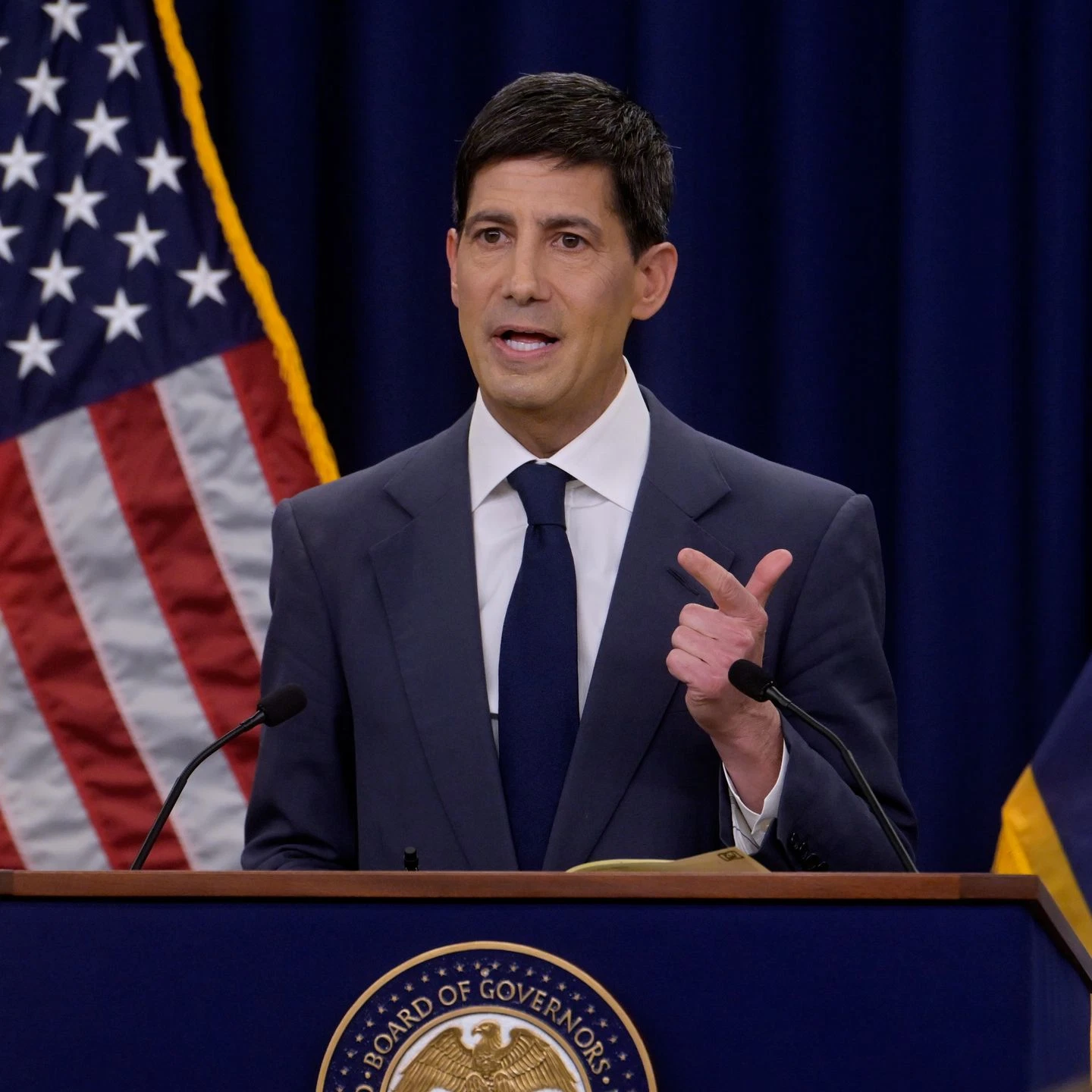
The Fed inflation divide revealed in newly released minutes shows a rate-setting committee sharply split over whether US inflation will remain stubbornly high or ease once the Iran war winds down. The document, released Wednesday, offers the first detailed look at internal deliberations under new Fed chair Kevin Warsh.
A Committee Pulling in Two Directions
The minutes laid bare a striking lack of consensus among the Fed’s 19 officials. Many indicated they expected the central bank’s key rate to remain at or slightly below its current 3.6% by year’s end. Yet just as many suggested the rate would likely be higher by that point.
The forecasts released after the June 17 meeting told the same story of division. Of the 18 policymakers who submitted projections, half backed raising rates by the end of the year, while the other half favored holding them steady or cutting them.
Notably, Warsh himself declined to submit a forecast. His reasoning reflects a broader philosophy: he believes such projections can lock policymakers into a rigid approach that becomes harder to adjust if the economy shifts course.
The Core Disagreement Over Inflation
At the heart of the split lies a fundamental question about where inflation is headed.
Most policymakers generally anticipated inflation would decline as gas prices cooled and the effects of tariffs faded. But a significant contingent worried about a countervailing force, the massive investment in artificial intelligence, which they feared could keep inflation elevated by driving up prices for semiconductors and other technology goods.
The minutes, released three weeks after the June 16-17 meeting, also revealed that a few officials saw a case for raising rates at that gathering. Ultimately, though, they agreed to leave the rate unchanged, a decision approved by a unanimous vote. The document did not identify which officials held which positions.
A New Chair and a Familiar Predecessor
The release marked a notable moment for the Fed’s leadership. Warsh was appointed by President Donald Trump earlier this year to replace Jerome Powell, whose term ended in May. Trump had repeatedly criticized Powell for not lowering borrowing costs quickly enough, yet there is little sign so far that Warsh is moving to cut rates.
Powell, for his part, remains on the Fed’s policymaking committee, serving a term as a Fed governor that runs until January 2028.
At a news conference on June 17, Warsh stressed that the Fed would bring inflation back to its 2% target, a goal it has missed for more than five years. Economists and Wall Street investors interpreted his remarks as a signal that the central bank could raise rates later this year.
The AI Wildcard
One of the more distinctive concerns running through the minutes is the potential inflationary impact of the AI boom.
Many officials flagged the risk that surging demand for AI infrastructure could push up prices for semiconductors, computer equipment, and electricity, the last of which is in high demand because data centers require enormous amounts of power to operate. According to the minutes, many participants noted that persistent strong demand for AI infrastructure would likely sustain upward pressure on prices for technology products and electricity.
The concern is not merely theoretical. Last month, Apple said it would raise the prices of its laptops and iPads, citing more expensive memory chips.
Rising Consumer Anxiety
Beyond the AI question, the Fed is watching how ordinary Americans perceive the trajectory of prices.
Inflation has worsened since the United States and Israel attacked Iran in late February, reaching a three-year high of 4.2% in May. As the conflict has eased, gas prices have retreated, and inflation is expected to cool when June’s figures arrive next week.
The deeper worry is whether expectations themselves could become self-fulfilling. If consumers and businesses assume prices will stay high, that belief can drive the outcome, as businesses raise prices in anticipation of higher costs and workers push for higher pay to keep up.
Recent data has amplified those concerns. The Federal Reserve Bank of New York reported Tuesday that its measure of consumer expectations for inflation one year out climbed to 3.7%, the highest in nearly three years. Expectations for inflation three years ahead rose to 3.3%, a four-year high.
Most Fed officials, including Warsh, say they keep a close eye on these expectations, though many give more weight to financial market measures, which have been lower and more stable than survey-based figures.
For now, the minutes make clear that the path forward remains genuinely uncertain, with the Fed’s own policymakers divided over which way inflation, and interest rates, will ultimately tilt.
Author