Kremlin Seizes Metro Russia as Moscow Expands Crackdown on Western Businesses
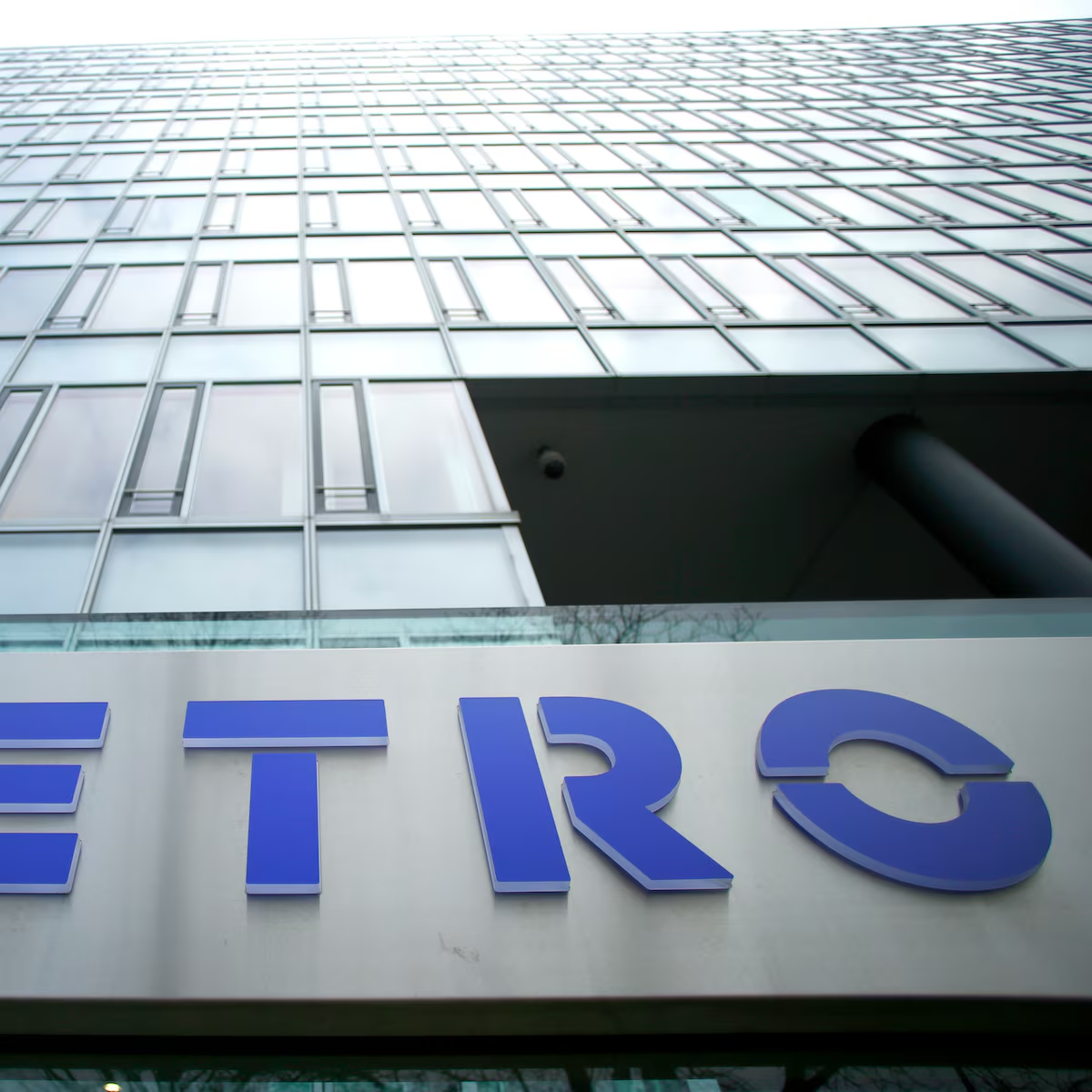
The Kremlin seizes Metro Russia in its latest move against Western companies still operating in the country. On Monday, President Vladimir Putin signed an executive order placing the Russian arm of German retail group Metro AG under what the government calls “temporary management.” The decision adds Metro to a growing list of foreign firms whose Russian businesses have been taken over by the state, and it comes at a time of sharply rising tension between Moscow and Berlin.
What the Order Does
Under Putin’s decree, the shares of Metro Russia are transferred to a company called Torg Rus. Corporate records show that this management firm was registered only earlier this month, suggesting it may have been created specifically to take control of the retailer’s Russian operations.
In an unusual detail, Johannes Tholey, the current chief executive of Metro Russia, is also listed as the head of Torg Rus. That arrangement may help ensure continuity in day-to-day operations, even as ultimate control shifts to the state.
Metro’s Response
Metro’s Russian subsidiary issued a brief statement saying its business was continuing to operate normally. However, it did not directly address the presidential order or explain what the change in control would mean for the company going forward.
The German parent company’s reaction will be closely watched, as it faces the prospect of losing effective control over a significant part of its international business.
Part of a Broader Pattern
Metro is far from the first Western company to face this treatment. The seizures are made possible by a decree Putin signed in 2023, which gave the Russian state the power to take temporary control of assets belonging to foreign companies.
Since then, the Kremlin has used that authority repeatedly, and the pace appears to be picking up.
A Wave of Recent Seizures
Just earlier this month, the Russian government took control of the local subsidiaries of several major Western businesses, including:
- Auchan, the French supermarket chain
- Nestlé, the Swiss food giant
- Lemana PRO, the home improvement retailer formerly known as Leroy Merlin
- Two French logistics companies
With Metro now added to the list, the number of well-known European brands affected in a single month is striking. It signals that Moscow is taking an increasingly aggressive stance towards foreign companies that have remained in the Russian market.
Moscow’s Justification
Russian officials have framed these seizures as a response to what they describe as hostile actions by unfriendly foreign governments. In Moscow’s view, taking control of Western-owned assets is a form of retaliation against countries that have imposed sanctions or taken other measures against Russia.
Critics, however, see the move as a way for the state to put pressure on Western governments while also gaining leverage over valuable businesses. For foreign companies, the message is clear: remaining in Russia carries growing risks, with assets potentially subject to state control at any moment.
Diplomatic Tensions in the Background
The timing of the Metro seizure is notable, as it comes amid a fresh chill in relations between Russia and Germany.
A Rare Meeting at the UN
Shortly before the decree was signed, Russian Foreign Minister Sergei Lavrov met with his German counterpart on the sidelines of the United Nations General Assembly in New York. It was the first meeting between the two countries’ top diplomats since Russia launched its full-scale invasion of Ukraine in 2022.
Any hope that the talks might ease tensions quickly faded. Lavrov later said he had not heard anything new during the meeting, suggesting that little progress was made.
The Leipzig/Halle Airport Incident
Relations had already been strained by a serious security incident. Just weeks earlier, Germany accused Russia of being responsible for an attempted drone attack at Leipzig/Halle Airport.
Berlin responded with a series of diplomatic measures, including:
- Closing a Russian consulate
- Shutting down the Russian cultural centre in Berlin
Moscow has rejected the accusations, calling them fabricated.
Against this backdrop, the seizure of a major German company’s Russian operations is likely to be seen in Berlin as another escalation in an already tense relationship.
What It Means for Western Businesses
For companies that chose to stay in Russia after 2022, the latest seizures raise difficult questions. Many firms remained in the country to protect their investments, serve existing customers or avoid heavy financial losses from a rushed exit.
Now, those same companies face the growing possibility that their operations could be taken over by the state with little warning.
Key Risks for Foreign Firms
The recent wave of takeovers highlights several dangers for businesses still active in Russia:
- Sudden loss of control over local subsidiaries
- Limited legal options to challenge state decisions
- Assets being used as bargaining chips in diplomatic disputes
- Uncertainty over whether temporary control will ever be reversed
While the government describes these measures as temporary, there is little clarity about how or when control might be returned to the original owners.
A Signal to Europe
The takeover of Metro Russia, following closely on the heels of seizures involving French and Swiss companies, sends a strong signal to European governments. It shows that Moscow is willing to use economic pressure as part of its broader confrontation with the West.
At the same time, it underlines how deeply political tensions are now shaping the business environment in Russia. Commercial decisions are increasingly tied to diplomatic relations, leaving companies caught in the middle.
Looking Ahead
For now, Metro Russia says it is operating as usual, and customers may notice little immediate difference. But behind the scenes, control of the business has shifted, and its future is uncertain.
As relations between Russia and Germany continue to deteriorate, and as Moscow expands its use of asset seizures, other Western companies still operating in Russia may be wondering whether they will be next. The Metro case is a stark reminder that, in today’s climate, doing business in Russia comes with risks that go far beyond the marketplace.
Author