A Record Day in Seoul: The Kospi’s 18% Surge and What It Does and Doesn’t Settle
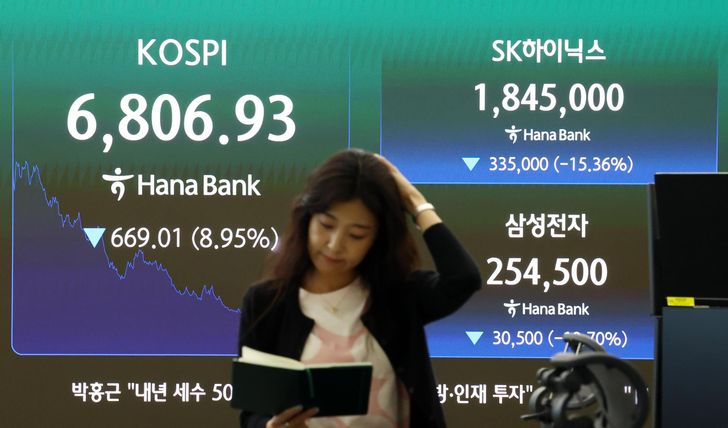
South Korea’s benchmark index closed Friday up 17.9 percent at 6,695.45 — the largest single-day gain in its history.
Three days earlier it had been in freefall, shedding more than 17 percent across three sessions as investors dumped technology stocks over doubts about the durability of the artificial intelligence boom and mounting competition from Chinese chip and AI rivals.
Net effect for the week: a decline of about 1.4 percent. Net effect for July: down roughly 22 percent, and still far below the peak above 9,000 reached in June.
That sequence tells you more than any single number.
What Moved
The chipmakers carried it. SK Hynix rose close to its 30 percent daily limit; Samsung Electronics gained as much as 28 percent.
Both had been battered in the preceding days — Samsung down more than 27 percent and SK Hynix down 18.5 percent across three sessions — which put a great deal of coiled energy behind Friday’s reversal.
Across the full week, SK Hynix finished about 5.3 percent lower and Samsung roughly 2 percent higher.
What Triggered It
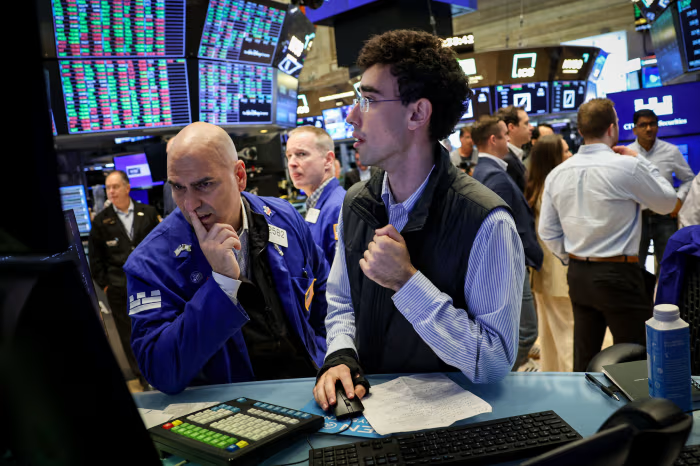
The immediate catalyst came from Wall Street. American chip stocks recorded their best day in over a year on Thursday after Microsoft reported stronger-than-expected quarterly profits.
That mattered because the month-long rout had been driven by a specific fear: that the enormous capital spending Big Tech firms have committed to AI infrastructure might not generate proportionate returns. A major buyer of that infrastructure posting solid numbers eased the concern, at least temporarily.
A second, more local catalyst helped. SK Group Chairman Chey Tae-won bought roughly 3,600 SK Hynix shares for about $3.2 million — his first direct investment in the company, and one widely read as a confidence signal following the chipmaker’s report on Wednesday of a more than sixfold increase in second-quarter earnings.
Who Was Buying
The flow data is revealing. By late morning, foreign investors had bought a net 4.86 trillion won — roughly $3.38 billion — while individual investors were net sellers of 4.46 trillion won and institutions net sellers as well.
In other words, overseas money moved in while domestic retail investors were still heading for the exit. That divergence often characterises the turning point of a panic, though it does not reliably predict what comes next.
Analysts also pointed to a technical factor: growing optimism that the unwinding of leveraged positions, which had amplified the selling, was nearing its end.
The Regulatory Response
Following an emergency meeting earlier in the week to address the rout, the South Korean government said Wednesday it would further restrict access to single-stock leveraged exchange-traded funds.
Albert Yong, managing partner at Seoul-based Petra Capital Management, said the measures should support stability, noting that less experienced investors will find it harder to pile back into those products given the additional restrictions.
His broader assessment was more measured. Microsoft’s results had eased anxieties about AI spending, and investors appeared to conclude the sell-off had gone too far — but whether this marks the start of a genuine recovery, he said, remains to be seen.
Elsewhere in Asia
Japan’s Nikkei 225 closed about 4 percent higher after gaining as much as 5.4 percent, led by semiconductor and AI-linked names. SoftBank Group rose sharply, as did chip equipment maker Tokyo Electron. The broader Topix added 1.3 percent.
The Currency Story
Running alongside the equity rebound was a significant development in foreign exchange.
The yen strengthened by as much as 3 percent on Thursday amid a surge in trading volumes, following what traders and analysts believe was intervention by Japanese authorities. Tokyo declined to confirm.
What is documented is that the Federal Reserve Bank of New York conducted a dollar-yen rate check on behalf of the US Treasury — a form of soft intervention in which officials request exchange-rate quotes from banks, often preceding direct currency purchases. Japan’s Nikkei newspaper reported the operation was coordinated.
Atsushi Mimura, Japan’s vice-minister of finance for international affairs, said his side is receiving support from US authorities that goes beyond mere moral support, and that the two have been in constant contact.
By Friday the yen had given back some ground, weakening 0.6 percent to around ¥160.40 against the dollar — still well stronger than the ¥163-plus level before the apparent intervention. The currency had been trading above 160 for weeks, near four-decade lows.
Why This Intervention May Differ
Japan spent ¥11.7 trillion, roughly $73 billion, defending the currency across April and May, with limited lasting effect.
Osamu Takashima, a foreign exchange strategist at Citigroup in Tokyo, argued that apparent American cooperation changes the calculation — making a return to ¥164 difficult in the near term, since markets will now be wary of further action.
Others are less convinced. Jonas Golterman of Capital Economics suggested intervention may work no better now than previously, while noting that the persistence of Japanese authorities points to the yen holding around 160 through this year before a more sustained recovery next year.
One banker in Asia said clients were already testing the government’s resolve with short yen positions targeting around ¥162.
The rate backdrop remains the fundamental driver. The Bank of Japan held its policy rate at 1 percent on Friday, as expected, and the Federal Reserve left its benchmark unchanged on Thursday. The gap between the two has been the central force behind yen weakness.
What Has Not Been Resolved
A record one-day gain feels decisive. It settles very little.
The Kospi remains roughly 22 percent lower for July and far beneath its June high. The underlying question that caused the sell-off — whether AI capital expenditure will translate into commensurate returns — has not been answered by one quarter of results from one company.
What Friday demonstrated is how tightly Korea’s equity market has become bound to the global AI trade, and how violently that linkage now transmits sentiment in both directions. Moves of this magnitude in either direction are themselves a symptom of an unsettled market rather than a healthy one.
A note for readers: this is market reporting rather than investment guidance. Volatility of this order carries real risk in both directions, and anyone making decisions on the basis of it would be well advised to speak with a qualified financial professional about their own circumstances.
Author