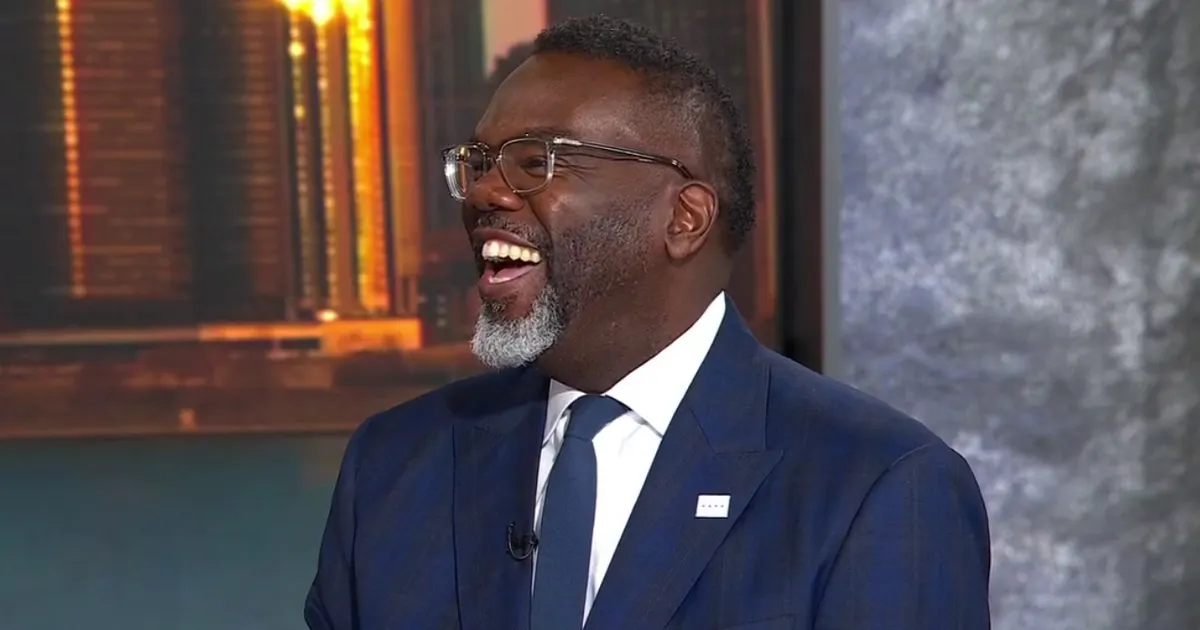
The Brandon Johnson reelection campaign is officially underway, and the numbers surrounding its launch tell you most of what you need to know about the challenge ahead.
After months of deliberation, Chicago’s mayor announced Sunday that he will seek a second term, framing the 2027 race as a contest that will compel voters to distinguish between what he called real progressives and posers.
That framing is not accidental. It is a strategy built around the one asset Johnson still has in abundance.
The Money Problem
By holding his announcement until after Labor Day, Johnson gave up ground he could not easily afford to lose.
His campaign fund holds less than $650,000. Frontrunner Alexi Giannoulias has roughly $22 million.
That gap is not a disadvantage to be managed through better messaging. It is a structural problem affecting television advertising, field organising, staffing and everything else a citywide campaign requires in a media market as expensive as Chicago’s.
Trailing by a factor of more than thirty in a crowded field is the kind of position that usually forces a candidate to run an entirely different type of campaign.
The Launch Itself
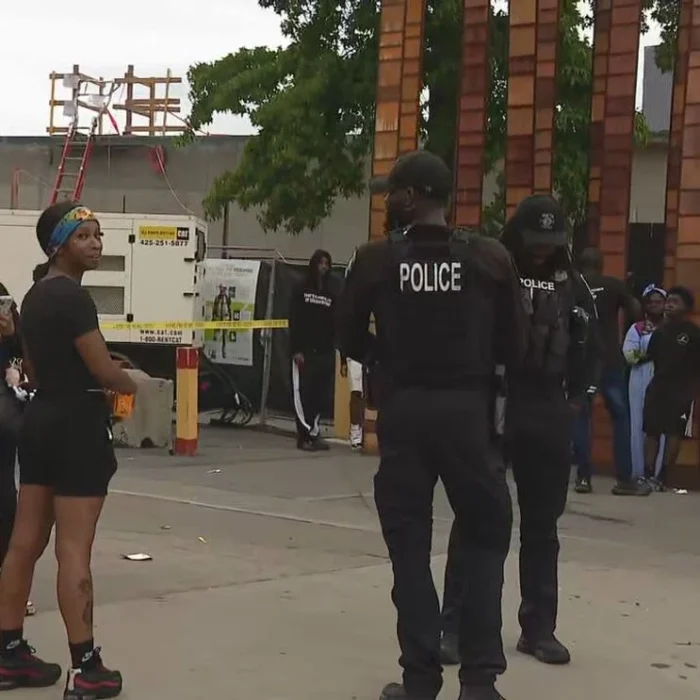
Johnson addressed several hundred energised supporters in a cloud-covered courtyard at the DuSable Black History Museum and Education Center.
The event had the feel of a block party rather than a conventional political announcement, complete with a sign-making station, tacos and campaign merchandise. The crowd amounted to a roll call of Chicago’s progressive activist community.
The choice of venue and format signalled the campaign’s theory: energy and organising will have to substitute for money.
Who Showed Up
The guest list was substantial and specific.
Retiring US Rep. Danny Davis attended, as did Cook County Commissioner Tara Stamps. The aldermanic contingent included Jeanette Taylor of the 20th ward, Rossana Rodriguez Sanchez of the 33rd, Byron Sigcho-Lopez of the 25th, Chris Taliaferro of the 29th, Jason Ervin of the 28th, and Walter “Red” Burnett of the 27th.
Also present were Chicago Teachers Union President Stacy Davis Gates, former congressional candidate Kat Abughazaleh, historian Sherman “Dilla” Thomas, Chicago Park District Superintendent Carlos Ramirez Rosa, and state Rep. LaShawn Ford.
The CTU presence matters particularly. Johnson is a former union organiser whose political rise ran directly through that institution, and its capacity for volunteer mobilisation is one of the few resources that can partially offset a fundraising deficit.
The Bet He Is Making
The core wager is that a growing left-wing movement can deliver enough turnout to overcome broader dissatisfaction with his job performance.
That approach has logic behind it. Municipal elections in Chicago typically draw modest turnout, which magnifies the influence of any bloc that reliably shows up. A committed, organised base can carry disproportionate weight when overall participation is low.
The real progressives and posers line is aimed squarely at that calculation. It attempts to convert an ideological argument into a turnout mechanism by making the race about authenticity rather than performance.
The Vulnerability
The obvious risk is that base consolidation has a ceiling.
Voter dissatisfaction with Johnson’s tenure is the backdrop to everything, and a campaign built primarily on mobilising committed supporters offers little to voters who are disappointed but persuadable. In a crowded field, that can be enough to reach a runoff. Winning one generally requires broader appeal.
Giannoulias, with his enormous financial advantage, has the resources to define the contest early and to compete for exactly the voters a base strategy cannot reach.
What to Watch
Three indicators will reveal whether this campaign is viable.
The first is fundraising velocity. Johnson does not need to match $22 million, but he needs enough to remain visible. A weak first quarter would be difficult to recover from.
The second is whether the progressive coalition holds. Crowded fields tend to splinter ideological blocs, and another candidate competing for the same voters would complicate the entire strategy.
The third is whether Johnson can expand his message beyond the courtyard audience. The launch was designed to rally people already with him. The harder work involves everyone else.
Chicago’s next mayoral election is still some distance away, which cuts both ways. It gives Johnson time to rebuild, and it gives his opponents time to spend.
Author