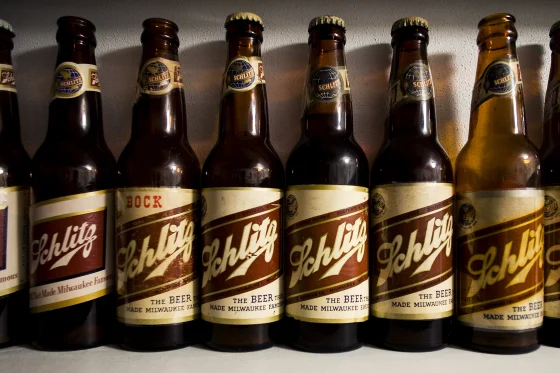
After nearly two centuries of pouring smiles, memories, and milestones into countless American glasses, the legendary Schlitz beer is officially calling it quits. Pabst Brewing Co. has confirmed that production of the iconic lager — the brew that famously “made Milwaukee famous” — is being halted, ending a 177-year journey that helped shape American beer culture itself.
For longtime fans, this isn’t just the discontinuation of a beverage. It’s the close of a deeply personal chapter in American history, one rooted in immigrant ambition, blue-collar identity, and the rise and fall of a once-unstoppable brewing empire.
The Official Word From Pabst
In a statement issued last month to Milwaukee Magazine, Pabst’s head of brand strategy Zac Nadile acknowledged that the company’s hand was forced by economic pressures.
According to Nadile:
- Storage and shipping costs for certain products have continued to rise
- The company had to make difficult choices about which beers to maintain
- Schlitz Premium is being placed on hiatus indefinitely
- Other retro brands under the Pabst umbrella — such as Blatz and Old Milwaukee bottles — will also become harder to find
Nadile emphasized that brands placed on hiatus remain part of the company’s history and “hopefully our future.” But for now, the beloved gold-canned classic will no longer be brewed for mass consumption.
A Wider Impact Across Pabst’s Retro Brands
While Schlitz is the headliner, the changes also affect other beers in Pabst’s portfolio. Specifically:
- Blatz bottle production has stopped
- Old Milwaukee bottles will become harder to find
- Other heritage labels could see future cutbacks
- The retro beer category continues to face pressure from craft beers, light beers, and modern consumer trends
For collectors and nostalgia buyers, the news signals a broader shrinking of an era of mid-century American brewing.
A Brand Born From Tragedy and Reinvention
Schlitz’s story began in 1849 when a German immigrant named Joseph Schlitz took over a small Milwaukee brewery after marrying the widow of its founder, August Krug. He renamed the business after himself, setting in motion a brewing dynasty that would dominate American beer culture for over a century.
But the brand’s national rise didn’t happen because of fancy marketing. Instead, it took a citywide tragedy to push Schlitz into the spotlight.
The Great Chicago Fire’s Surprising Role
In 1871, the Great Chicago Fire devastated the city. Schlitz responded by shipping barrels of beer to help residents through the crisis. Word spread quickly, and what started as a humanitarian gesture turned into a massive boost in brand recognition.
By the 1900s, the slogan “The Beer that Made Milwaukee Famous” was etched into American pop culture. And by the 1950s, Schlitz was the biggest brewery in the entire United States.
Its iconic ad slogan summed up the dominance:
“When you’re out of Schlitz, you’re out of beer.”
The Beginning of the Downfall
Despite its powerful legacy, Schlitz hit several major setbacks during the second half of the 20th century, including:
- Budweiser overtaking it in market share in the 1950s
- The infamous “Schlitz Mistake” of 1976, when the company altered the recipe to boost profits
- The 1977 “Drink Schlitz or I’ll Kill You” advertising campaign, widely considered one of the worst marketing blunders in beverage history
- The rise of light beers and shifting consumer preferences
- A growing public image of Schlitz as old-fashioned
Each blow chipped away at the brand’s once-mighty reputation, and by the early 1980s, Schlitz had become a textbook example of mismanagement.
The Schlitz Mistake That Changed Everything
When the company altered its recipe in the mid-1970s, the new formulation produced a beer that was visually inconsistent and tasted noticeably worse to longtime drinkers. Customers abandoned the brand in droves, and the company never fully recovered.
The recipe change is widely seen as one of the most consequential corporate missteps in American beverage history — a cautionary tale that’s still studied in business schools today.
A Pop Culture Spotlight (For All the Wrong Reasons)
In 1991, Schlitz received an unexpected boost in name recognition when “Saturday Night Live” aired the now-famous “Schmitts Gay” sketch. Though the parody actually mocked the macho-themed beer ads of Schlitz’s competitors, audiences strongly associated it with Schlitz itself.
The sketch became part of the broader perception that Schlitz had simply become a punchline of America’s mid-century brewing scene — a relic of marketing decisions long past.
A Series of Ownership Changes
After decades of decline, Schlitz changed hands multiple times:
- Sold to Stroh Brewery Co. in 1982
- Stroh discontinued Milwaukee-based brewing
- Sold to Pabst in 1999
- Recently brewed at an Anheuser-Busch facility in Texas
Each transition further distanced Schlitz from its Milwaukee roots, even as nostalgia kept the brand alive for loyal drinkers.
One Last Batch — A Final Toast to History
In a sentimental final chapter, the Wisconsin Brewing Co. — based outside Madison — will brew one last batch of Schlitz on Saturday. The recipe being used? Not the 1976 reformulation. Not the modern Texas-brewed version.
Instead, brewmaster Kirby Nelson is using the 1948 recipe, from the era when Schlitz, not Budweiser, was considered the king of beers.
Nelson summed up the moment perfectly when he told The Milwaukee Journal Sentinel that Schlitz deserves to go out with “dignity and respect.”
Why Schlitz Mattered So Much
For decades, Schlitz wasn’t just a beer — it was a working-class symbol, a fixture of family gatherings, bowling nights, summer cookouts, and Friday paychecks. Its rise tells the story of American immigrant ambition; its fall tells the story of corporate over-reach and consumer betrayal.
Some of the cultural moments that made Schlitz iconic include:
- Bar tops across Wisconsin and Illinois featuring the famous Schlitz globe sign
- Generations of factory workers loyal to the brand
- Frequent appearances in mid-century films and TV
- Iconic stadium and arena partnerships
- A long-standing place in American working-class identity
Even those who never drank it have likely seen its glowing signs hanging in countless Midwestern bars.
The Broader Decline of Heritage Beer Brands
Schlitz’s hiatus reflects broader shifts in the American beer market, including:
- Growing dominance of craft beer
- Rising costs of materials, fuel, and transportation
- Younger consumers prioritizing local breweries
- A long-term decline in light beer sales
- Shifting cultural perceptions of traditional beer brands
Many heritage brewers have struggled to keep up with changing tastes, and the pause on Schlitz may signal more shifts to come in the legacy beer space.
A Sentimental Goodbye From Loyal Fans
For decades, Schlitz had become more than a brand — it was a connection to past generations. Many older drinkers associate the beer with their parents, grandparents, or childhood memories of family barbecues and Midwest summers.
Reactions across social media show that for many longtime fans, this isn’t just losing a beverage, it’s losing a piece of personal history. Some are stocking up on remaining cans while others are sharing stories online about everything Schlitz once meant to them.
Is There Hope for a Comeback?
Pabst hasn’t slammed the door entirely. The company emphasized that brands placed on hiatus could still return depending on demand, customer feedback, and the economic environment. If interest in classic American beer brands rises again, Schlitz could one day reappear.
Some possibilities for a future return include:
- A heritage-focused relaunch
- A limited-edition revival run
- Reintroduction in select markets
- Collaboration with craft breweries to keep the recipe alive
- A nostalgia-driven marketing campaign
In the meantime, fans are preparing to savor whatever Schlitz cans they can find.
The Bottom Line
The discontinuation of Schlitz beer marks the closing of one of the most storied chapters in American brewing. From its rise to dominance, its missteps, its cultural symbolism, and now its quiet exit, Schlitz represents the long arc of an industry that has shaped generations.
The “Beer that Made Milwaukee Famous” may be pouring its final batch, but its legacy lives on in barroom mirrors, vintage tin signs, and the memories of countless drinkers who once raised a Schlitz can in celebration.
For now, the world says goodbye to a beer that once defined an era — and toasts a brand that, despite its fall, will forever hold a place in American history.
Author