
Saronic and Taiwan’s NCSIST Team Up to Advance Autonomous Surface Vessels
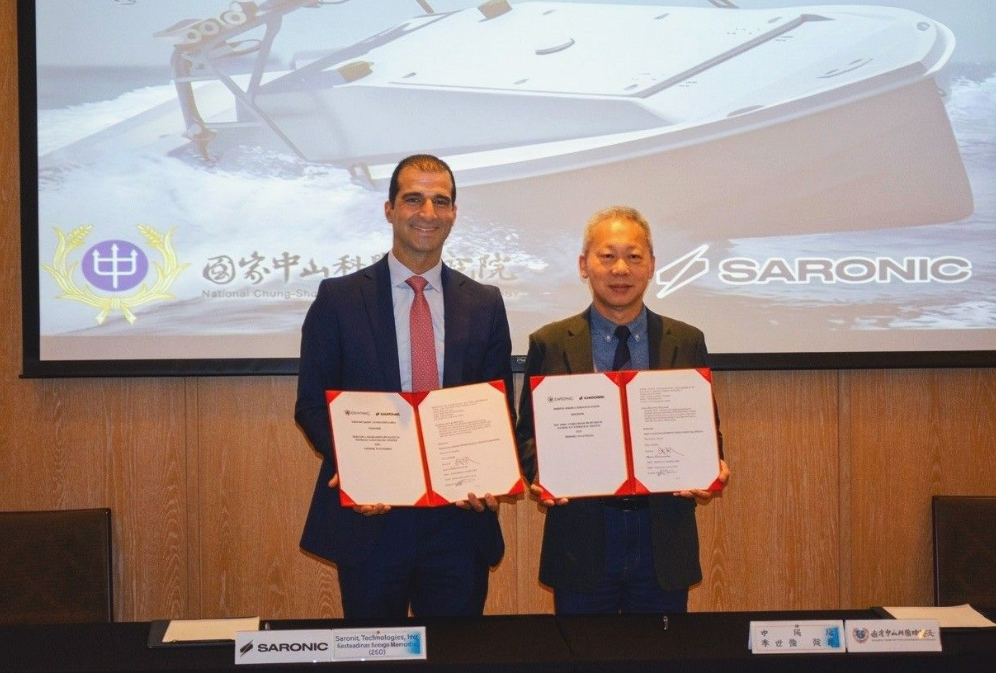
Autonomous Surface Vessels are quickly becoming one of the most important technologies in modern maritime defense, and a new partnership is aiming to push that frontier even further. Saronic Technologies has signed a Memorandum of Understanding (MoU) with Taiwan’s National Chung-Shan Institute of Science and Technology (NCSIST) to explore joint work on AI-enabled maritime capabilities.
The agreement signals a meaningful step toward strengthening maritime security in a region where defense readiness has become increasingly critical.
A Note on the Original Headline
Although the original headline referenced “Korea,” the announcement actually involves Taiwan’s NCSIST. This article reflects the accurate details of the collaboration as outlined in the official partnership.
Why This Partnership Matters
The MoU between Saronic and NCSIST brings together two organizations with complementary strengths. Saronic Technologies has earned a reputation as a fast-rising innovator in autonomous maritime systems, while NCSIST stands as Taiwan’s leading defense research and development institution.
NCSIST plays a central role in strengthening Taiwan’s defense industrial base, making it a natural partner for a company like Saronic, which is focused on building dual-use autonomous platforms designed for both defense and commercial environments.
By combining cutting-edge American autonomy expertise with Taiwan’s robust defense engineering ecosystem, the partnership is positioned to accelerate progress on technologies that could reshape maritime operations in the years ahead.
The Focus Areas of the Collaboration
Under the agreement, both organizations will identify and pursue opportunities to work together across a wide range of technologies and applications. While the partnership is still in its early stages, the MoU outlines several priority areas:
- AI-enabled command-and-control (C2) software development
- Broader systems integration for maritime platforms
- Advancement of autonomous surface vessel capabilities
- Supply chain expansion for long-term sustainment
- Improved maintenance and operational readiness frameworks
These priorities reflect a shared understanding that modern maritime defense isn’t just about hardware. The real edge comes from how intelligently systems can communicate, adapt, and operate in complex environments.
Saronic’s Corsair and the Dual-Use Approach
A central element of the collaboration is the potential application of Saronic’s autonomous surface vessels, including its well-known Corsair platform. Corsair represents Saronic’s broader vision of dual-use technology, meaning vessels designed to serve both military and commercial missions.
This dual-use philosophy is particularly relevant for Taiwan, where maritime needs span coastal defense, fisheries protection, search and rescue, and commercial shipping. Vessels capable of supporting multiple mission types provide flexibility while reducing the cost burden of specialized fleets.
By exploring how Corsair and similar platforms can integrate with Taiwan’s mission requirements, the partnership opens the door to practical, scalable solutions for both governmental and private sector use.
Why Autonomous Surface Vessels Are Gaining Traction
The global demand for ASVs has been steadily climbing, and several factors are driving the trend:
- Rising maritime security challenges across multiple regions
- The need to monitor large ocean areas with limited personnel
- Growing capabilities of AI in navigation, perception, and decision-making
- The cost effectiveness of unmanned platforms compared to traditional crewed vessels
- Improved survivability in contested or high-risk environments
For nations like Taiwan, which face complex maritime security dynamics, ASVs offer a strategic edge. They can patrol sensitive waters, gather intelligence, and respond to threats without putting human crews directly in harm’s way.
Strengthening Supply Chains and Sustainment
Beyond technology development, the agreement also touches on supply chain expansion and long-term sustainment — two areas that often determine whether advanced systems can be effectively deployed at scale.
Modern defense partnerships are increasingly evaluated not just on innovation but on the ability to maintain and support equipment over time. By exploring opportunities to enhance maintenance and sustainment frameworks, Saronic and NCSIST are taking a forward-looking approach that prioritizes operational readiness rather than one-off deployments.
This is especially important in the maritime environment, where vessels operate under harsh conditions and require dependable repair and logistics networks to remain mission-capable.
The Strategic Picture
The Saronic and NCSIST collaboration arrives at a moment when maritime tensions and security concerns are reshaping global defense priorities. Allies and partners across the Indo-Pacific are investing heavily in next-generation technologies that can deter threats and reinforce stability.
Autonomous systems are now seen as a foundational pillar of that strategy. Countries that can effectively deploy AI-driven vessels gain enhanced situational awareness, faster response times, and more efficient use of resources. For Taiwan, partnering with a leading autonomy firm like Saronic helps strengthen its position as a technologically advanced and resilient defense partner.
A Win for Defense Innovation
For Saronic, the partnership represents a significant international milestone. The company has been steadily building its presence as a key player in the autonomous maritime sector, and a formal collaboration with one of Taiwan’s most respected defense institutions adds credibility and reach to its growing portfolio.
For NCSIST and Taiwan, the agreement provides access to cutting-edge autonomous surface vessel platforms and AI-enabled systems that align with the country’s evolving defense posture. It also reinforces Taiwan’s commitment to working with leading global innovators to enhance its maritime capabilities.
Looking Ahead
Although the MoU is an early-stage agreement, it lays the groundwork for what could become a meaningful long-term partnership. The combination of Saronic’s autonomous expertise and NCSIST’s defense engineering depth has strong potential to produce real-world systems that go well beyond conceptual collaboration.
As both organizations work through specific projects and identify priority programs, the maritime defense community will be watching closely. Successful joint efforts could set a new model for how private autonomy companies and national defense institutions collaborate to develop next-generation capabilities.
Final Thoughts
The Saronic and NCSIST partnership is a clear sign of where modern maritime defense is heading. Autonomous Surface Vessels, AI-driven command-and-control, and dual-use platforms are no longer futuristic concepts — they are becoming central to how nations protect their waters and project influence.
If the early ambitions of this collaboration translate into concrete programs, the partnership could play a notable role in shaping the future of AI-enabled maritime operations, not just in Taiwan but across the broader region.
Author