Sun Pharma Organon Acquisition Sends Shares Soaring 7%
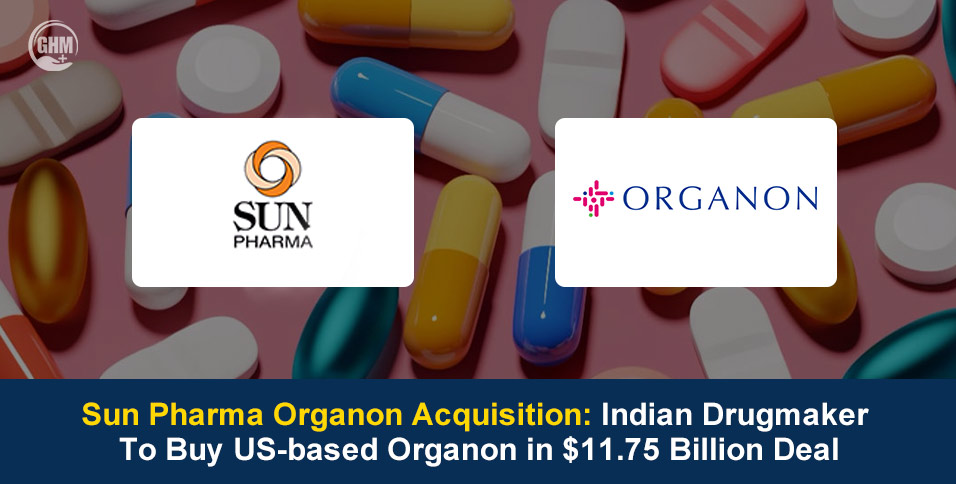
Sun Pharma Organon Acquisition has just reshaped the global pharmaceutical landscape. Shares of Sun Pharmaceutical Industries surged more than 7 percent on Monday after the Indian drugmaker announced it would acquire New Jersey-based Organon & Co in an all-cash deal valued at $11.75 billion, including debt.
The transaction marks one of the most significant moves in Indian pharma history and signals a major step in Sun Pharma’s ambition to climb into the upper ranks of global drugmakers.
The Deal at a Glance
Under the terms of the agreement, Sun Pharmaceutical will acquire all outstanding shares of Organon for $14 per share in cash. The all-cash structure provides Organon shareholders with immediate, tangible value, while giving Sun Pharma a strategic foothold in some of the world’s most lucrative pharmaceutical markets.
Some of the key highlights of the deal include:
- An enterprise value of $11.75 billion, including Organon’s debt
- A $14 per share buyout for Organon stockholders
- A combined revenue base of approximately $12.4 billion
- Entry into the top 25 global pharmaceutical companies for Sun Pharma
- A vastly expanded product portfolio, especially in women’s health and biosimilars
Carrie Cox, Organon’s executive chair, said the company’s board reviewed several strategic alternatives before deciding that the all-cash transaction offered the most compelling and immediate value to its stockholders.
Who Is Organon?
Organon was spun off from pharmaceutical giant Merck in 2021 and has since established itself as a notable player in two important segments — women’s health and biosimilars. Although it has had a turbulent run as a standalone company, its global footprint and product depth have remained strong.
A few important details about Organon include:
- More than 70 products distributed across 140 countries
- A focus on women’s health, biosimilars, and established brands
- Six manufacturing facilities across the European Union and emerging markets
- Key revenue markets including the United States, Europe, China, Canada, and Brazil
Despite this broad reach, Organon has been navigating significant debt and operational challenges, which set the stage for an acquisition by a larger, financially stronger player.
Why This Deal Matters for Sun Pharma
For Sun Pharma, the acquisition is more than a financial transaction. It’s a strategic accelerator that aligns with the company’s long-term ambitions in innovative medicines and global market expansion.
Kirti Ganorkar, managing director at Sun Pharma, described the move as a logical next step in the company’s global growth journey. The U.S. continues to be a key revenue market, and Organon brings deep, well-established access to that market along with significant manufacturing and distribution capabilities.
Some of the strategic benefits Sun Pharma expects from the deal include:
- A meaningful boost to its innovative medicines business
- Scale across the all-important U.S. market
- A diversified portfolio across women’s health and biosimilars
- Access to mature global supply chains
- Reduced dependence on the more competitive generics segment
Sun Pharma’s innovative medicines segment currently focuses on areas like dermatology, ophthalmology, and onco-dermatology. With Organon now in the fold, that segment is expected to grow from 20 percent of total sales in fiscal year 2025 to roughly 27 percent post-acquisition.
A Move Toward Innovative Medicines
The acquisition fits squarely within Sun Pharma’s strategy of expanding its innovative medicines presence. According to the European Medicines Agency, innovative medicines contain active substances or combinations that have not been authorized before, often offering meaningful improvements over existing treatments.
By absorbing Organon’s portfolio, Sun Pharma is signaling a clear pivot toward higher-margin and more differentiated products. Dilip Shanghvi, executive chairman of Sun Pharma, said that Organon’s portfolio, capabilities, and global reach are highly complementary to the Indian drugmaker’s existing operations.
The Financial Picture
The deal isn’t without complexity. Organon ended December 2025 with a debt load of $8.6 billion and a cash balance of $574 million. Its net debt to EBITDA ratio sat at four times, signaling a stretched balance sheet.
By contrast, Sun Pharma is “net positive,” meaning it has more cash than debt, providing it with the financial flexibility to absorb a transaction of this scale. After the acquisition closes, the combined entity is expected to have a net debt to EBITDA ratio of 2.3 times, which is far healthier and more sustainable than Organon’s current standalone position.
That stronger combined balance sheet should help reassure investors that the deal, while large, is structured in a financially manageable way.
Market Reaction
Investors clearly liked the news. Sun Pharma shares jumped more than 7 percent on Monday following the announcement, while Organon shares had already surged nearly 31 percent on Friday after the Economic Times reported that a deal was being finalized at around $13 billion.
The market reaction suggests that:
- Sun Pharma’s strategy is being viewed positively
- Organon shareholders are getting attractive value
- The combined company is expected to be more competitive globally
- The structure of the all-cash deal eliminates much of the typical merger uncertainty
LSEG data showed Sun Pharma’s market cap stood at more than $41 billion as of Friday, underscoring its status as a heavyweight in the Indian pharmaceutical industry.
A Look at Sun Pharma’s Acquisition History
This isn’t the first time Sun Pharma has stepped in to absorb a struggling business. The company has built a track record of identifying value in distressed assets and turning them around.
Some of Sun Pharma’s most notable past deals include:
- Acquiring Israeli research firm Taro Pharma in 2007 when it was in financial distress
- Buying Ranbaxy Laboratories in 2014 from Daiichi Sankyo for around $3.2 billion at a time when Ranbaxy was facing major regulatory pressure from the U.S. Food and Drug Administration
- Adding Organon as its sixth major acquisition in the last 16 years
The pattern is clear. Sun Pharma has consistently used opportunistic acquisitions to expand its capabilities, market reach, and product lines, often picking up underperforming companies and integrating them into its broader operations.
Industry Perspective
Analysts see the move as strategically sound but cautioned that integration challenges and short-term financial pressures should not be underestimated.
Bhavesh Shah, managing director and head of investment banking at Mumbai-based Equirus Capital, described deals of this kind as “strategically positive but financially nuanced.” He noted that such acquisitions can become value accretive over the medium to long term if they bolster the company’s portfolio or market reach and add scale.
However, he also flagged some near-term risks, including:
- Higher leverage during the integration period
- Costs related to combining operations and systems
- Execution risks tied to managing a global product portfolio
- Regulatory approvals across multiple jurisdictions
Even so, given Sun Pharma’s experience handling complex acquisitions, many analysts expect the company to navigate these challenges effectively.
A Big Step for Indian Pharma on the Global Stage
The deal also has broader symbolic importance. India has long been known as the “pharmacy of the world” because of its strength in producing affordable generic medicines. With this acquisition, Sun Pharma is signaling that Indian pharma can also compete at the highest level in innovative and specialty medicines.
By stepping into the top 25 global pharmaceutical companies, Sun Pharma is helping to redefine how the world views Indian drugmakers — not just as suppliers of generics, but as global innovators with serious commercial reach.
What Happens Next
The acquisition will move forward through the standard regulatory and shareholder approval processes. While such deals typically take several months to close fully, both companies have signaled strong commitment to a smooth transition.
For Sun Pharma, the next phase will involve:
- Integrating Organon’s manufacturing and distribution networks
- Streamlining product portfolios to maximize synergies
- Expanding its presence in markets like the U.S., Europe, China, Canada, and Brazil
- Strengthening its innovative medicines pipeline
- Managing combined operations under a unified strategy
For investors, the focus will be on whether Sun Pharma can deliver on the financial and strategic promises that have driven the recent surge in its share price.
Final Thoughts
The Sun Pharma Organon Acquisition is one of the most ambitious moves ever made by an Indian pharmaceutical company. It combines scale, strategic diversification, and market access in a single, decisive deal that pushes Sun Pharma into the upper tier of global drugmakers.
While near-term integration challenges are inevitable, the long-term potential is significant. Sun Pharma is signaling that it intends to be more than a leader in generics — it’s positioning itself as a global force in innovative medicines, women’s health, and biosimilars.
If executed well, this deal could mark a transformative chapter not just for Sun Pharma, but for the Indian pharmaceutical industry as a whole.
Author