California Governor Debate Takeaways: A High-Stakes Showdown in Claremont
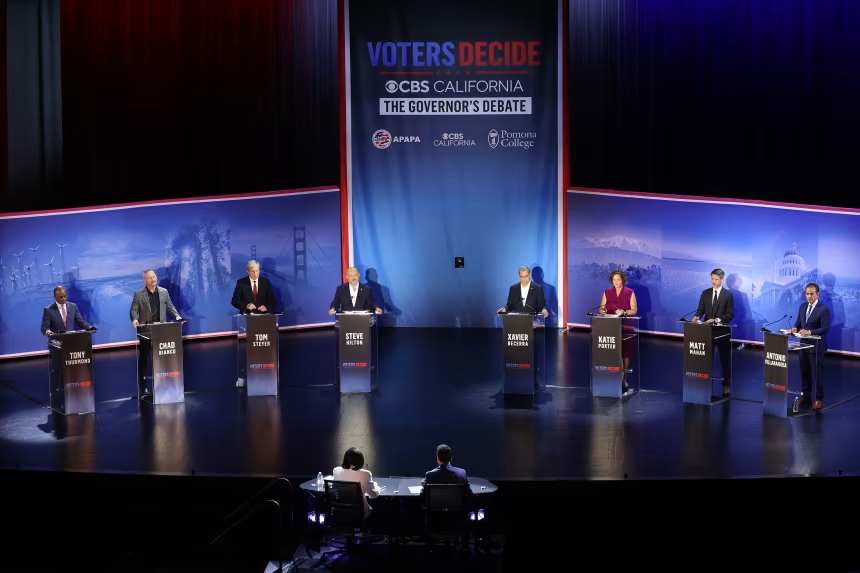
The race to become California’s next governor just got a whole lot more intense. With ballots going out to voters in less than a week, the latest California governor debate takeaways from Tuesday night’s showdown at Pomona College in Claremont reveal a pack of candidates desperately trying to break out of an unusually crowded and competitive race.
Eight contenders crammed onto a single debate stage, eager to capture the attention of California voters before the June primary kicks off. With several leading candidates polling within striking distance of one another, the night turned into a fast-paced, high-energy clash filled with sharp exchanges, surprising attacks, and standout moments.
This race is especially significant because Gov. Gavin Newsom — a Democrat who has dominated California politics for years — cannot run again due to term limits. Whoever finishes in the top two during California’s nonpartisan primary will move forward to the November general election, regardless of party affiliation.
Here are five key takeaways from the most spirited debate of the campaign so far.
1. Xavier Becerra Took the Heat From All Sides
Former California Attorney General and Biden cabinet member Xavier Becerra found himself at the center of attention — and not in a good way. After the surprise exit of Democratic congressman Eric Swalwell earlier this month following sexual assault allegations, Becerra’s polling numbers have surged. As a result, his rivals decided it was finally time to start treating him as a serious frontrunner.
San Jose Mayor Matt Mahan unexpectedly pivoted from a wildfire response question into a pointed critique of Becerra’s tenure as Health and Human Services Secretary. Mahan blasted Becerra over what he described as poor handling of monkeypox, COVID-19, and the influx of migrant children at the southern border.
Republican Steve Hilton joined in when Becerra proposed addressing California’s home insurance crisis by declaring a state of emergency to freeze insurance policies. Hilton challenged Becerra on whether he had even read the relevant statute, insisting that the proposal would be illegal under existing emergency powers laws.
Becerra pushed back, saying Hilton was wrong. After the debate, he calmly told reporters that taking heavy criticism is simply what comes with rising in the polls. According to Becerra, that’s just what happens when you reach the top.
2. Eight Candidates, One Crowded Stage
With eight contenders sharing the stage, the debate was the largest of the entire campaign. Predictably, that produced moments of pure chaos, with candidates frequently talking over each other during the 90-minute event.
Moderators repeatedly threatened to cut microphones to maintain order, and at times candidates were given just seconds to answer high-stakes questions. Several attacks went unaddressed when moderators chose not to allow rebuttals.
A Pomona College student summed up the chaos perfectly when he was called on to ask the first audience question. He casually remarked that the debate had been a bit of a mess — drawing one of the biggest reactions of the night.
Co-moderator Pat Harvey acknowledged the high energy with a laugh, joking that the candidates must have downed plenty of coffee before stepping onstage. Co-moderator Sara Sadhwani noted that voters likely walked away with a deeper understanding of the candidates’ personalities and temperaments — something many people in such a crowded field are eager to gauge.
3. Katie Porter Leans Into Her Parent Persona
Former congresswoman Katie Porter, the only woman on stage, leaned heavily into her well-known political identity as a relatable, minivan-driving single mother. She used her time to push proposals aimed directly at California parents, including her plan for free child care and a tuition-free pathway to college.
Porter cast these proposals as straightforward affordability solutions for working families across the state.
She also brought a sense of humor to the chaos around her. As several of her opponents began talking over each other, Porter dramatically dropped her head into her hands and quipped that the scene was worse than her teenagers at the dinner table — a moment that drew laughs and resonated with parents in the audience.
By focusing on family economics and presenting herself as a calm, grounded voice amid the chaos, Porter aimed to position herself as a steady alternative in an unpredictable race.
4. Tom Steyer Owns the Tax Conversation
Most candidates were quick to dodge the topic of taxes during the debate. When asked whether they supported suspending the gas tax due to high pump prices, the two Republicans said yes and the six Democrats said no — but that was nearly the extent of the discussion.
The exception was Tom Steyer, the progressive billionaire and former hedge fund manager. Steyer leaned all the way into the tax conversation, framing it as the central solution to California’s biggest financial challenges.
Steyer voiced support for a windfall profits tax on oil companies, blaming them for inflated gas prices. He also pitched eliminating a controversial property tax exemption for corporate real estate, claiming the move would generate $22 billion annually for California.
According to Steyer, the new revenue would help fund universal single-payer healthcare, teacher salaries, and educator training programs. He emphasized that no one else on stage was willing to talk seriously about revenue.
What Steyer didn’t mention, however, is that many of these proposals have circulated through the State Capitol for years without success. California voters even rejected the corporate property tax change in 2020 — a reminder that bold ideas sometimes face strong political resistance.
State schools chief Tony Thurmond was the only other candidate to voice support for new tax measures, briefly endorsing a billionaire tax initiative likely to appear on the November ballot.
5. Two Republicans, Two Very Different Tones
In last week’s debate, Republicans Steve Hilton and Chad Bianco aligned on nearly every issue. This time, they finally found one important area of difference — not policy, but tone.
While Hilton focused his attacks on individual candidates and policy details, Bianco came out swinging at the entire Democratic Party. He blamed “failed Democrat policies” for everything from soaring living costs to insurance company exits, increased homelessness, drug use, and devastating wildfires.
Speaking directly to the college students in the audience, Bianco delivered one of the most fiery moments of the night. He warned that he was genuinely afraid of what California’s future might look like under any of the Democrats on stage, suggesting young Californians might one day feel forced to leave the state.
When Porter brought up single-payer healthcare, Bianco snapped at her, telling her bluntly that anyone who wants socialism should go somewhere else.
Bianco’s frustration showed in his closing remarks, when he sarcastically described the entire 90-minute debate as “an hour and a half you’re never going to get back” — sealing his image as the angrier of the two Republicans on the stage.
A Fierce Race Headed for the Final Stretch
With ballots heading to California voters next week, the urgency in this race has reached a new level. Five candidates remain tightly bunched at the top of the polls, while the other three are still working to break through. Polls show a significant number of undecided voters, meaning that even small momentum shifts in the coming days could dramatically reshape the field.
The debate served as a crucial moment for each candidate to deliver a memorable performance. Whether through bold proposals, sharp attacks, relatable storytelling, or fiery rhetoric, every contender was clearly trying to leave a lasting impression on California voters.
What’s Next
With early voting beginning soon, and the primary just weeks away, the candidates will continue crisscrossing the state to deliver their messages. The top two finishers — regardless of party — will advance to November’s general election, leaving California voters with a uniquely pivotal role in shaping the state’s political future.
For now, the spotlight remains on each candidate’s ability to differentiate themselves in a deeply competitive field. Tuesday night’s debate offered a vivid snapshot of where the race stands: chaotic, intense, and far from settled.
Final Thoughts
The latest California governor debate takeaways highlight just how unpredictable and fast-moving this race has become. With the top contenders battling for momentum, ideologies clashing, and voter sentiment still in flux, the path to Sacramento remains wide open.
As voters prepare to cast their ballots, one thing is certain: the next chapter of California politics will be written by an electorate that now has more information — and more drama — than ever to consider.
Author