Transitioning Away From Fossil Fuels Conference Could Mark a Defining Moment for Climate Action
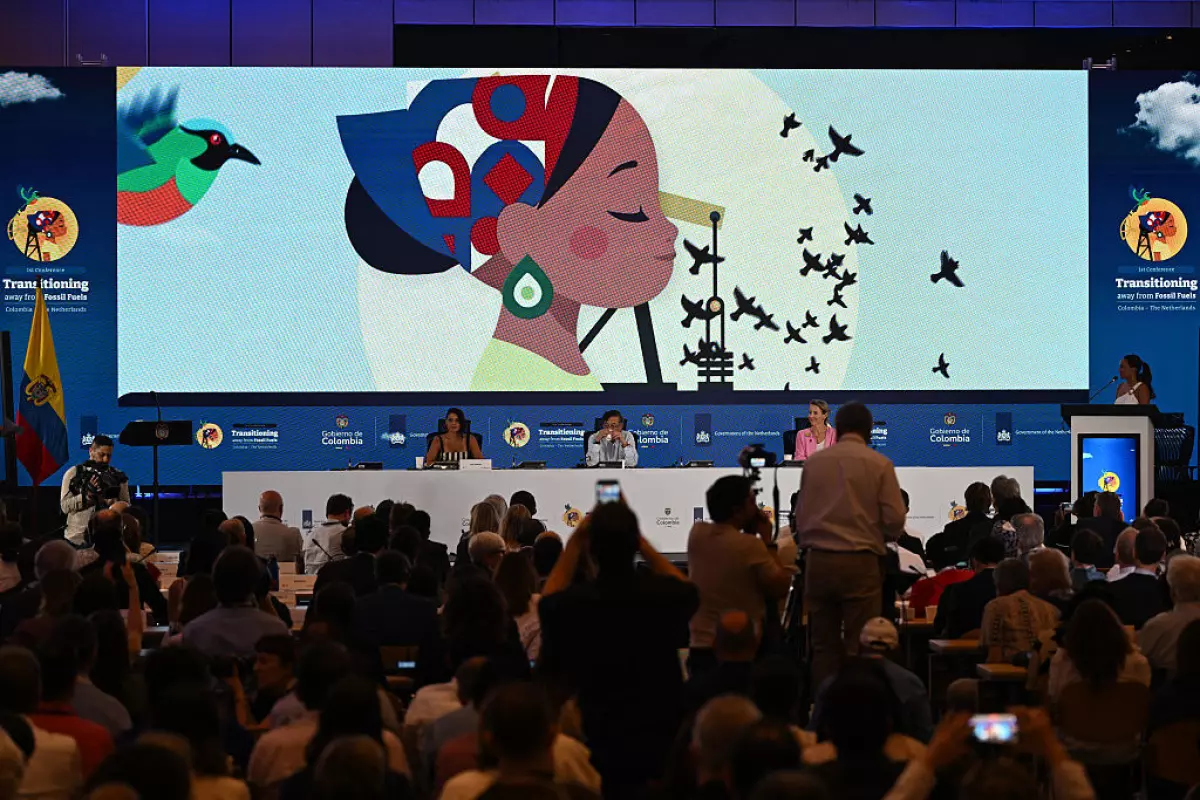
A historic gathering on Colombia’s Caribbean coast may become a defining chapter in the global push toward a cleaner future. The transitioning away from fossil fuels conference, taking place this week in Santa Marta, Colombia, has brought together more than 50 countries to map out concrete steps to reduce — and eventually eliminate — the world’s dependence on oil, gas, and coal.
For the first time, an international high-level summit is being held with one clear, focused goal: to chart a real path away from fossil fuels. As global tensions, energy crises, and climate disasters continue to mount, the world is watching closely to see whether this conference can deliver something that decades of climate negotiations have so far failed to achieve.
A Symbolic Setting
The conference is being held just north of one of South America’s largest coal export ports — a powerful reminder of how deeply fossil fuels remain embedded in the global economy. Colombia, a major producer of coal, oil, and gas, is co-hosting the event alongside the Netherlands, the historic birthplace of oil giant Shell.
The choice of co-hosts is striking. Both nations are playing increasingly active roles in shifting their economies, and both are pushing for an honest, urgent global conversation about how to move on from fossil fuels.
Colombia’s environment minister, Irene Vélez Torres, opened the event with a powerful message, urging participants to make this a moment when ambition becomes action. Her call for a turning point in history captures the broader spirit of what organizers and delegates hope to achieve in Santa Marta.
An Energy Crisis Adds Urgency
The conference takes place during one of the most challenging energy moments in modern history. The U.S.-Israeli war in Iran has dramatically disrupted global oil supplies, sent fuel prices soaring, and pushed the world into what International Energy Agency executive director Fatih Birol has described as “the mother of all energy crises.”
This unprecedented disruption is reshaping how leaders around the world view fossil fuel dependency. Many countries — particularly those vulnerable to energy shocks — see the crisis as a major reason to accelerate their transition to renewables.
For example, Vanuatu, a small island nation increasingly threatened by rising sea levels, is feeling the pressure on multiple fronts. Ralph Regenvanu, Vanuatu’s minister for climate change, told NPR that the country has been forced to act quickly. As fuel imports grow more expensive and supply uncertainty deepens, Vanuatu has fast-tracked its target to electrify its government vehicle fleet and is investing more aggressively in solar power.
Renewables Are Now Cheaper
Many countries attending the conference aren’t just acting out of environmental concern — they’re following the economics. According to financial services firm Lazard, large solar and wind projects now produce energy more cheaply than coal and natural gas in most regions. Affordable Chinese electric vehicles are also gaining traction worldwide, accelerating the transition further.
As Leo Roberts of the climate nonprofit E3G points out, governments aren’t necessarily moving away from fossil fuels because of climate ideology. They’re doing it because it’s cheaper, more efficient, and far more secure. Energy independence has become a serious strategic priority — and renewable technologies offer a powerful path to achieving it.
Notable Absences
While the conference is making headlines for who is participating, it’s also drawing attention for who isn’t. The United States, the world’s largest oil and gas producer and biggest oil consumer, is not attending the summit. The U.S. State Department dismissed the event in an emailed response, claiming that moving away from reliable energy sources to rely on intermittent ones would be destructive — and reaffirming that the U.S. would not be part of what it called the climate agenda.
The reality, however, is more nuanced. Modern renewable energy paired with battery storage and grid management has proven highly reliable in numerous regions, including in the U.S. itself.
China, the world’s largest coal consumer, is also absent from the conference. While China is making massive investments in renewables, it remains a complex player in the global fossil fuel landscape.
Still, several major fossil fuel producers — including Australia, Mexico, and Nigeria — are at the table in Santa Marta. As Daniela Durán, head of international affairs at Colombia’s Ministry of Environment, explained, the conference is intended for those nations ready to act now. Doors remain open for others to join when they’re ready, but this isn’t a venue for debating whether to transition — it’s a space for moving forward.
A Response to COP Frustration
The conference exists, in part, because of growing frustration with the United Nations’ annual climate conferences known as COPs. While COPs have been the world’s main climate negotiation platform for three decades, progress on fossil fuels specifically has been stubbornly slow.
A breakthrough finally came in 2023 in Dubai, when countries officially agreed to transition away from fossil fuels in their energy systems. But since then, the world has been unable to agree on how to actually carry out that transition.
At UN climate conferences, all participating countries must approve the language in any agreement. According to Johanna Gusman, senior attorney at the Center for International Environmental Law, fossil fuel-producing nations such as Saudi Arabia have repeatedly blocked stronger fossil fuel language in COP texts. Last year’s UN climate conference in Brazil ended without a roadmap for phasing out fossil fuels, despite roughly 80 countries pushing for one.
In response, Colombia and the Netherlands announced the Santa Marta conference as a complementary effort — not a replacement for COPs but a focused space where ambitious nations can engage in real, concrete dialogue about transitioning away from fossil fuels.
Mapping the Way Forward
Throughout the two-day summit, delegates are tackling a wide range of practical issues, including:
Shifting government subsidies away from fossil fuels like gasoline and diesel toward renewable energy and battery storage. Finding employment opportunities for the millions of people currently working in fossil fuel industries — including communities surrounding Colombia’s coal mining regions.
This focus on a “just transition” — one that supports workers and communities economically dependent on fossil fuels — is widely viewed as essential for ensuring social and political support for the energy transformation.
The Path to a Binding Treaty
One of the more controversial discussions at the conference centers on whether the world should pursue a legally binding treaty to commit countries to a real fossil fuel phase-out. Tzeporah Berman, founder and chair of the Fossil Fuel Treaty Initiative, says many participating nations are open to creating such a binding mechanism.
However, others remain hesitant. According to Andrés Gómez, Latin America coordinator for the Fossil Fuel Treaty Initiative, some countries — even after 30 years of climate negotiations — still want to continue with non-binding agreements. The split highlights the ongoing tension between countries serious about systemic action and those concerned about economic and political consequences.
Still, Durán hopes that the Santa Marta conference will lead to ongoing summits dedicated specifically to fossil fuel transition. Tuvalu, another small island nation deeply affected by climate change, is reportedly likely to host the next gathering.
A Coalition of the Doers
Former Irish President Mary Robinson described the Santa Marta conference as “a coalition of the doers” — a group of nations no longer waiting for everyone else to come on board. According to Robinson, the world has a unique opportunity to shift directions rapidly — and the urgency of the moment cannot be overstated.
Echoing this urgency, Johan Rockström, director of the Potsdam Institute for Climate Impact Research, warned that the world will inevitably surpass the 1.5°C warming threshold within the coming decade. While returning from such an overshoot remains scientifically possible, doing so will require dramatic acceleration of the global transition away from fossil fuels.
Despite the daunting reality, Rockström expressed hope. He told delegates he had never felt more encouraged as a scientist, calling the participating nations “the light in a tunnel of darkness.”
A Mismatch Between Pledges and Action
A recent UN report makes the global challenge brutally clear. Current emissions reduction pledges under the 2015 Paris Agreement would only cut global emissions by about 12% by 2035 — far below the 50% reduction scientists say is needed to keep warming in check.
This gap between pledges and action is exactly why the Santa Marta conference matters. Countries gathered in Colombia are no longer just talking about ambition — they’re discussing real strategies, real frameworks, and real timelines for delivering on the climate promises the world has been making for decades.
Why the Santa Marta Conference Matters
The transitioning away from fossil fuels conference may not solve the global climate crisis on its own, but it represents a significant evolution in how the world approaches the issue. Instead of struggling to negotiate fossil fuel language inside larger climate summits where consensus is nearly impossible, ambitious nations are now creating their own dedicated space for action.
This kind of focused diplomacy may finally allow the world to move beyond debates about whether to transition and into productive conversations about how — and how fast — to do so.
Final Thoughts
The Santa Marta conference could mark a powerful turning point in the global energy transition. Coming at a time of geopolitical instability, energy crisis, and rapidly worsening climate impacts, the gathering carries enormous symbolic and practical weight.
Whether it leads to binding treaties, accelerated renewable energy adoption, or simply a stronger global coalition of forward-looking nations, the message from Santa Marta is unmistakable: the world is no longer satisfied with vague climate commitments. The future demands real, measurable action, and the countries gathered in Colombia are determined to lead the way.
For the planet, for vulnerable communities, and for the next generation, the hope is simple: that what begins on the Caribbean coast this week becomes the start of something the world has been waiting decades to see — a true, decisive shift away from the fuels driving the climate crisis.
Author