NASA Artemis II Moonship Return Marks Triumphant Close to Historic Lunar Mission
In a moment cheered around the world, the NASA Artemis II moonship return is now complete. The Orion capsule that recently carried four brave astronauts on a record-breaking journey around the moon has officially arrived back at Florida’s Kennedy Space Center — the very same place where its incredible voyage began nearly a month ago.
The historic return marks the closing chapter of humanity’s first crewed mission to the moon in over half a century, and it sets the stage for even more ambitious lunar adventures in the years ahead.
A Long Journey Home
The Orion capsule, affectionately named Integrity by the U.S.-Canadian crew, splashed down safely in the Pacific Ocean on April 10 after its nearly 10-day mission. From there, NASA’s recovery team transported the capsule overland from San Diego to Cape Canaveral, completing the long final leg of its triumphant return.
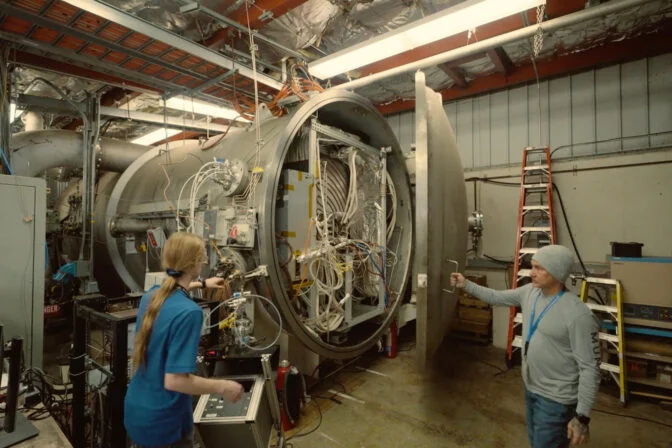
Now safely back at Kennedy Space Center, engineers will perform detailed inspections of the spacecraft. Among the most closely studied components will be the heat shield, which protected the capsule from the searing temperatures it endured during atmospheric reentry. NASA will also remove and recycle electronic systems and onboard research equipment, all in preparation for the next major step in the Artemis program.
A Mission That Made History
The Artemis II mission represented a defining moment for modern space exploration. Until this mission, no astronauts had traveled to the moon since the Apollo 17 mission back in 1972 — meaning more than 50 years had passed without humans returning to lunar territory.
The four-person Artemis II crew — Commander Reid Wiseman, pilot Victor Glover, mission specialist Christina Koch, and Canadian Space Agency astronaut Jeremy Hansen — flew farther into deep space than any humans before them. Their incredible voyage circled the moon and pushed the boundaries of human exploration in remarkable ways.
According to NASA, the spacecraft performed exceptionally well throughout the flight. Aside from one stubborn issue — a temperamental onboard toilet that gave the crew a few headaches — the mission ran smoothly, surpassing expectations and validating Orion’s readiness for far more complex future missions.
Celebrating the Crew
After their epic journey, the Artemis II astronauts have spent the past few weeks undergoing medical examinations, debriefings, and post-mission evaluations. Now, they’re finally getting a chance to relax and reflect on the mission of a lifetime.
Commander Reid Wiseman shared a quiet but deeply emotional moment with the public on social media, posting a video of himself unwinding on the beach. He admitted that he had been waiting for this moment for a long time and described an overwhelming sense of peace. According to Wiseman, the mission gave him a flood of new perspectives — many of which had nothing to do with simply leaving Earth.
His post quickly resonated with millions of fans of space exploration who have been following the historic mission since its launch.
Looking Ahead to Artemis III
The successful return of Artemis II is more than just a finishing line — it’s the beginning of an even bigger chapter. NASA’s next big mission, Artemis III, is now in active preparation. While Artemis II tested human travel deeper into space, Artemis III will introduce one of the most complex steps yet: docking exercises in Earth orbit.
Artemis III will use a brand-new Orion capsule and feature a fresh crew of astronauts. The mission’s primary goal will be to dock with the lunar landers currently being developed by SpaceX and Blue Origin — two private space giants playing pivotal roles in NASA’s broader return-to-the-moon strategy.
This step is crucial because it will test the technology that will eventually allow astronauts to descend to and walk on the lunar surface for the first time since the Apollo era. The successful execution of Artemis III could pave the way for the long-awaited Artemis-era moon landing, currently expected as early as 2028.
Why This Mission Matters
The Artemis program represents far more than just a return to the moon. It is a strategic effort designed to lay the foundation for a sustained human presence in deep space — and eventually serve as a steppingstone for crewed missions to Mars.
By gradually testing and refining technologies, vehicles, and human endurance through carefully designed missions, NASA aims to ensure that future astronauts can travel safely, work effectively, and explore deeper than ever before. Artemis II provided critical real-world data on how Orion performs over extended deep-space missions, paving the way for safer and more ambitious operations.
Beyond the technological achievements, Artemis II also captured the public’s imagination in a way few missions have in recent decades. Children, scientists, and longtime space fans alike watched the mission unfold with excitement, reigniting interest in the spirit of exploration that defined the original Apollo era.
International Collaboration in Action
A key feature of Artemis II was its international makeup. Canadian astronaut Jeremy Hansen’s role marked the first time a non-American astronaut journeyed beyond low-Earth orbit — a powerful symbol of how modern space exploration is increasingly a shared global effort.
The collaboration between NASA and the Canadian Space Agency reflects the broader cooperative model behind Artemis, which involves partners from around the world contributing technology, expertise, and personnel. As future Artemis missions grow more complex, this international teamwork will be essential to ensuring success.
A Gateway to the Future
The lessons learned from Artemis II will play a vital role in shaping the next generation of space exploration. Engineers will spend the coming months carefully analyzing every aspect of the capsule’s performance, scrutinizing components, materials, and systems to identify both successes and areas for improvement.
This information will help NASA refine the design of future capsules, including the one slated for Artemis III. With each mission, the agency moves closer to its long-term goal of establishing the Artemis Base Camp on the lunar surface and eventually building infrastructure to support deep-space exploration.
The Orion capsule itself will be partially repurposed in line with NASA’s commitment to sustainability. Some of its components will be recycled or reused, supporting research and development for upcoming missions.
A Moment to Celebrate
For now, the country — and the global community of space enthusiasts — has plenty to celebrate. The Artemis II mission proved that human space travel beyond Earth is not only possible again, but also more advanced, safer, and more inclusive than ever before.
The successful return of the moonship to Kennedy Space Center is a moment that resonates deeply, blending nostalgia for the Apollo era with the optimism of a brand new generation of exploration. From the brave astronauts who flew the mission, to the engineers who designed the spacecraft, to the millions watching from around the world, Artemis II has reignited humanity’s collective passion for the stars.
Final Thoughts
The NASA Artemis II moonship return is more than just the homecoming of a spacecraft — it’s a powerful reminder of what humanity can accomplish when curiosity, courage, and collaboration come together. With Artemis III on the horizon and a return to the lunar surface planned for 2028, the future of space exploration has never looked brighter.
As Orion now begins its post-mission analysis, the world looks ahead with anticipation. The moon, once again, is within reach — and this time, humanity is going there to stay.
Author