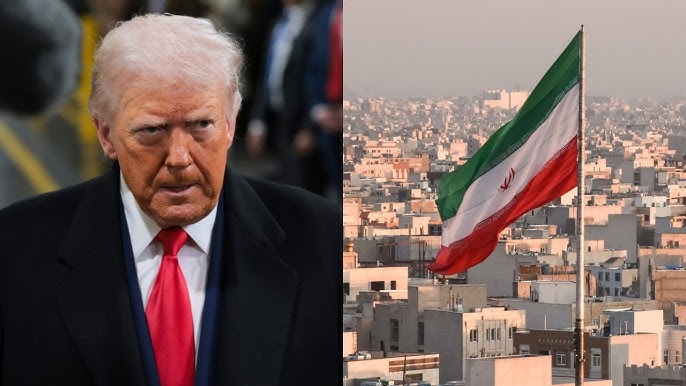
Trump Iran blockade has become the latest high-risk move in a war that has so far defied easy answers. President Donald Trump is wagering that overwhelming American economic strength can finally crack the Islamic Republic, succeeding where decades of sanctions, military action, and diplomatic pressure have repeatedly fallen short. Whether this strategy delivers a breakthrough or becomes another chapter in a long history of failed pressure campaigns remains the central question shaping the conflict.
The Core Idea Behind the Blockade
The strategy itself is simple in concept. By choking off Iran’s oil exports and squeezing the imports that keep daily life running, the U.S. hopes to push Iranian society into deep distress. The expectation is that growing pressure on the population will eventually force Tehran’s leadership to abandon its nuclear ambitions.
From Washington’s perspective, this approach feels logical. Every country, regardless of its political system, depends on basic essentials like food, fuel, and stable employment. When officials see signs of crisis inside Iran — soaring inflation, mass unemployment, and shortages — they take it as proof that the two-week blockade is starting to work.
Trump’s Confidence in the Strategy
The president has been particularly upbeat about the move. He recently described the blockade as “genius” and said Iran’s economy was effectively dead. According to CNN reporting, Trump has even prepared his advisers for the possibility that this blockade could last well beyond initial expectations.
For Trump, the appeal is strong. The plan applies maximum pressure on Iran without putting American troops directly in harm’s way or restarting a costly bombing campaign that delivered punishing damage but failed to produce a decisive victory. It also helps the U.S. regain leverage that was lost when Iran shut down the Strait of Hormuz, sparking a global energy crisis.
The Two Big Questions That Will Decide Everything
While the strategy looks powerful on paper, two critical issues will determine whether it succeeds.
The first is how long the United States itself can absorb the costs of an extended war. With gasoline already topping $4 a gallon and inflation rising, American voters are growing impatient. Republicans, already worried about midterm elections, fear that prolonged economic pain could damage Trump’s standing further.
The second question is whether the strategy is built on accurate intelligence and a realistic understanding of Iran’s leadership. Washington has a long track record of misreading how Middle Eastern governments respond to pressure, often expecting them to behave according to American logic rather than their own ideological framework.
A Country Already Under Severe Strain
Reports from inside Iran make it clear that the country is suffering. According to recent coverage, more than a million workers have lost their jobs, food prices are skyrocketing, and the government has shut down internet access in many areas, paralyzing online commerce.
Even basic items like red meat have become unaffordable for most families. Government offices have been ordered to cut electricity use by 70% after 1 p.m., and Iran’s Oil Minister has urged citizens to slash energy consumption.
U.S. officials reportedly believe Iranian intelligence assessments suggest the economy could collapse within weeks, possibly even days. Trump has repeatedly argued that Iran’s inability to export crude could force the country to shut down oil wells, leading to long-term industrial damage.
Could Economic Pain Lead to Political Collapse?
Some analysts believe extreme economic suffering could eventually translate into mass political unrest. Alex Vatanka of the Middle East Institute suggests that the blockade could create the kind of public anger that becomes hard for the regime to suppress. He envisions a scenario where millions of unemployed workers take to the streets demanding relief.
However, Vatanka cautions that this kind of pressure could take months to reach a tipping point. He also notes that meaningful political change would require organized opposition and significant defections within the regime — neither of which has materialized so far.
Trump May Not Have the Luxury of Time
The clock isn’t on Trump’s side. His approval numbers are at historic lows, and his party is bracing for tough midterm elections. Every additional week the war drags on, with the Strait of Hormuz closed and oil prices climbing, only deepens economic pain inside the United States.
There’s also a more personal factor at play. Trump has openly focused on his legacy in the final stretch of his presidency. For someone who has built his identity around winning, being seen as losing a war with Iran would be a serious blow.
Why the Blockade Could Still Fail
Even with all this pressure, there’s a real chance the strategy itself is flawed. The killing of Iran’s Supreme Leader Ali Khamenei didn’t break the country. Weeks of intense bombing didn’t shake the regime either. The question now is whether economic collapse will succeed where everything else has failed.
Iran has a long history of enduring punishment. It has lived under Western sanctions for decades and survived an eight-year war with Iraq that left an estimated one million casualties. Whenever internal protests have grown too large, the regime has responded with brutal force to maintain control.
The Islamic Republic’s defining identity is resistance to what it calls the “Great Satan.” For some leaders inside the regime, surrendering to American pressure would be far worse than enduring societal collapse.
A Familiar Pattern in Washington
Trita Parsi of the Quincy Institute for Responsible Statecraft argues that Trump’s team is repeating a long-running mistake. American administrations across decades have searched for that one perfect pressure point that would force Iran to surrender. According to Parsi, this approach almost always ends in disappointment.
There’s also a deeply rooted belief in conservative U.S. circles that Iran’s economy and government are forever on the verge of collapse. Trump echoed this view from the Oval Office, insisting that all Iran has to do is “cry uncle” and admit defeat.
A Risky Bet With Major Consequences
If the blockade succeeds, Trump could finally break a cycle that has frustrated American presidents for nearly half a century. He would be remembered as the leader who ended the long standoff with Iran.
But if it fails, the outcome would reinforce a familiar lesson: that the Islamic Republic’s ability to absorb hardship continues to neutralize even the most overwhelming American pressure.
For now, both Washington and Tehran are locked in a high-stakes test of endurance — one where economic strength, political will, and ideological resolve will collide in ways that could reshape the Middle East for years to come.
Author