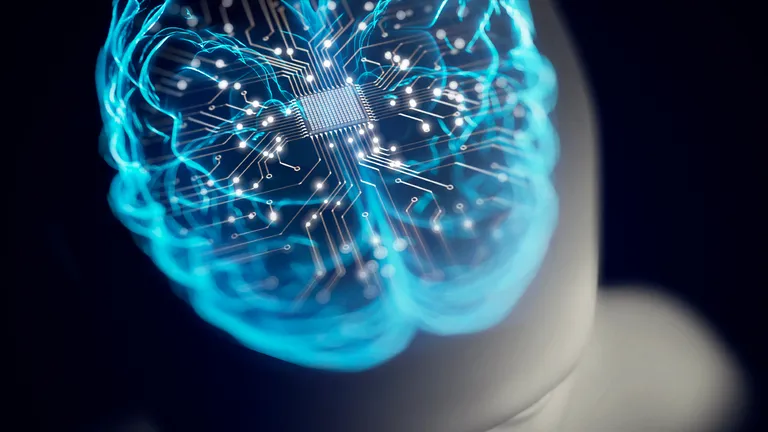
Artificial neurons brain cells research has just taken a remarkable leap forward. Scientists have successfully created tiny artificial neurons that can actually “talk” to real brain cells, opening the door to a new generation of brain implants, smarter AI systems, and revolutionary medical treatments. The breakthrough, published in Nature Nanotechnology, brings together engineering, neuroscience, and computing in ways that could reshape both technology and medicine in the years ahead.
A Major Step Toward Brain-Like Computing
The research team behind the discovery printed extremely small artificial neurons capable of communicating directly with mouse brain cells. The achievement is part of a broader scientific push to build computers that mirror the way the human brain works. These advanced systems are known as neuromorphic computers, and they could dramatically improve the energy efficiency of artificial intelligence.
Mark Hersam, professor of materials science and engineering at Northwestern University and co-author of the study, explained that the team’s goal is to mimic the brain as closely as possible. According to Hersam, the motivation behind the work is to create an alternative to traditional digital computing — one that can handle massive amounts of data while consuming far less energy.
This kind of innovation is becoming increasingly important as AI continues to grow in scale and complexity. Conventional digital computers struggle with rising energy demands, and the brain remains one of nature’s most efficient processing systems.
Why Traditional Chips Can’t Replicate the Brain
Standard silicon chips are powerful, but they aren’t suited to imitate the human brain. They’re rigid, built from repeating transistors arranged in flat, two-dimensional layouts, and they rely on fixed connections that don’t evolve.
The brain works very differently. Brain cells are flexible, varied, and constantly communicate through a complex three-dimensional structure that changes over time. Connections between neurons grow stronger when used often and weaker when neglected. This dynamic and adaptive behavior is what allows the human brain to learn, adapt, and process information so efficiently.
Most current brain-computer interfaces can’t replicate this complexity. They typically rely on rough electrical pulses to communicate with neurons, leading to limited and imprecise interactions.
The Limitations of Earlier Artificial Neurons
Before this new study, scientists had built artificial neurons using two main types of materials:
- Soft organic materials such as gels or tissues that can carry electrical and chemical signals.
- Hard metal oxides that conduct electricity efficiently.
Both approaches have drawbacks. Soft materials tend to fire too slowly, while hard metal oxides fire too fast. Neither matches the natural rhythm of real brain cells, making true communication with biological tissue difficult.
The new research solves this problem by introducing a creative new approach.
The Breakthrough: Printable Inks and Flexible Polymers
The Northwestern team developed printable inks containing tiny flakes of molybdenum disulfide, a semiconductor, and graphene, an excellent electrical conductor. These inks are printed onto a flexible polymer substrate, creating thin and adaptable artificial neurons.
In the past, researchers viewed polymer substrates as a problem because polymers usually interfere with electrical signals. But Hersam’s team turned this challenge into an advantage. They discovered that the polymer could be carefully manipulated to control how electricity flows through the artificial neuron.
Hersam called this the key innovation: “the partial decomposition of the polymer.” By precisely tuning how the polymer heats up and breaks down, the engineers created tiny filaments of energy that allow the current to rise and then suddenly fall back. This creates a sharp burst of energy, similar to how a real neuron fires.
This phenomenon is called “snap back negative differential resistance,” and it allows the artificial neuron to mimic the natural spiking behavior of biological cells.
Mimicking the Many Patterns of Real Neurons
One of the most exciting aspects of the new research is the ability to produce many different signaling patterns. By adjusting the device’s parameters, the team could generate:
- A steady series of spikes
- Spikes spaced out at specific intervals
- Sudden bursts of multiple spikes
According to Hersam, the team can replicate all kinds of spiking responses that mimic biology. This versatility is essential, since real neurons use different firing patterns to communicate different types of information.
Real Brain Cells Responded to the Artificial Neurons
To test how well the artificial neurons could interact with biological tissue, the scientists placed them next to slices of mouse brain in a lab dish. The results were striking.
The mouse neurons began firing in sync with the artificial neurons, suggesting that the brain tissue could interpret the artificial signals as if they were coming from natural cells. This is a powerful sign that the technology could one day form the basis of advanced brain implants and brain-computer interfaces.
Why This Matters for Medicine
Beyond computing, this breakthrough holds enormous promise for medicine. Some of the most exciting potential applications include:
- Brain implants that better integrate with neural tissue
- Smarter prosthetic limbs controlled by thought
- Assistive communication devices for people with disabilities
- Therapies for neurodegenerative conditions like Alzheimer’s
- Possible replacement of damaged nerve cells in the future
If artificial neurons can effectively communicate with biological ones, doctors may eventually be able to restore lost brain functions or repair damaged neural connections.
A Promising Reaction From the Scientific Community
Timothée Levi, a professor of bioelectronics at the University of Bordeaux who studies artificial neurons, praised the new study even though he wasn’t part of the research. According to him, the new artificial neuron impressively matches the natural frequency of real neurons.
Levi pointed out that the work adds to a growing body of research showing that artificial neurons can interact with biological ones. These breakthroughs are happening alongside major advances in how artificial neurons are built, how they connect, and how they’re programmed.
However, Levi cautioned that scientists are still far from achieving long-term, deep communication between artificial and biological neurons. He explained that researchers can control these interactions for a short time, but not yet for long durations. That makes them unsuitable, for now, as permanent additions to the human brain.
The Next Big Challenge: Building Complete Brain-Like Circuits
Both Levi and Hersam emphasized that creating effective artificial neurons is only one part of the puzzle. To build true brain-like computing systems, researchers must also create artificial synapses — the structures that link neurons together.
Hersam called this the “frontier problem.” Scientists now have devices that mimic individual brain elements, but the next step is integrating them into full circuits that can perform complex functions. Achieving that goal would represent a massive shift in how computers are designed and how brain implants work.
A Glimpse Into the Future
The development of artificial neurons that can truly communicate with brain cells is more than a scientific milestone. It’s a glimpse into a future where computing becomes more efficient, AI becomes more powerful, and medicine becomes more personalized.
Imagine future brain implants that don’t just stimulate cells but actually have natural conversations with them. Picture AI systems that can learn and adapt with the kind of efficiency seen in biological brains. Consider treatments that could one day restore memory, mobility, or speech for people with severe neurological conditions.
While these possibilities are still years away, the foundation is being built today.
Final Thoughts
The new breakthrough in artificial neurons brain cells research marks a turning point in both neuroscience and computing. By creating tiny, flexible neurons that can mimic real biological signals — and by showing that real brain cells respond to them — scientists have opened a path toward smarter machines, more advanced brain implants, and powerful new medical therapies.
There is still a long road ahead, including the development of artificial synapses and long-term communication systems. But this discovery proves that the dream of merging human biology with intelligent technology is closer than ever. As researchers continue refining these tools, the future of AI and brain science looks more exciting and more connected than at any point in history.
Author