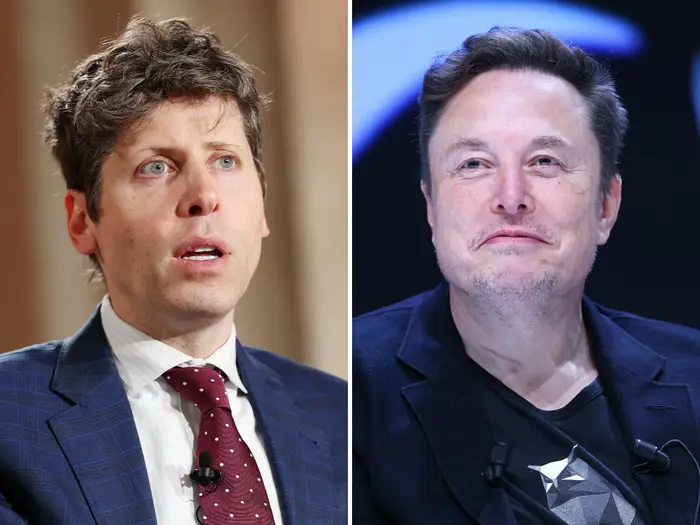
Musk vs Altman Trial Day 4: Inside the Most Talked-About Moments
The Musk vs Altman trial entered its fourth day on Thursday with fresh drama, sharp questioning, and revealing testimony in the high-profile civil case between Elon Musk and OpenAI CEO Sam Altman. The day began with Musk back on the witness stand, facing tough cross-examination, and ended with new financial details emerging from one of his closest aides. The trial, already one of the most closely watched legal battles in the tech world, continues to expose the deep tensions between two of artificial intelligence’s most powerful figures.
This time, attention shifted toward Musk’s own AI ambitions, his charitable donations to OpenAI, and a courtroom moment so dramatic that the judge had to step in. Here’s a closer look at the most important moments from Day 4.
Musk Insists xAI Poses No Real Threat to OpenAI
A major focus of the day was the role of xAI, Musk’s artificial intelligence company and the maker of the Grok chatbot. OpenAI’s legal team has long argued that Musk’s lawsuit, which centers on OpenAI’s shift from a nonprofit to a for-profit structure, is essentially a strategic move to weaken a rival.
Musk pushed back firmly. He described xAI as the smallest player in the AI race and said it was nowhere near the size of his competitors. According to his own ranking, Anthropic comes first, followed by OpenAI, then Google, and finally what he called “some Chinese open-source models.”
He insisted that xAI is roughly one-tenth the size of OpenAI. Despite that, Musk has been actively strengthening the company. Earlier this year, xAI was merged with SpaceX, and a recent agreement with AI coding startup Cursor gives SpaceX the option to acquire the company for a reported $60 billion. Even with these moves, Musk maintained that xAI is still a small operation in the broader AI landscape.
Judge Stops Musk’s “Terminator” Talk
Musk has made several references throughout the trial to what he calls an AI “Terminator” scenario, painting dark pictures of a future where artificial intelligence becomes a serious threat to humanity. On Thursday, US District Judge Yvonne Gonzalez Rogers had heard enough.
Before the morning recess, the judge made it clear that the courtroom was not the place to debate human extinction. The exchange came after Musk was asked about Tesla’s robotics business and previous remarks he had made about “building a robot army.”
Musk explained that Tesla does not produce weapons and noted that he wants to avoid any “Terminator” situation. When pressed for clarification, he said the worst-case scenario would be one in which AI ends up wiping out humanity. The judge’s firm reminder helped refocus the trial on the legal issues at hand rather than apocalyptic predictions.
Musk’s Money Manager Faces Tough Questioning
The second witness called by Musk’s legal team was Jared Birchall, a former Morgan Stanley banker who now serves as Musk’s money manager. His testimony brought new attention to the financial side of Musk’s relationship with OpenAI.
Birchall told the court that Musk made approximately 60 donations to OpenAI, totaling around $38 million, along with monthly rent contributions. Musk has alleged that these funds were misused and helped enrich some of the very people now named as defendants.
Under cross-examination, OpenAI’s lead lawyer William Savitt pressed Birchall on whether Musk ever placed conditions on how the donations should be used. Birchall said there was always a shared understanding among Musk and OpenAI’s founding members about how the money would be applied. He added that the funds were never meant to be used for “whatever use, at any time.”
The conversation also turned to a 2018 office-sharing arrangement between OpenAI and Musk’s brain-computer interface company, Neuralink. Savitt referenced emails in which Birchall expressed concerns about security at the shared building, noting OpenAI’s growing public profile. According to Birchall, the security costs, which included armed personnel, were shared between OpenAI and Neuralink.
Birchall also confirmed that he had served as the corporate secretary of xAI until just a few weeks ago and has held additional roles at Neuralink and The Boring Company, two other ventures within Musk’s expanding business empire.
What to Expect Next Week
With the jury not sitting on Friday, the first week of testimony came to an end with Birchall’s appearance. But next week is set to deliver one of the most anticipated moments of the entire trial.
Greg Brockman, OpenAI’s president and cofounder, is scheduled to take the stand. Brockman is widely seen as a key witness because of personal journal entries he wrote during the period leading up to Musk’s departure from OpenAI in 2018. Those notes have already played a significant role in shaping the trial.
In one entry, Brockman wrote that Musk had not been treated honestly during discussions about OpenAI’s shift toward a for-profit model, particularly the idea of pursuing that change without him. In another, he questioned the morality of converting the nonprofit into a B-corp while excluding Musk, calling such a move “pretty morally bankrupt.” He also acknowledged that Musk was far from naive about what was unfolding.
OpenAI has pushed back, claiming that the journal entries were “cherry-picked” by Musk’s legal team. Still, the entries were so significant that the judge cited them when ordering a jury trial.
The Stakes Going Forward
Musk’s legal team is asking for substantial consequences if the jury rules in his favor. Among the demands, Musk wants both Brockman and Altman removed from their roles as officers of OpenAI and asked to forfeit their equity in the company.
As the trial moves into its second week, the spotlight will only grow brighter. With Brockman’s testimony on the horizon and more financial details likely to emerge, the case continues to reshape public understanding of how OpenAI evolved into one of the most influential AI companies in the world.
The Musk vs Altman trial is no longer just a courtroom battle. It has become a defining moment for the future of artificial intelligence, corporate governance, and the people who shape both.
Author