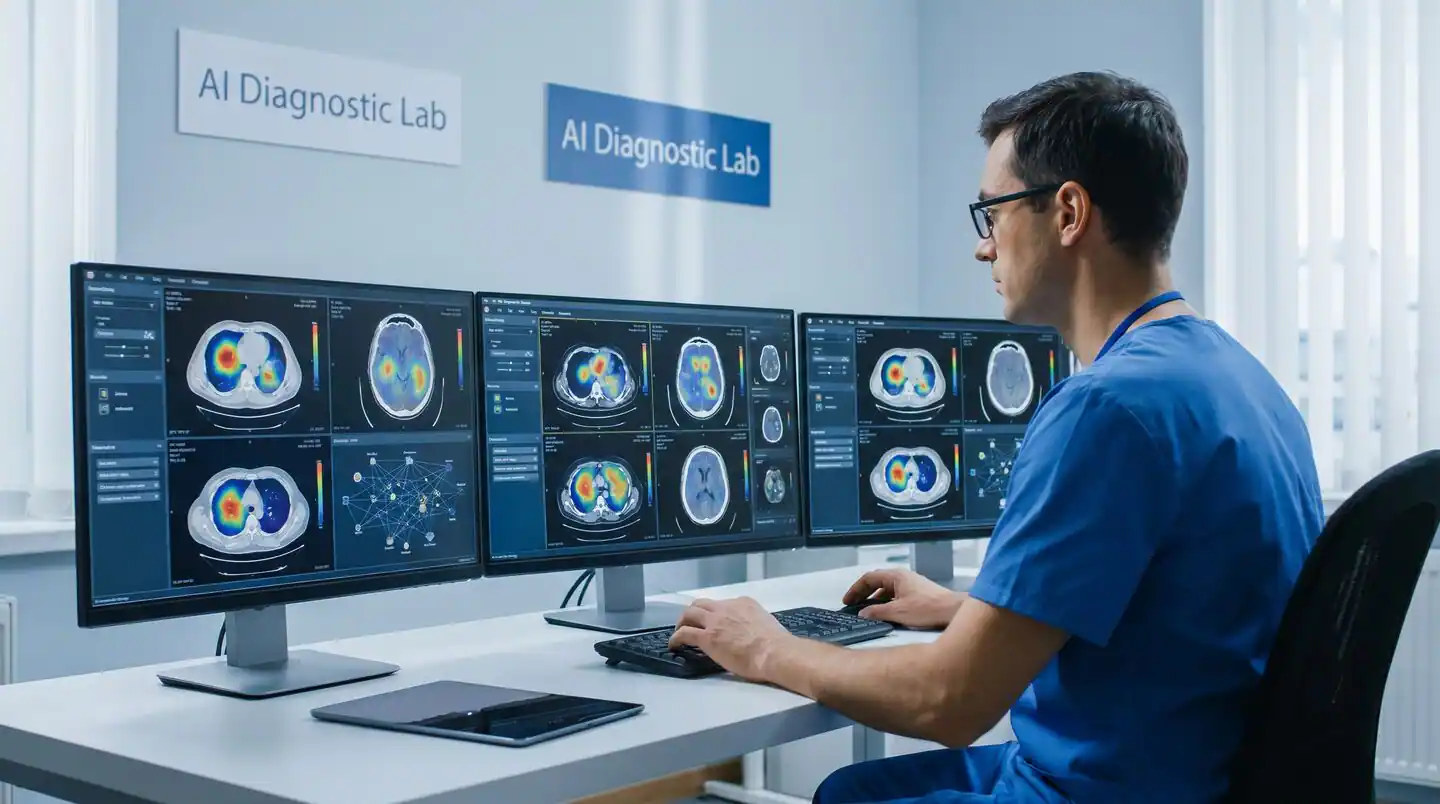
REDMOD AI Detects Pancreatic Cancer Years Before Symptoms Appear
AI pancreatic cancer detection has reached an exciting new milestone, and it could change the way one of the deadliest cancers is diagnosed. Scientists have developed an artificial intelligence system that can pick up faint warning signs of pancreatic cancer in CT scans long before any human expert would notice them. In some cases, the model spotted trouble more than two years before a formal diagnosis was made.
A Breakthrough Called REDMOD
The new tool, named REDMOD (short for Radiomics-based Early Detection Model), was developed to identify pancreatic ductal adenocarcinoma. This is the most common and most lethal type of pancreatic cancer, and it usually goes undetected until it has already advanced.
The findings, published in the journal Gut, suggest REDMOD could help shift diagnoses from a desperate late-stage discovery to something far more hopeful: stage 0 detection, when treatment options are still wide open and survival rates are dramatically higher.
Why Pancreatic Cancer Is So Hard to Catch
Pancreatic cancer carries one of the lowest survival rates of any major cancer, largely because it is sneaky. In its early stages, the disease rarely causes symptoms, and the changes it triggers in pancreatic tissue are nearly impossible to see on standard imaging. By the time patients feel something is wrong, the cancer has often spread.
Even seasoned radiologists struggle to spot it early. Routine CT scans simply don’t reveal the subtle differences that signal trouble brewing inside the pancreas.
That’s the gap REDMOD was built to fill.
How the AI System Works
REDMOD focuses on something called radiomics, which means analyzing tiny variations in tissue texture that are invisible to the human eye. The model studies these patterns and looks for the kind of fingerprint that early pancreatic cancer leaves behind, even before any obvious tumor appears.
To make the system more reliable, the researchers added an automated segmentation feature that precisely maps out the pancreas and separates it from surrounding tissues and organs. This step removes the inconsistencies that can creep in when humans manually outline scans.
In short, REDMOD doesn’t just guess. It systematically identifies the pancreas, examines its texture, and flags suspicious patterns with mathematical precision.
Putting It to the Test
To see how well the system performed, researchers ran REDMOD through abdominal CT scans collected from 219 patients across several hospitals. Each of these patients had originally been considered cancer-free by radiologists, but all of them were later diagnosed with pancreatic cancer.
The timing of the scans was telling:
- 87 patients (40%) had their scans taken 3 to 12 months before diagnosis
- 76 patients (35%) were scanned 12 to 24 months before diagnosis
- 56 patients (25%) were scanned more than 24 months ahead, in some cases close to three years prior
In nearly two-thirds of these cases, the cancer eventually appeared in the head of the pancreas.
For comparison, scans from 1,243 individuals who did not develop pancreatic cancer within three years were also analyzed. The two groups were matched by age, sex, and scan date to keep the comparison fair.
The Striking Results
REDMOD detected hidden warning signs of pancreatic cancer an average of 475 days before doctors made an official diagnosis. That’s more than a year of extra time, and in cancer terms, that window can be life-saving.
The researchers point out that catching the disease this early could be transformative. Modelling studies suggest that if more pancreatic cancers were caught while still localized, survival rates could more than double. Timing of diagnosis is, by far, the single most important factor in whether a patient survives.
When the AI was matched against experienced radiologists, the gap was striking:
- Overall, REDMOD identified true positive cases at nearly twice the rate (73% vs 39%)
- For scans taken more than two years before diagnosis, the model was almost three times more accurate (68% vs 23%)
These numbers show how much information is hiding in plain sight on CT scans, just waiting for the right tool to find it.
Reliable Across Different Patient Groups
The team also wanted to confirm that REDMOD wasn’t just lucky on one dataset. They tested it on a separate group of 539 patients and the system correctly identified just over 81% as cancer-free. On the well-known US National Institutes of Health NIH-PCT dataset, which included 80 patients, REDMOD reached 87.5% accuracy.
Even more impressive, when patients were rescanned later, the AI returned the same result 90 to 92% of the time. That kind of consistency is crucial for any technology that hopes to make its way into hospital workflows.
What This Means for the Future
The implications stretch far beyond a single research paper. If REDMOD continues to perform this well, it could become a powerful screening tool for people at higher risk, such as those experiencing unexplained weight loss or newly diagnosed diabetes, both of which can be early hints of pancreatic trouble.
Of course, the researchers are quick to note that more work is needed. The study had limited ethnic diversity, and clinical trials are still required before the technology can be rolled out widely. But the foundation is strong.
In their own words, REDMOD represents a meaningful step toward changing how this difficult disease is approached, moving from late-stage discovery to proactive interception.
Final Thoughts
AI pancreatic cancer detection is no longer a theoretical idea floating in research labs. With tools like REDMOD, doctors may soon have the ability to act years before symptoms even surface, giving patients a real fighting chance against one of medicine’s toughest opponents. It’s a glimpse into a future where artificial intelligence quietly works alongside doctors, catching what no human eye could see, and turning hopeless diagnoses into treatable ones.
Author