SpaceX Falcon Heavy Launch Returns After 18 Months — and a Satellite Was Watching
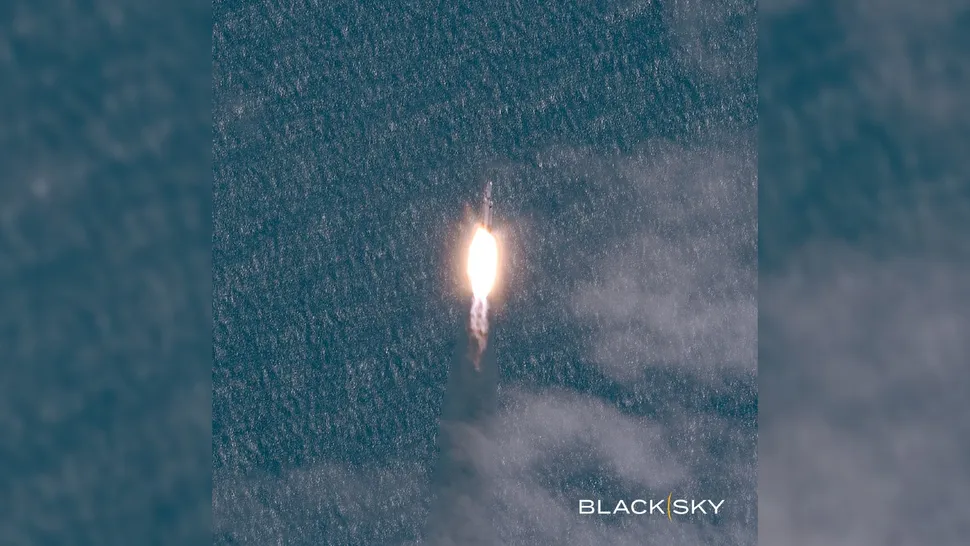
The SpaceX Falcon Heavy launch on Wednesday, April 29, marked the powerful rocket’s first flight in 18 months — and the moment didn’t just play out on the launchpad. Far above Earth, a sharp-eyed satellite was watching too, capturing some of the most jaw-dropping aerial views of a rocket launch the public has seen in recent years.
The result is a set of striking new images that not only celebrate the return of one of the world’s most powerful operational rockets, but also showcase just how advanced commercial Earth-observation technology has become.
What the Falcon Heavy Was Doing
The Falcon Heavy lifted off from NASA’s Kennedy Space Center in Florida, carrying a major payload destined for high above our planet.
Highlights of the launch:
- The rocket flew from Kennedy Space Center (KSC) in Florida.
- It carried the ViaSat-3 F3 communications satellite.
- The destination was geosynchronous transfer orbit.
- It was the Falcon Heavy’s first flight in a year and a half.
Geosynchronous transfer orbits are typically used for large communications satellites that will eventually settle into a fixed position relative to Earth, providing services like broadband, broadcast TV, and global connectivity. ViaSat-3 F3 fits squarely into that category, supporting expansions in next-generation satellite communication.
A Satellite Caught the Whole Thing
While millions watched the launch from the ground or via livestreams, one BlackSky Gen-3 Earth-observing spacecraft had a far rarer view — looking down at the action from orbit.
BlackSky’s satellite captured two key moments:
- A pre-launch shot of the Falcon Heavy sitting on the pad in twilight conditions.
- A post-liftoff image of the rocket already streaking through Florida’s cloudy skies.
According to the company, the spacecraft snapped an extreme off-nadir twilight image of the rocket on the pad at 7:29 local time. Then, at 10:13 — just 38 seconds after liftoff — it caught the Falcon Heavy in flight, already traveling at over 400 miles per hour.
That kind of timing is no accident. It’s the result of a satellite system specifically designed to grab high-value imagery at flexible times throughout the day.
What Makes the BlackSky Gen-3 Imagery So Impressive
The new images stand out not just because they show a rocket launch, but because they reveal what modern commercial satellites are now capable of doing in real time.
Notable capabilities of BlackSky’s Gen-3 satellites include:
- The ability to capture images at multiple times throughout the day.
- Flexible imaging modes that can be tuned to specific events.
- Time-diverse coverage that allows them to monitor evolving situations.
- High-resolution imaging from low Earth orbit.
According to BlackSky, the Gen-3 spacecraft are capable of resolving features as small as 13.8 inches (35 centimeters) on the ground. That’s a stunning level of detail when you consider the satellites are operating from far above our atmosphere, traveling at orbital speeds.
Why the Twilight Pre-Launch Shot Is Special
One of the most visually striking parts of this story is the off-nadir twilight image of the rocket on the pad. In simple terms, “off-nadir” means the satellite was capturing the rocket at an angle, not directly overhead.
That angle matters because:
- It shows the rocket against a unique twilight backdrop.
- It demonstrates the satellite’s flexibility to image targets even when not directly above them.
- It captures the dramatic atmosphere just before liftoff.
- It highlights the integration of technology, lighting, and timing that makes such a shot possible.
For space enthusiasts, the pre-launch frame feels almost cinematic — a quiet moment frozen just before one of the most explosive feats in modern engineering.
Catching the Rocket Mid-Flight at 400 MPH
Even more impressive is the post-liftoff image, taken just 38 seconds after the rocket left the pad. By that point, the Falcon Heavy was already moving at speeds exceeding 400 miles per hour and climbing through cloud cover.
Capturing a clear image of an object moving that fast, from orbit, with this kind of clarity, is a major technical achievement. It also signals where the future of Earth observation is heading:
- Faster reaction times for satellite imaging tasks.
- Real-time observation of dynamic events like launches and severe weather.
- More commercial use cases for live, high-detail satellite views.
- Greater public awareness of what’s happening in orbit and on Earth’s surface.
It’s a small reminder that space isn’t just about rockets anymore — it’s about a growing ecosystem of spacecraft watching, communicating, and supporting life on the planet below.
A Quick Refresher on the Falcon Heavy
For anyone who hasn’t kept up with the rocket’s history, the Falcon Heavy is one of the most impressive launch vehicles flying today.
Key facts about Falcon Heavy:
- It is the second-most-powerful operational rocket in the world.
- Only NASA’s Space Launch System (SLS) moon rocket is more powerful among active vehicles.
- SpaceX’s even bigger Starship is still in development and not yet in regular operation.
- Falcon Heavy debuted in February 2018.
- It has now completed 12 successful flights with no launch failures.
Its sheer power makes it a go-to choice for missions that demand heavy payloads, complex orbits, or both. The combination of three Falcon 9 cores working together creates one of the most visually dramatic launches in modern spaceflight.
A Long Wait Between Launches
Wednesday’s flight was the first time the Falcon Heavy had launched since October 2024. That earlier mission was no minor task — it sent NASA’s Europa Clipper spacecraft on its long journey to the Jupiter system, where it will study the icy moon Europa for signs of conditions suitable for life.
Reasons Falcon Heavy launches tend to be relatively rare include:
- The rocket is reserved primarily for missions requiring heavy lift capacity.
- Many traditional Falcon Heavy-class missions are now handled by upgraded Falcon 9 rockets.
- Long preparation timelines are needed for high-stakes payloads.
- SpaceX is also focusing major resources on the development of Starship.
So when a Falcon Heavy does fly, it’s almost always tied to something noteworthy — and ViaSat-3 F3 is no exception, given its role in expanding global satellite communications.
The Bigger Picture: A Crowded but Coordinated Sky
These satellite images of a Falcon Heavy launch are also a great snapshot of how active and interconnected modern space activity has become. In a single moment:
- A heavy-lift rocket was launching a new communications satellite.
- A commercial Earth-observation satellite was watching the launch from orbit.
- Multiple ground stations were tracking and processing data.
- Public audiences were watching streams and updates around the world.
That kind of layered activity speaks to a broader shift. Space is no longer just the domain of governments and a handful of major aerospace companies. It’s becoming a complex, commercial, and increasingly visual environment shared by many players.
Why ViaSat-3 F3 Matters
While the Falcon Heavy and the BlackSky satellite stole much of the attention, the actual payload — the ViaSat-3 F3 satellite — has its own quiet importance.
ViaSat-3 F3 is part of a broader effort to:
- Provide high-capacity broadband connectivity worldwide.
- Support both commercial and government communications needs.
- Strengthen coverage in regions where reliable connectivity is hard to come by.
- Compete in a fast-evolving satellite communications market.
In an era when global demand for fast, reliable connectivity keeps growing — driving everything from streaming to remote work to AI-powered services — heavy-duty communications satellites like this one play a crucial behind-the-scenes role.
What This Launch Means for SpaceX
For SpaceX, the successful return of Falcon Heavy reaffirms several important points about its operational fleet.
The takeaways include:
- Falcon Heavy remains a reliable, high-performance launcher.
- The vehicle’s perfect track record continues, with zero failures across 12 flights.
- SpaceX retains the ability to handle heavy or complex missions independently of Starship’s progress.
- It can keep meeting the needs of major customers, from NASA to large commercial operators.
Even as Starship development races forward, Falcon Heavy provides a proven, dependable backbone for missions that simply can’t wait for next-generation hardware.
A Visual Reminder of How Far We’ve Come
Stepping back, there’s something genuinely moving about seeing this launch from space. Generations grew up watching rocket launches from the ground or on television. Now, satellites operated by private companies can capture those same launches from orbit, in real time, in remarkable detail.
It speaks to:
- The maturation of commercial space as an industry.
- The growing role of Earth observation in everyday life.
- The seamless way humans, machines, and rockets now share orbital space.
- The expanding possibilities for storytelling, science, and security.
What looks like a simple set of striking photos is, in fact, the result of decades of innovation across multiple sectors of space technology.
Final Thoughts: A Launch Worth Looking At — From Every Angle
The latest SpaceX Falcon Heavy launch was more than just a return to flight for one of the world’s most powerful operational rockets. It was a moment captured from multiple perspectives — from the ground in Florida, from the rocket itself, and from a high-tech satellite watching from orbit. Together, those views offer a glimpse of the present and future of space exploration: one where every important moment is observed, recorded, and shared from all angles.
For Falcon Heavy, the mission added another flawless flight to its growing record. For BlackSky, it served as a powerful demonstration of what its Gen-3 satellites can do. And for the rest of us, it offered a stunning reminder that some of the most beautiful pictures of Earth’s most dramatic engineering feats are now being taken from far beyond it.
Author