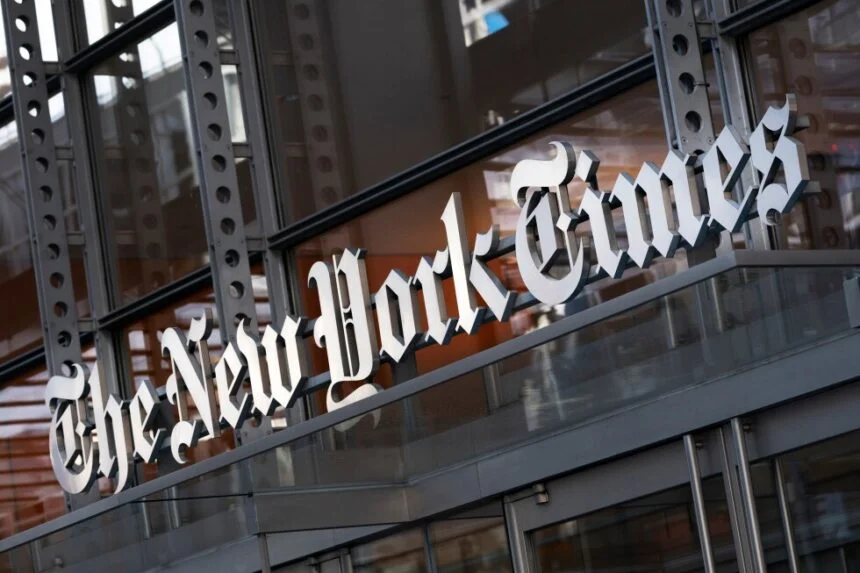
EEOC sues New York Times in a high-profile new lawsuit that has reignited debates about diversity, equity, and inclusion policies at major media organizations. The Equal Employment Opportunity Commission, the federal agency tasked with enforcing workplace discrimination laws, accused the Times of denying a promotion to a white male employee due to his race and gender. The case is now placing one of the country’s most influential newsrooms at the center of an unfolding legal and political storm.
A Major Lawsuit With Major Implications
The EEOC filed the lawsuit Tuesday in the U.S. District Court for the Southern District of New York, alleging that the Times violated Title VII of the Civil Rights Act of 1964. The federal law prohibits employment discrimination based on race, color, religion, sex, or national origin.
According to the EEOC’s statement, the agency took action against the Times because of the lack of a promotion for a “well-qualified white male employee” alongside what it described as discriminatory diversity, equity, and inclusion policies. The agency also pointed to a 2021 “Call to Action” issued by the Times in which the publication committed to increasing non-white and female representation in leadership roles.
EEOC Chair Andrea Lucas stated that federal law is clear, that hiring or promotion decisions cannot be motivated in whole or part by race or sex. According to her, there is no exception to that rule, even for organizations pursuing diversity goals.
Why This Lawsuit Matters
The lawsuit is significant for several reasons:
- It targets one of the most prominent newsrooms in the world
- It places DEI initiatives under direct federal scrutiny
- It reflects an evolving legal interpretation of workplace diversity programs
- It is the third lawsuit filed by the Trump administration or President Trump himself against the Times in five years
- It comes amid a wider effort to challenge corporate and media DEI policies
These details make this case far more than a typical employment dispute. It carries the potential to influence how major employers across the country structure their hiring and promotion strategies.
The Times Pushes Back Strongly
The New York Times rejected the lawsuit immediately and forcefully. Times spokesperson Danielle Rhoades Ha stated that the publication “categorically rejects the politically motivated allegations” brought by the Trump administration’s EEOC.
She emphasized that the company’s hiring and promotion practices are merit-based and focused on recruiting and promoting the best talent available. The Times has also indicated that it intends to defend itself vigorously.
For the Times, the lawsuit isn’t just a legal challenge but a public relations issue. The newspaper has long positioned itself as an industry leader on issues of inclusion and representation. Defending its DEI policies in federal court will require careful navigation of legal, public, and political pressures.
A Pattern of Lawsuits Between Trump and the Times
This lawsuit is the latest in a long-running dispute between the Trump administration and The New York Times. In recent years:
- President Trump filed a $100 million lawsuit against the Times in 2021, which was dismissed
- A $15 billion personal lawsuit was filed by Trump in 2025 and later refiled
- The administration has filed multiple legal actions against media companies
- The Times itself sued the Pentagon last year over journalist restrictions
- A federal judge ruled in favor of the Times in the Pentagon case
This back-and-forth has shaped the relationship between the Trump administration and one of America’s most influential publications. While many of these lawsuits have not yielded successful outcomes for the Trump side, they have generated significant attention and political momentum.
The Broader DEI Debate
The DEI conversation has shifted dramatically in recent years. What was once widely embraced by corporations and media companies is now under intense scrutiny in legal, political, and cultural spheres. Some of the major changes shaping the debate include:
- Supreme Court rulings restricting race-based affirmative action
- Increased federal scrutiny of workplace DEI programs
- Several major companies scaling back internal diversity initiatives
- Conservative groups pushing for legal challenges
- Broader political polarization around DEI policies
The Times’ “Call to Action” from 2021 reflected a wider corporate trend at the time. Many newsrooms publicly committed to increasing diversity, especially after broad social conversations following 2020. The current legal climate, however, is challenging the way these initiatives are designed and implemented.
The EEOC’s Argument
The EEOC’s argument hinges on the idea that DEI programs cannot legally favor or disadvantage employees based on race or gender. According to the agency, even well-intentioned policies must comply with federal anti-discrimination laws. The lawsuit is structured around three core claims:
- The Times allegedly passed over a qualified white male employee for a promotion
- The decision was reportedly tied to demographic considerations
- The publication’s broader DEI strategy may have created a discriminatory environment
If proven, these allegations could have major implications not just for the Times but for many other corporations whose DEI strategies follow similar models.
The Times’ Defense Strategy
Although details are still emerging, the Times’ defense strategy is likely to revolve around several arguments:
- Its hiring and promotion practices are based on merit
- DEI policies are aimed at expanding talent pools, not limiting them
- The publication has documented qualifications and procedures for promotions
- The “Call to Action” was a broader cultural commitment, not a binding rule
- The lawsuit is politically motivated rather than legally grounded
The publication’s reputation, established leadership, and financial resources will likely give it strong legal capabilities. However, the case may still take months or years to resolve, depending on how the courts proceed.
The Trump Administration’s Larger Strategy
The lawsuit is part of a broader strategy that critics say uses DEI-related issues to target media organizations legally and politically. Last week, the Federal Communications Commission ordered an accelerated review of ABC’s local station broadcast licenses, an unusual move connected to DEI policies. The FCC is examining whether the stations violated rules prohibiting unlawful discrimination.
This indicates a pattern of increased federal pressure across multiple agencies. Some of the broader legal and regulatory actions include:
- EEOC scrutiny of corporate hiring practices
- FCC reviews of broadcast license eligibility
- Department of Education actions against universities
- Department of Justice attention on DEI compliance
- Increased scrutiny by the IRS on certain nonprofit DEI programs
These efforts collectively signal a more aggressive federal response to DEI policies, especially in industries seen as influential in shaping public discourse.
Why Media Companies Are in the Spotlight
Media organizations like The New York Times have been at the center of the DEI debate for years. Several reasons make them especially vulnerable to scrutiny:
- They influence public opinion at scale
- They publicly champion social justice issues
- Many openly published DEI commitments after 2020
- They have predominantly highly educated employees with structured hiring processes
- They often serve as benchmarks for corporate cultural standards
Because of their visibility, lawsuits like the EEOC’s have outsized symbolic and political impact. They also highlight the tension between media organizations’ editorial values and the legal requirements governing employment.
Possible Outcomes of the Lawsuit
If the lawsuit progresses, several possible outcomes could shape the future of DEI strategies in U.S. workplaces:
- The Times may settle with structural reforms or payments
- A court ruling could force changes in DEI policies industry-wide
- The case could end up in higher courts, setting national precedent
- It could trigger more lawsuits against other major employers
- It could prompt Congress to revisit DEI-related legislation
For now, the legal process will play out over many months. The eventual resolution could shape American workplaces for years to come.
Reactions Across the Political Spectrum
Reactions to the lawsuit are sharply divided.
Supporters of the EEOC’s action argue that:
- Employment laws must apply equally to all groups
- Some DEI programs have crossed legal lines
- Federal enforcement is necessary to prevent discrimination
- Major institutions must be held accountable
Critics of the lawsuit argue that:
- It targets a media company for political reasons
- DEI initiatives address long-standing inequities
- The lawsuit oversimplifies complex employment decisions
- It may chill efforts to build inclusive workplaces
The deep divide reflects how DEI has evolved into one of the most polarizing topics in American public life.
Why This Case Could Reshape American Workplaces
The implications of EEOC sues New York Times go far beyond a single dispute. The lawsuit may end up influencing:
- How major corporations structure hiring and promotion processes
- The legal standards for DEI initiatives
- The relationship between government agencies and private employers
- The future direction of public discourse around equity and inclusion
- The way leadership pipelines are evaluated across industries
Whether the EEOC succeeds or not, the case will likely accelerate ongoing changes in how organizations approach diversity policies.
A Defining Moment for Newsroom Diversity
For The New York Times specifically, this lawsuit may force a more transparent conversation about how DEI initiatives are implemented. The publication has long emphasized the importance of newsroom diversity, but it may now have to demonstrate that its policies fully align with federal anti-discrimination laws.
The outcome could influence:
- Editorial leadership selection processes
- Internal training and policy frameworks
- Public messaging around diversity efforts
- Relationships with employees and labor groups
- Long-term recruitment and promotion strategies
The Times has tools and resources to navigate the situation, but the lawsuit is undeniably a serious legal challenge.
Final Thoughts
EEOC sues New York Times marks a pivotal moment in the ongoing debate about DEI, workplace equity, and the legal boundaries of inclusive hiring practices. The lawsuit raises important questions about how organizations balance fairness, representation, and federal compliance.
While the legal battle is just beginning, the implications stretch far beyond the courtroom. Major corporations, media outlets, and government agencies are all watching closely. The outcome could redefine how DEI is shaped, debated, and enforced across America.
The case highlights one of the country’s most pressing challenges, building inclusive workplaces while ensuring that no employee, regardless of race, gender, or background, is treated unfairly. For The New York Times, the path forward will require careful legal strategy, transparent communication, and a clear demonstration that its hiring and promotion practices align with federal law.
For the broader public, the lawsuit serves as a reminder that the conversation around DEI is far from settled. As courts, regulators, and corporations continue to grapple with these complex issues, the consequences will shape American workplaces for years to come.
Author