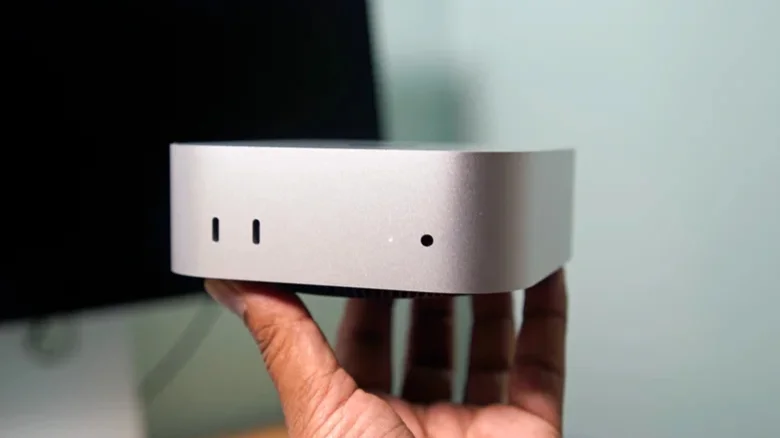
Apple Discontinues Cheapest Mac Mini as AI Demand Drives Up Prices
Apple discontinues cheapest Mac mini, and the move signals a notable shift in how the company is responding to surging demand from the artificial intelligence world. The wallet-friendly $599 entry-level Mac mini appears to have quietly vanished from Apple’s online store, leaving the lineup to start at $799 — a price tag tied to the model packing 512GB of storage. The change was first picked up by MacRumors after spotting updates to Apple’s product page.
While Apple has not yet issued a public confirmation, multiple outlets, including Engadget, have reached out for comment. The shift reflects a broader trend rippling through the tech industry, where soaring demand for memory, storage, and high-performance chips is pushing prices higher across the board.
Why the $599 Mac Mini Was Such a Big Deal
When Apple rolled out the redesigned Mac mini back in 2024, the $599 starting price felt almost too good to be true. For years, Apple’s lineup had been criticized for high entry costs, but the new mini bucked that trend in a meaningful way.
The base model packed surprisingly serious specs for the price, including:
- A choice of Apple’s M4 chip configurations
- A minimum of 16GB of RAM
- At least 256GB of internal storage
- A solid selection of ports for productivity and creative work
For everyday users, students, and even professionals on a budget, the Mac mini quickly earned a reputation as one of the most compelling values Apple had offered in years.
How the AI Boom Changed Everything
The Mac mini didn’t stay just a budget desktop for long. It quickly became a favorite among AI enthusiasts and developers who discovered the tiny machine was surprisingly well-suited for running local large language models. As the AI agent ecosystem expanded, the mini found a second life as a dedicated host for autonomous tools like OpenClaw and similar agentic software.
That growing popularity collided with another major industry trend: tightening global supply chains for memory and storage components. The combination appears to have nudged Apple into pulling its lowest-tier configuration, at least for the time being.
In short, the same qualities that made the Mac mini a hit with AI tinkerers may now be the reason its cheapest version is no longer available.
Tim Cook Hints at Supply Pressure
Apple CEO Tim Cook acknowledged this shift during the company’s most recent earnings call. He explained that both the Mac mini and Mac Studio are likely to take several months before supply catches up with demand. According to Cook, both products have proven to be powerful platforms for AI workloads and agentic applications, and customer awareness of that capability has grown more quickly than Apple anticipated.
In other words, Apple underestimated just how hungry the AI community would be for its compact desktops.
The Bigger Industry Picture: RAMaggedon
The semiconductor industry is currently navigating what insiders have been calling “RAMaggedon,” a period defined by squeezed supplies and rising costs for memory components. Apple has generally weathered this storm better than many of its competitors, but the effects are starting to show in subtle pricing adjustments across its lineup.
Take the MacBook Air, for example. When Apple introduced the M5-powered version, the company also bumped the base storage to 512GB and lifted the starting price to $1,099. To keep budget-conscious shoppers happy, Apple positioned the MacBook Neo at around $600, offering many of the perks of a modern Mac without the higher entry cost.
Unfortunately, the Mac mini doesn’t currently have a similarly affordable cousin to fill that gap.
What This Means for Mac Mini Buyers
For shoppers eyeing the Mac mini, the immediate impact is clear: the cheapest doorway into Apple’s desktop ecosystem just got more expensive. Anyone hoping to grab the original $599 configuration will likely need to look at refurbished units, third-party resellers, or remaining inventory at retail partners.
Buyers willing to pay $799 still get a capable machine with double the storage, which is arguably more practical for modern workloads anyway. But the symbolic value of that $599 starting point — a price that briefly made Apple feel surprisingly accessible — is gone for now.
There’s no official word on whether Apple plans to reintroduce a lower-cost Mac mini in the future. Given how quickly AI workloads are reshaping consumer hardware demand, much will depend on whether memory and storage prices stabilize in the coming year.
A Sign of Where Apple Is Heading
The decision to phase out the cheapest Mac mini is more than a routine pricing tweak. It reflects how deeply the AI revolution is influencing hardware strategy at major tech companies. Devices that were once marketed primarily as productivity machines are now being reframed as personal AI workstations, capable of running sophisticated models without relying on cloud services.
For Apple, the Mac mini and Mac Studio have become unexpected stars in this transition. Customers are increasingly buying them not just for traditional computing tasks, but as compact, energy-efficient platforms for experimenting with local AI tools.
Final Thoughts
The fact that Apple discontinues cheapest Mac mini may disappoint budget shoppers, but it tells a much bigger story about where the industry is headed. AI-driven demand is rewriting the rules of consumer hardware, pushing memory, storage, and chip pricing into uncharted territory.
For now, anyone wanting a slice of Apple’s desktop lineup will need to budget a bit more. Whether the $599 Mac mini ever makes a comeback remains uncertain, but one thing is clear: Apple’s smallest desktop has officially graduated from budget favorite to AI workhorse, and its pricing is starting to reflect that new identity.
Author