Android AICore Storage Spikes Finally Get a Clear Explanation from Google
The mystery behind Android AICore storage spikes is finally being cleared up, thanks to fresh documentation from Google that explains why some users have been seeing their phone storage temporarily eaten up by the system’s on-device AI engine. According to a recent report from 9to5Google, the spikes are not bugs or runaway processes — they’re actually part of a deliberate safety mechanism designed to keep your device’s AI features working smoothly, even when something goes wrong during an update.
What Is Android AICore, Anyway?
For users who haven’t heard of it yet, Android AICore is the on-device artificial intelligence runtime that Google introduced for Android 14 and later versions on supported devices. It serves as the backbone for several smart features powered by local generative models like Gemini Nano.
Some of the most popular AICore-driven features include:
- Advanced proofreading that goes beyond simple spell check
- Automatic speech recognition for transcribing voice into text
- Scam detection that helps users avoid fraudulent calls and messages
- Smart reply suggestions in messaging apps
- Summarization tools for long articles or emails
- Translation between multiple languages
Because all of these features rely on Gemini Nano running locally on the phone, your device must store the AI model directly in its memory rather than fetching it from the cloud each time it’s needed.
Why Storage Suddenly Looks Bigger After an Update
According to the 9to5Google report, Android AICore documentation now openly explains why some users notice a temporary increase in storage usage. When Google rolls out a new version of Gemini Nano, the system temporarily keeps both the old and new versions of the model for up to three days.
This isn’t a glitch — it’s a deliberate fail-safe. If the new model has a bug or fails to perform properly, the phone can instantly fall back to the older, stable version without needing to redownload anything. As 9to5Google highlights, the guidance from Google clearly states that once the system confirms the update is stable, the extra storage space clears automatically.
In other words, your phone briefly carries two AI brains until it’s sure the new one is safe to use full-time.
Why Google Designed It This Way
For most users, an extra few hundred megabytes might feel annoying — especially on phones running low on free space. But from an engineering perspective, this approach is actually quite smart. Holding onto the old model temporarily allows for several important advantages:
- Instant rollback if a new update introduces problems
- Avoidance of long redownloads that could leave AI features unusable
- Faster recovery for users when bugs are detected after rollout
- Reduced risk of devices being stuck in a broken state
Anyone who has ever waited hours for a failed system update to roll back will understand why this kind of safety net is genuinely valuable.
The Trade-Off Between Storage and Stability
Of course, no engineering decision comes without trade-offs. The AICore approach prioritises stability over short-term storage efficiency. While the duplication only lasts up to three days, the size of generative AI models means even a brief overlap can take up noticeable space on devices with limited storage.
Modern AI models like Gemini Nano are not small. They are designed to perform complex tasks like language understanding, translation, and summarisation directly on the device. That sophistication comes with a cost — these models can take up significant memory, especially on phones running multiple AI-powered features at once.
The Privacy Advantage of On-Device AI
One of the biggest benefits of running models locally is privacy. With on-device AI, sensitive data such as messages, call logs, and personal documents never need to leave the device. Tasks like scam detection, proofreading, or translation can happen entirely offline.
This local-first approach also delivers other practical wins:
- Faster response times since there’s no need to communicate with a remote server
- Continued functionality even when there’s no internet connection
- Reduced cloud computing costs for both Google and end users
- Better handling of regional language and dialect variations
For users in places with patchy connectivity, on-device AI can make a real difference in everyday usability.
Why the Storage Spikes Are More Visible on Some Phones
Not all Android devices will experience these storage fluctuations the same way. Phones with limited base storage — for example, those with just 64GB or 128GB of internal memory — will feel the impact much more acutely than flagship devices with 256GB or more.
In addition, devices that run multiple feature-specific models or support multi-lingual ASR and translation may see even larger spikes during updates. Each of these capabilities can require its own dedicated AI components, which means more files, more frequent updates, and bigger temporary footprints.
What This Means for Everyday Users
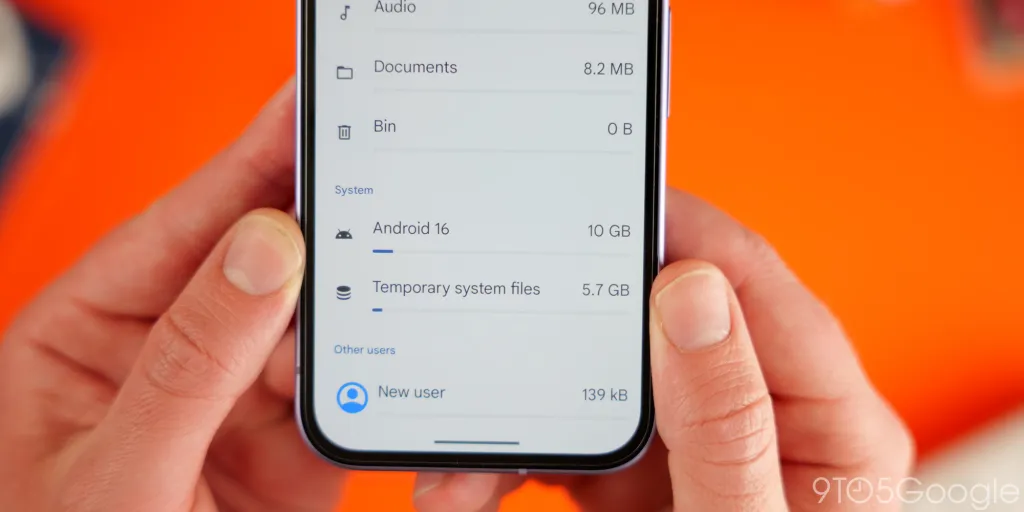
If you’ve ever opened your phone’s storage manager and wondered why your system files suddenly ballooned, the AICore explanation may finally put your mind at ease. The good news is that you don’t need to do anything. The system clears the duplicated model files automatically once it has confirmed the update is stable.
There are still a few things users can do to manage storage smartly:
- Keep an eye on your phone’s storage manager for unusual long-term spikes
- Free up space proactively if you’re already near your storage limit
- Avoid manually deleting AI-related system files unless guided by your device manufacturer
- Update your phone’s operating system regularly to benefit from the latest improvements
What Developers and Mobile Teams Should Watch
For developers and product teams working on Android-powered apps, the AICore behavior introduces new considerations. They may need to monitor how their apps interact with on-device models and ensure that their products remain stable across both old and new versions of Gemini Nano during the brief overlap period.
Developers should also keep an eye on potential vendor-specific tweaks. OEMs like Samsung, Pixel, and others may implement their own storage-management policies on top of Google’s defaults, which could affect how aggressively older model versions are cleared.
Looking Ahead in the World of On-Device AI
The discussion around Android AICore storage spikes is part of a much bigger conversation about the future of AI on smartphones. As more workloads move from the cloud onto local devices, users can expect their phones to do increasingly impressive things without needing an internet connection.
But this future also comes with practical challenges, such as:
- Larger AI model files demanding more device storage
- More frequent updates as models continue evolving
- Greater pressure on OEMs to deliver phones with ample base storage
- Need for clearer transparency about how AI features use system resources
The fact that Google is publicly explaining these storage behaviors suggests the industry is moving toward greater openness as on-device AI becomes a normal part of daily life.
A Smarter, More Stable Future
The Android AICore storage spikes story might seem like a technical curiosity at first glance, but it reveals something important about how thoughtful AI integration works on mobile. Sacrificing a little extra storage for a few days in exchange for instant rollback capability and update stability is a trade-off that ultimately benefits users.
As AI becomes more deeply embedded into the way we use our phones, these kinds of design choices will become increasingly important. They reflect a careful balance between innovation, user safety, and everyday usability.
For now, if you ever notice your storage briefly creeping up after a system update, you can rest easy. It’s not a bug. It’s not a leak. It’s simply your phone’s AI brain making sure it has a backup plan — just in case.
Author