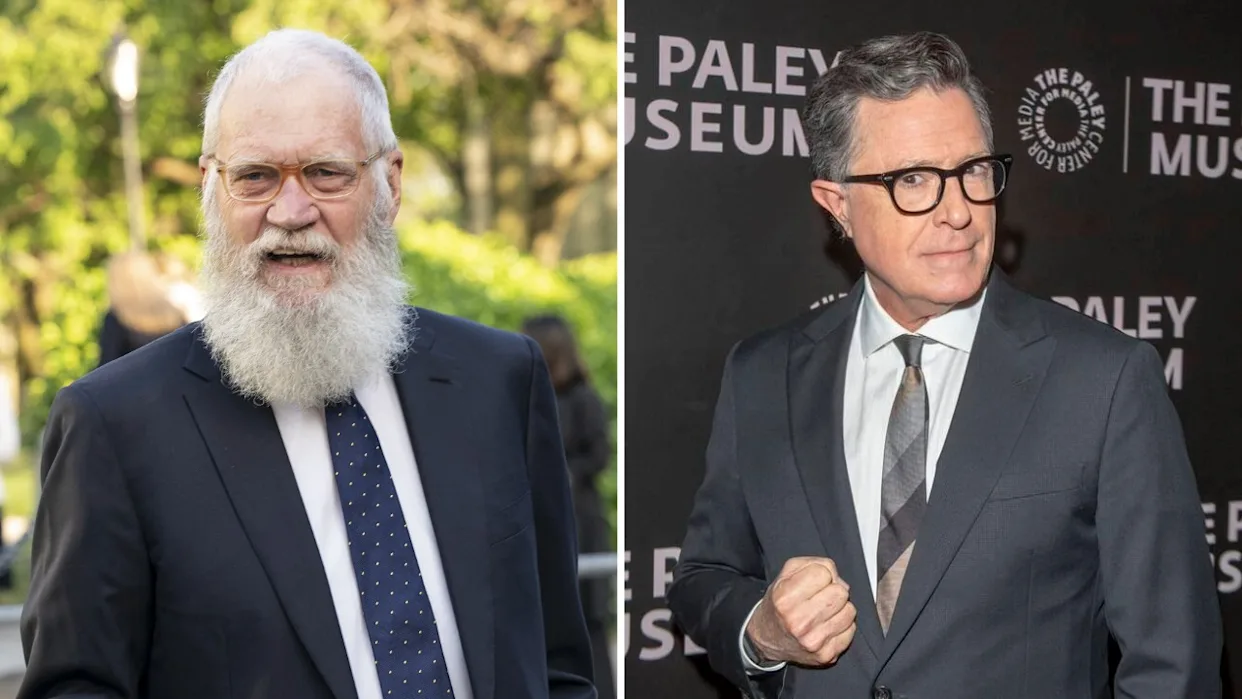
David Letterman Stephen Colbert cancellation has become one of the most explosive late-night television conversations of the year. With his usual sharp tongue and unfiltered honesty, Letterman publicly accused CBS of misleading the public about the real reasons for canceling The Late Show with Stephen Colbert. His remarks, made in a new interview with The New York Times, have reignited debate about the future of late-night television, the impact of corporate deals, and how networks treat their own talent.
Letterman Calls CBS “Lying Weasels”
David Letterman, who founded The Late Show in 1993, did not hold back when sharing his thoughts. He flatly rejected the network’s claim that financial pressures alone led to the show being axed. Instead, he suggested that CBS’s true motivations were tied to its ongoing acquisition by Skydance.
According to Letterman, the show’s cancellation was strategically positioned to assure Skydance that they would inherit no political or operational complications by taking on Colbert’s program. As he put it, executives essentially promised, “We’re going to take care of the show. We’re just going to throw that into the deal.”
His final blow came in classic Letterman style, with no diplomatic softening. He said, “I’m just going to go on record as saying: They’re lying.”
Such a direct accusation from a major media figure adds weight and credibility to the criticism CBS has been facing since the cancellation was first announced.
CBS’s Official Reason: A “Financial Decision”
CBS has stuck to its position that the cancellation was simply a financial decision. The network insists that the move had nothing to do with politics, audience size, or corporate restructuring. Stephen Colbert addressed the matter on his own show soon after the announcement, treating the moment with humor while acknowledging the wider concerns.
The official narrative from CBS has emphasized:
- Rising production costs
- Shifts in how audiences consume late-night content
- The ongoing transition toward streaming
- Industry-wide pressures on traditional broadcast formats
- The need to evolve programming for younger viewers
While these explanations may have some validity, Letterman’s comments paint a more cynical picture, one in which corporate maneuvering took priority over creative integrity.
Why Letterman’s Voice Carries Weight
Few people understand the inner workings of late-night television as deeply as David Letterman. He spent decades shaping the format, first at NBC and then at CBS. Letterman’s history with The Late Show makes him a particularly important figure in this conversation. Several reasons make his commentary land especially hard:
- He created the version of The Late Show that became a cultural institution
- He understands the financial structures of broadcast television
- He has firsthand experience navigating corporate decisions
- He has seen many shifts in late-night programming over the years
- He has long been respected for his honesty and credibility
When Letterman calls out a major network, audiences and media insiders pay attention.
Letterman Reflects on the State of Late-Night TV
While Letterman didn’t hold back on his criticism of CBS, he also offered a broader perspective on the difficulties facing late-night television. He acknowledged that CBS doesn’t “share the books” with him, meaning he doesn’t have direct access to the financial details. Yet he believes there’s truth to the idea that traditional television has been hit hard by digital and streaming competition.
His reflection touched on several major industry shifts:
- Audiences moving away from broadcast TV
- The rise of YouTube clips replacing full episodes
- Streaming giants reshaping the entertainment landscape
- Younger viewers preferring podcasts and short-form content
- Advertising dollars shifting away from traditional networks
Despite these realities, Letterman emphasized that the human cost of canceling The Late Show is being overlooked. He noted the impact on Colbert, on the show’s loyal fans, and on the cultural value of having a steady late-night voice.
The Emotional Weight of the Cancellation
For long-time fans of The Late Show, the news of its end has hit hard. Letterman’s reaction reflects how deeply the cancellation has affected those who built the show or grew up watching it. He shared that he was in “disbelief” when he learned that the show he originally founded was being shut down.
He raised an emotional question that captured the heart of the issue. He asked what about the “humanity for Stephen, and the humanity of people who love him, and the humanity for people who still enjoyed that 11:30 respite?”
It is a reminder that television isn’t just a business, it is also a deeply personal part of millions of viewers’ nightly routines.
The Show Ends in May
The Late Show with Stephen Colbert is officially set to air its final episode on Thursday, May 21. After that, CBS will replace it with Byron Allen’s Comics Unleashed, starting Friday, May 22.
Several elements of this transition stand out:
- The new show will mark a major shift in CBS’s late-night strategy
- Comics Unleashed leans into a different style of comedy
- The change reflects CBS’s effort to reduce costs
- Byron Allen’s company brings fresh business priorities
- Audiences will have to adjust to a new late-night identity
For viewers used to Colbert’s politically driven monologues, the change will be significant.
Why Skydance Is Central to the Story
The looming Skydance acquisition is widely viewed as a critical force shaping CBS’s strategy. According to Letterman, the network wanted to deliver a clean transition to Skydance with no controversial baggage. That mindset, he believes, played a role in why The Late Show was viewed as expendable.
Some of the corporate concerns tied to the deal include:
- The political nature of Colbert’s monologues
- Risk-aversion among incoming corporate leadership
- Streamlining late-night offerings before the merger
- Avoiding political fallout under new ownership
- Reducing operational costs across high-budget shows
Letterman’s interpretation suggests that Skydance’s expectations, rather than the show’s performance, may have shaped the network’s actions.
Colbert’s Position in the Industry
Stephen Colbert has been one of the most influential voices in late-night television since taking over The Late Show in 2015. With sharp political commentary, unique guests, and a loyal fan base, he has built a strong cultural footprint. Some highlights of his run include:
- Major political interviews during turbulent national moments
- Influence in shaping public conversations
- A powerful comedic style mixing satire and sincerity
- Long stretches as the highest-rated host in late night
- Major contributions to CBS’s brand identity
Despite this, Colbert has also faced challenges in recent years, including shifts in late-night ratings and changing audience habits. But few expected such an abrupt cancellation.
The Decline of Traditional Late Night
Letterman’s comments also reflect a broader, undeniable truth, that late-night television is going through a major transformation. The format that dominated American television for decades is now being squeezed by:
- A flood of digital alternatives
- Younger audiences preferring podcasts and YouTube
- Limited budgets for hosts and writers
- The end of the network advertising boom
- Networks slashing premium programming
This decline has impacted every major late-night show, not just Colbert’s. Many networks are rethinking their late-night strategies, and some are removing late-night formats altogether.
Public Reaction to Letterman’s Comments
Online reactions to Letterman’s blunt criticism have been swift and emotional. Many fans have expressed support for his honesty, while others have begun debating the future of broadcast television. Some of the strongest reactions include:
- Praise for Letterman speaking out so directly
- Support for Colbert and his contributions to the format
- Criticism of CBS for handling the cancellation poorly
- Concerns about how corporate deals shape creative content
- Calls for more transparency from major networks
For many viewers, Letterman’s commentary became a moment of validation, capturing emotions they had been struggling to express.
Why This Cancellation Feels Different
Network television has experienced numerous cancellations over the years, but the Colbert situation feels uniquely heavy. Several reasons set this particular ending apart:
- Colbert’s political voice during turbulent national moments
- The connection between The Late Show and CBS’s identity
- The legacy of David Letterman as the show’s creator
- The cultural importance of long-running late-night voices
- The fact that CBS is in the middle of a major corporate shift
These factors combine to create a moment that goes beyond a routine programming change.
The Future of CBS Late Night
With Comics Unleashed taking over, CBS is signaling a clear shift in tone. Rather than relying on a politically charged late-night host, the network appears to be moving toward a lighter, more cost-effective format. This change raises several important questions:
- Can CBS maintain audience loyalty with a different style?
- Will Comics Unleashed succeed where other replacements have failed?
- How will Colbert’s audience react to the new direction?
- Will streaming and digital content fill the late-night void?
- What does the future hold for political late-night satire?
For some fans, the new format may not feel like a meaningful replacement for Colbert’s nightly cultural commentary.
Letterman’s Lasting Legacy
David Letterman remains one of the most respected voices in television history. His decades-long career shaped the format, the standards, and the expectations of late-night TV. When he speaks, networks tend to listen, and so do audiences.
Some of Letterman’s contributions to the format include:
- Pioneering edgy, conversational humor
- Setting standards for celebrity interviews
- Creating a generation of late-night writers
- Shaping the show that became a cultural institution
- Mentoring some of the biggest names in modern comedy
His openness about the cancellation reflects his ongoing investment in the world he helped build.
A Difficult Goodbye for Loyal Fans
For viewers who tuned in to The Late Show every night, the cancellation feels personal. The 11:30 PM hour has long been a comforting routine, a place where audiences could decompress before bed. Losing that routine carries emotional weight, especially for fans who appreciated Colbert’s blend of humor, politics, and warmth.
Some fans have expressed sadness over:
- The loss of a steady political commentator
- The end of a consistent late-night ritual
- The cultural impact of Colbert’s voice
- The weakening of late-night talk shows in general
- A growing sense that broadcast television is losing creative ground
Their reactions echo Letterman’s emphasis on the humanity behind the cancellation.
A Larger Reflection on Broadcast Television
Letterman’s commentary tapped into broader anxieties about the state of broadcast television. With networks consolidating, advertisers cutting back, and audiences leaving traditional platforms, late-night television represents one of the clearest examples of how the industry is changing.
Some broader trends shaping this shift include:
- Massive consolidation of media companies
- Increased reliance on streaming services
- Decline of weeknight viewership
- Growing competition from social media platforms
- Shifts in how audiences engage with political content
Letterman’s blunt commentary reflects how many people in the industry feel about these challenges, but few are willing to say so publicly.
Final Thoughts
The David Letterman Stephen Colbert cancellation moment has become one of the most talked-about media stories of the year. With Letterman calling CBS “lying weasels” and openly questioning the network’s official reasoning, fans and media analysts now have a deeper, more emotional perspective on what is happening behind the scenes.
CBS continues to defend its decision as a financial necessity, but Letterman’s interview adds a sharper edge to the conversation. His belief that the cancellation was tied to the Skydance acquisition reframes the entire narrative, suggesting that corporate priorities, not audience preferences, played a major role in ending one of late-night television’s most respected shows.
As The Late Show prepares for its final episode on May 21, fans are left with a mix of emotions. They feel sadness over the show’s end, frustration with the network, and uncertainty about the future of late-night television. Letterman’s powerful commentary captures all of these feelings while reminding the public that television is more than just a business decision. It is also a cultural and emotional anchor for millions of viewers.
For Colbert, the road ahead remains open. His talent, influence, and connection with audiences guarantee that this is not the end of his career, just the end of a chapter. For CBS, the next chapter begins with Comics Unleashed, a sharp departure from the political late-night identity Colbert built. For viewers, the loss is real, but the conversation around it is far from over.
The Letterman interview will likely fuel debate for weeks to come. Whether or not CBS responds further, the broader public has heard one of television’s most respected voices say what many already suspected. Sometimes the official story isn’t the whole story. And sometimes, the truth comes from someone who has spent his entire career telling it like it is.
Author